Maserati Ghibli: Common Issues, Reliability & Real Repair Costs
"The Ghibli uses a Ferrari-derived V6 and Maserati electronics. That combination produces beautiful noise and expensive electrical faults. Here's what goes wrong first."
Engine
7/10
Gearbox
8/10
Electric
4/10
Total Risk
6/10
Quick Verdict
AvoidExtremely high risk of catastrophic failure. Requires massive emergency budget.
Reliability Verdict
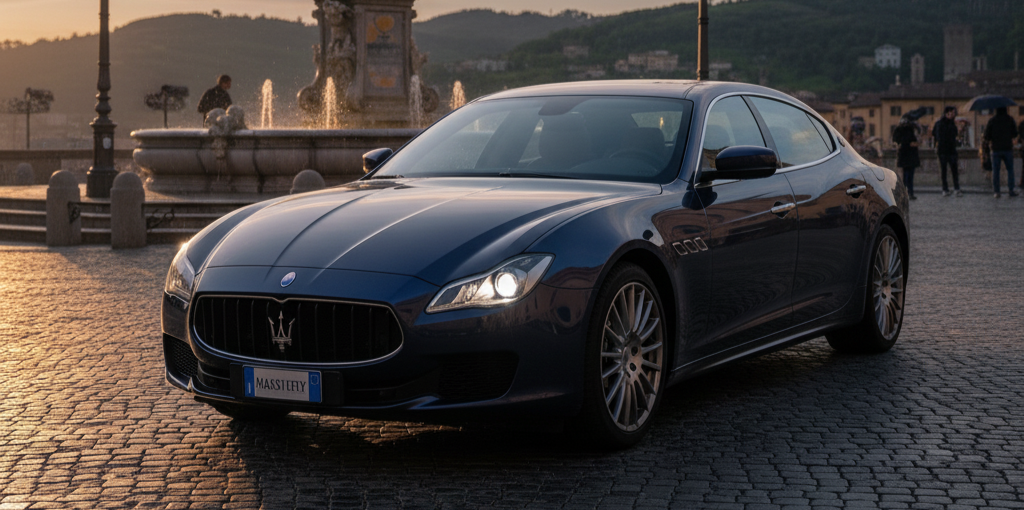
The Maserati Ghibli and Quattroporte are emotionally compelling luxury sedans that carry a mixed reliability record. The engines (especially Ferrari-derived V8 units) are capable and can be reliable with proper maintenance. The electrical system, infotainment, and build quality consistency are the ongoing frustrations. Repair costs are elevated due to limited independent expertise, high parts pricing, and expensive diagnostic labelling.
Failure Probability Timeline
Peak Italian flair with fewest headaches. Annual battery health checks mandatory.
The 'Electronic Fatigue Zone.' Door modules, Infotainment screens, and suspension sensors frequently fail.
Compounding risks of turbo oil seals and air suspension compressor failure.
*Data based on owner-reported failures and specialist shop frequency reports.
Executive Intelligence Summary
Maserati Ghibli and Quattroporte reliability: electrical failures, infotainment glitches, air suspension costs, and real ownership expenses vs German rivals.
In This Guide
The Maserati Ghibli and Quattroporte occupy a unique position in the luxury car market: Italian brand mystique, Ferrari-sourced engineering heritage, and genuine motorsport DNA - at pricing that undercuts the German flagships. On paper, compelling. In practice, ownership requires a specific mindset and realistic budget expectations.
This is the guide that Maserati dealers won’t give you.
The Maserati Ownership Reality
The Maserati modern sedan era begins with the Ghibli (2014) and the current-generation Quattroporte (2013). Both use the same platform, share the same engine families, and exhibit similar ownership patterns. The key insight from aggregated complaint data:
| Complaint Category | Frequency | Cost Impact |
|---|---|---|
| Electrical system | Very High | Medium - igh |
| Powertrain (engine/trans) | Medium | High - ritical |
| Vehicle speed control (ESC/ABS) | High | Medium |
| HVAC system | Medium | Medium |
| Interior build quality | High | Low - edium |
The headline issue is not engine failure - it is electrical and build quality consistency that fails to match the brand’s price point and Italian luxury promise.
Electrical System: The Primary Ownership Frustration
Maserati complaint databases show electrical system problems as the single most frequent complaint category across both Ghibli and Quattroporte generations. The patterns are specific and documented:
Battery Drain / Non-Start Events
- Maseratis use complex always-on proximity systems and comfort electronics
- Vehicles left stationary for more than 10 days can discharge batteries to below-start threshold
- Owners report needing battery replacements every 2 - years for those who don’t drive frequently
- Solution: always use a quality battery maintainer (CTEK or similar) when not driving regularly
Random Warning Light Cascades
- The CAN-bus system can produce spurious warning combinations including ABS, ESC, engine management, and suspension warnings simultaneously
- Root cause: often a single sensor sending incorrect data that triggers multiple downstream system responses
- Cost to diagnose: $300 - 600 in specialist diagnostic time before any parts are ordered
Door Module and Lock Failures
- Independent Maserati specialists describe door module failure rates as “non-trivial” - high enough that keeping replacement modules in stock is worthwhile
- Pattern: one door module fails 竊・door won’t lock, window inoperative 竊・replace module 竊・another fails within 6 - 8 months
- Cost per module: $400 - 1,200 each, plus diagnosis and fitting
Failure Probability Timeline
The Maserati is at its best. Minor electrical bugs emerge but often resolved via software updates. The engine and drivetrain are performing optimally.
- Infotainment software freezes (update-fixable)
- Minor sensor calibration warnings
- Battery condition monitoring required
Warranty fatigue zone. Electrical gremlins compound. Air suspension equipped models show first strut leaks. Sensor failures begin.
- Door module failures begin
- O2/MAF/wheel speed sensor failures
- Air suspension strut leaks
- HVAC system faults on some cars
- Infotainment screen degradation
High-maintenance phase. Electrical continues. Transmission fluid essential. Engine maintenance more expensive than German rivals of same age.
- ZF transmission service essential
- Air suspension full refresh
- Multiple sensor replacements
- Interior trim component wear
- Possible turbo seal weeping
*Data based on owner-reported failures and specialist shop frequency reports.
Infotainment: The Uconnect Frustration
If there is one single element that most consistently disappoints Ghibli and Quattroporte owners, it is the infotainment system. Both cars use a Uconnect-based system sourced from the Stellantis (formerly Chrysler/FCA) parts bin.
The system itself is the same architecture used in Jeep Grand Cherokee and Chrysler 300 products. In those cars, it is considered acceptable. In a 竄ャ65,000+ luxury Italian sedan, it is not.
The documented problems:
- Screen freeze requiring a hard reboot (press and hold power) while driving
- Navigation rendering that appears visually dated versus German rivals
- Response lag of 2 - seconds on button presses in older software versions
- Screen brightness that cannot match bright sunlight without adjustment
- Connectivity and CarPlay/Android Auto retrofitting required on older models
The owner response: Most Ghibli owners accept the infotainment as a known limitation and stop comparing it to a Mercedes MBUX or BMW iDrive. The car delivers in other areas. The infotainment is simply not one of them.
Cost to address: Dealer software updates ($150 - 400) resolve many responsiveness issues. Full screen replacement for dead pixels or cracked displays: $1,500 - 3,000.
Engine Reliability: The Genuine Bright Spot
Amid all the electrical criticism, it is important to state clearly: Maserati’s engines are capable and can be long-lived with proper maintenance.
The 3.0T V6 (Ghibli S / Quattroporte base)
This twin-turbo 3.0L V6 delivers 350 - 30 hp depending on tune. It uses a similar architectural philosophy to Ferrari-derived engines and is fundamentally solid when maintained.
Key maintenance requirements:
- Oil changes every 7,500 miles maximum (not the dealer’s extended intervals)
- Coolant pH monitoring - the aluminium engine is sensitive to acidic coolant
- Turbo oil seal inspection at 60,000+ miles (some sealing weep within range)
Catastrophic failures: Rare on properly maintained examples. The documented Quattroporte engine replacement cases (where a new engine failed again at 14,744 miles) are extreme outliers, though they illustrate the importance of Maserati warranty coverage when things go wrong.
The Ferrari F154 3.8T V8 (Quattroporte GTS / S Q4)
The 3.8L twin-turbo V8 is a shared Ferrari platform engine - the same base unit found in the Ferrari California T and similar models.
- Reliability: Excellent on maintained examples. Ferrari builds engines for longevity under exotic ownership conditions
- Cost to maintain: Oil changes exceed $500 at dealers. Specialist independent shops bring this to $250 - 400
- Key risk: After 2022, Maserati stopped using Ferrari-derived engines. For used buyers, pre-2022 V8 Quattroportes are the authentic purchase
ZF 8HP Transmission: Reliable If Serviced
Both the Ghibli and Quattroporte use the ZF 8-speed automatic - the same unit praised across BMW, Audi, and Jaguar applications. It is fundamentally sound.
The failure point in Maseratis is Maserati’s “lifetime fill” recommendation. ZF themselves and every independent transmission specialist recommend fluid changes every 60,000 miles. Follow ZF’s guidance, not the factory sticker.
Interior Build Quality: The Expectation Gap
The consistent owner complaint across Ghibli and Quattroporte reviews is the gap between the brand’s price point and the interior execution:
The Problems:
- Some dashboard and door panel materials share parts with mainstream Chrysler vehicles - visually identifiable to an experienced buyer
- Certain switchgear and control knobs feel insufficiently premium for a 竄ャ65,000+ car
- Early Ghibli models (2014 - 016) have documented dashboard and door panel rattles at specific resonance frequencies
- Leather quality on entry-level trim levels does not consistently match German competitors at the same price
The nuance: Higher-specification Ghibli GranLusso and Quattroporte Nerissimo trims use premium materials that address most of these concerns. The criticism applies most sharply to base and S trim levels.
Real repair cost Comparison: Annual Budget
Assuming a 5-year-old example with 45,000 miles, driven 10,000 miles per year:
| Category | Maserati Ghibli S | BMW 540i G30 | Mercedes E400 W213 |
|---|---|---|---|
| Routine Service | ツ・600,000 | ツ・380,000 | ツ・420,000 |
| Electrical Repairs | ツ・500,000 | ツ・200,000 | ツ・350,000 |
| Sensor Failures | ツ・250,000 | ツ・80,000 | ツ・120,000 |
| High-Risk Reserve | ツ・400,000 | ツ・150,000 | ツ・250,000 |
| Total Annual | ツ・1,750,000 | ツ・810,000 | ツ・1,140,000 |
The Maserati costs approximately 2テ・the G30 BMW’s annual maintenance budget and 1.5テ・the Mercedes’. This is the core ownership equation that every prospective Maserati buyer must honestly confront.
Which Maserati is Lowest Risk?
Best Buy: 2018 - 021 Ghibli S (3.0T V6)
- Improved electrical architecture vs 2014 - 017
- Reduced complaint volume per unit in aggregated data
- Still benefiting from some extended warranty coverage on newer examples
- Infotainment updated with CarPlay integration
Higher Risk: 2013 - 016 Quattroporte (Any engine)
- Highest complaint volumes in aggregated data
- Oldest examples of the current platform architecture
- Dealer support for early Quattroporte often poor in non-major markets
Enthusiast Choice: Pre-2022 Quattroporte GTS (V8)
- Ferrari-derived engine is the mechanical highlight
- Buy only with extended warranty and specialist relationship
- Budget for electrical costs independently of powertrain
Verdict: For Buyers Who Understand the Trade
The Maserati Ghibli and Quattroporte deliver something genuinely unique: Italian character, exhaust sound, and visual drama that German sedans largely cannot replicate. They are not objectively reliable cars by the standards of BMW’s B58 or the Lexus LS. They are emotionally rewarding cars with known costs.
Buy one only if:
- You have secured CPO or independent extended warranty coverage
- You have found a specialist independent Maserati workshop (not a dealer)
- You have budgeted ツ・500,000+ per year in maintenance above routine service
- You have accepted that the infotainment will never match a German rival
If those conditions are met, the Ghibli or Quattroporte rewards with something no spreadsheet can capture.
Intelligence: Recommended Guide
- Most Unreliable Luxury Cars 2026 Ranking
- Most Expensive Luxury Car Repairs Ranked
- Lexus LS Reliability: Common Problems & Repair Cost Guide ($1,500 - $5,000)
- Audi A8 Reliability & Real Costs
Executive Buying Advice
Target 2018+ Ghibli models where electrical architecture improved. Always buy CPO or with extended warranty for any Maserati purchase. Budget $2,000-5,000 annually for unscheduled electrical and sensor maintenance beyond routine service. Independent Maserati specialists provide significantly better value than dealerships for non-warranty work.