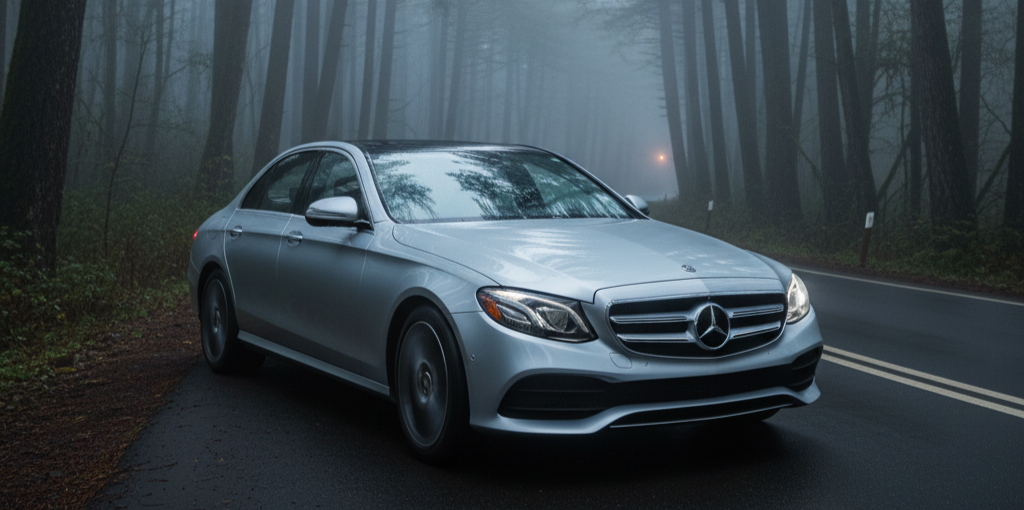
Mercedes-AMG GT: Reliability Guide & M177/M178 Engine Analysis
"The AMG GT puts the M178 dry-sump V8 behind the front axle. It's one of the best sounding cars ever made, but track-used examples develop problems twice as fast as street cars."
Engine
7/10
Gearbox
7/10
Electric
6/10
Total Risk
4/10
Quick Verdict
Buy with CautionExpect significant running costs. Manageable if preventative maintenance is done.
Reliability Verdict
The AMG GT (M178) benefits from a dry-sump oiling system compared to the M177 in road cars, giving it better oil management under sustained high-G track use. The oil separator risk is structurally similar. The biggest cost differentiator vs C63/E63 is the optional Carbon Ceramic Brake system — which can cost $10,000 - $18,000 to replace.
Overview
Mercedes-AMG GT reliability guide: M178 4.0T V8 dry-sump setup, oil separator risk, CCB brake costs, and ownership analysis for GT, GTS, GTR variants.
In This Guide
Mercedes-AMG GT Reliability: The M178 Sports Car Experience
The Mercedes-AMG GT is a different kind of AMG. While C63 and E63 are performance derivatives of production chassis, the AMG GT (R190) was designed from a clean sheet as a sports car.
It uses the M178 — the dry-sump, track-focused sibling of the M177. Same 4.0L twin-turbo V8, but with genuine motorsport oiling that makes it more suitable for sustained track use.
1. AMG GT Variants: Which One to Buy?
| Variant | Output | Key Diff |
|---|---|---|
| GT | 469 hp | Manual gearbox option, base car |
| GT S | 522 hp | More aggressive tune, standard DCT |
| GT C | 549 hp | Rear-wheel steering, wider body |
| GT R | 577 hp | Full aero, adaptive suspension |
| GT Black Series | 730 hp | Motorsport-derived, most extreme |
Higher variants have better suspension and brakes but also higher parts costs. The GT Black Series is in a separate class and not recommended for regular street use as a daily driver.
2. The M178 Advantage: Dry-Sump Oiling
The key mechanical advantage of the AMG GT over M177-powered sedans:
- Dry-sump oiling: A separate oil reservoir and scavenge pump prevents oil starvation under sustained high lateral G-forces (cornering, track use).
- Result: Under track conditions where a wet-sump engine would oil-starve in fast corners, the M178 maintains lubrication.
- Reliability impact: Better protection at the limits. But the oil separator risk is still present.
3. Carbon Ceramic Brakes: The Hidden Ownership Cost
The GT S and above commonly come with optional carbon ceramic brakes (CCB):
- Front rotor size: 390mm (standard) / 420mm (GT R/Black)
- Rotor lifespan: Highly variable — street-only use can last 50,000 - 80,000 miles. Track use: 10,000 - 20,000 miles.
- Wear indicator: Rough finger-touch texture across rotor surface = replacement needed.
- Cost: $10,000 - $18,000 for a full four-corner replacement set (AMG parts pricing).
Caution
Always check CCB rotor texture before purchase. A set needing replacement is a $10,000+ bill that should be factored into the purchase price.
4. DCT vs Manual Transmission
The base AMG GT offered a 7-speed manual (rare) or Speedshift DCT. The DCT is the dominant choice on used market cars.
- DCT fluid: Change every 30,000 miles (AMG “lifetime” claim is false under performance use).
- Track use: The DCT runs hot on track. Fluid degradation is rapid when track driving without cooling periods.
- Clutch pack: $5,000 - $8,000 if worn from track abuse.
5. Buying Advice by Variant
- GT / GT S: Best entry-level. Most supply, best parts availability.
- GT C: Best balance of performance and practicality.
- GT R: Genuine sports car but heavy track history - spect carefully.
- GT Black Series: Collector / track car. Not a daily driver.
Universal rule: Ask for track history. A GT R with heavy Nürburgring use is a very different ownership proposition than a GT S with 90% highway miles.
Related Resources
- Mercedes-AMG C63 Reliability: Common Problems & Repair Cost Guide ($3,000 - $4,500+)
- M177 Oil Separator Failure Guide
- M177 vs Porsche 3.8TT Comparison
Executive Buying Advice
Check CCB rotor surfaces immediately — rough texture means replacement is imminent. Verify oil separator service history on any car over 55k miles. Track history dramatically increases risk on this car — ask explicitly.