Mercedes-AMG M177 Engine: Cooling System Problems & Solutions
"The M177 V8 produces enormous heat between its twin turbos. The cooling system is the most critical maintenance area. A single failed thermostat can cascade into a ,000 problem."
Engine
7/10
Gearbox
7/10
Electric
6/10
Total Risk
4/10
Quick Verdict
Buy with CautionExpect significant running costs. Manageable if preventative maintenance is done.
Reliability Verdict
The M177 cooling system uses plastic pipes, an electric pump, and a thermostat that all have finite service lives. The electric pump fails without warning. Plastic pipes become brittle in the hot-V zone by 60,000 - 0,000 miles. A cooling failure on a 550+ hp engine is catastrophic - erheating warps the aluminum head, distorts the block, and kills the gaskets. Prevention is mandatory.
Overview
AMG M177 cooling system failure guide: Electric water pump failure, plastic coolant pipe cracks, thermostat failure, and failure prevention costs.
In This Guide
AMG M177 Cooling System Problems: Complete Prevention Guide
Cooling system failures are the silent killer on the AMG M177. Unlike the oil separator — which announces itself with smell and visible leaks — cooling failure can develop quickly and invisibly, culminating in catastrophic overheating.
On a 469 - 3 hp twin-turbo V8, catastrophic overheating means warped heads, failed gaskets, and a repair bill that can exceed $20,000.
This guide explains exactly what fails, when, and how to prevent it.
1. The M177 Cooling Circuit
The M177 uses a dual-circuit cooling system:
- Primary circuit: Cools the engine block and cylinder heads.
- Charge air cooling circuit: A separate low-temperature circuit that cools the compressed air from the turbos before it enters the engine.
This is more complex than a single-circuit system and doubles the number of potential failure points.
2. Electric Water Pump Failure
The M177 uses an electric water pump rather than a belt-driven mechanical unit. The electric pump is controlled by the ECU and can modulate flow rate based on demand.
Advantages: More efficient at partial load. Can continue running after engine shutdown for post-drive cooling.
Disadvantage: It can fail suddenly and without warning.
- Failure mode: Electric motor burnout, impeller failure, or control circuit failure.
- Mileage: 40,000 - 0,000 miles (worst-case failures seen as early as 40,000 miles on high-output E63 S cars).
- Symptoms: Low coolant temperature warning, P0128 code (coolant below threshold), overheating warning.
- Critical risk: The ECU will detect pump failure and trigger limp mode — but only after the engine begins to overheat. There is very little margin between warning and damage.
Cost to fix: $900 - $1,800 including new pump, fresh coolant, and any adjacent plastic pipe inspection.
Caution
Never ignore a coolant warning on an M177. Pull over immediately. These engines do not tolerate overheat - uminum heads warp at ~240°F coolant temperature, which is reached within minutes of pump failure at highway speed.
3. Thermostat Failure
The thermostat on the M177 is a known early-failure item, particularly in US and Northern European climates.
- Failure mode: Thermostat sticks open — the cooling circuit runs continuously, preventing the engine from reaching operating temperature.
- Symptom: The temperature gauge never reaches normal (or takes 10+ minutes in normal conditions). Fuel economy drops because the ECU runs a rich fuel map during warm-up.
- Long-term consequence: Extended cold-running = fuel dilution of engine oil = accelerated wear.
- Mileage band: 40,000 - 0,000 miles on many W205 C63 units.
- Cost: $300 - $700 including part and labor.
Note: Mercedes extended the warranty on thermostats in some markets. Check with a dealer whether your car is covered.
4. Plastic Coolant Pipes
The hot-V environment degrades plastic coolant pipes over time. Several critical pipes route through or adjacent to the valley:
- Engine valley crossover pipes: Small-bore plastic lines connecting the primary circuit.
- Intercooler inlet/outlet pipes: Charge air cooling connections.
- Pass-through fittings: Where coolant lines pass through the firewall or around the turbos.
Failure mode: The plastic becomes brittle from repeated thermal cycling. Hairline cracks develop at stress points (bends, fittings). The car loses coolant slowly — often not triggering a warning immediately, but gradually depleting the reservoir.
- Detection: Check the expansion tank monthly. A car that requires regular top-ups has a leak somewhere. Pressure-test the cooling system during any service.
- Prevention: At 60,000+ miles, replace plastic lines with silicone alternatives. Cost: approximately $500 - $900 in parts.
5. Intercooler Circuit Leaks
The charge air cooling circuit uses its own pump, reservoir, and small-bore hoses. These degrade similarly to the primary circuit pipes.
- Symptom: Gradual power loss, increased heat-soak after spirited driving, boost levels slightly below expected.
- Diagnostic: Temperature sensors in the charge air circuit will log elevated readings if intercooler coolant is depleted.
- Cost: $600 - $1,000 for intercooler circuit hose replacement and coolant.
6. Cooling System Refresh: What to Do at 60k Miles
For any M177-powered car approaching or past 60,000 miles, a full cooling system refresh is strongly recommended:
| Item | Condition at 60k | Action | Cost |
|---|---|---|---|
| Electric water pump | Approaching end of life | Inspect/replace | $500 - $900 |
| Thermostat | May be failing | Replace | $200 - $400 |
| Coolant | Degraded additive package | Full flush | $150 - $250 |
| Plastic pipes | Becoming brittle | Inspect, replace on condition | $300 - $700 |
| Expansion tank cap | Pressure rating may have dropped | Replace | $50 |
| Total Refresh | $900 - $1,800 |
7. Affected Models
See also: Mercedes-AMG C63 Reliability: Common Problems & Repair Cost Guide ($3,000 - $4,500+) | M177 Oil Separator Failure
1. This Engine Powers More Cars Than You Think
The Mercedes-AMG M177 4.0L twin-turbocharged V8 appears in:
- C63 W205 (2015 - 2021, 469 - 3 hp)
- E63 W213 (2017 - 2023, 603 hp)
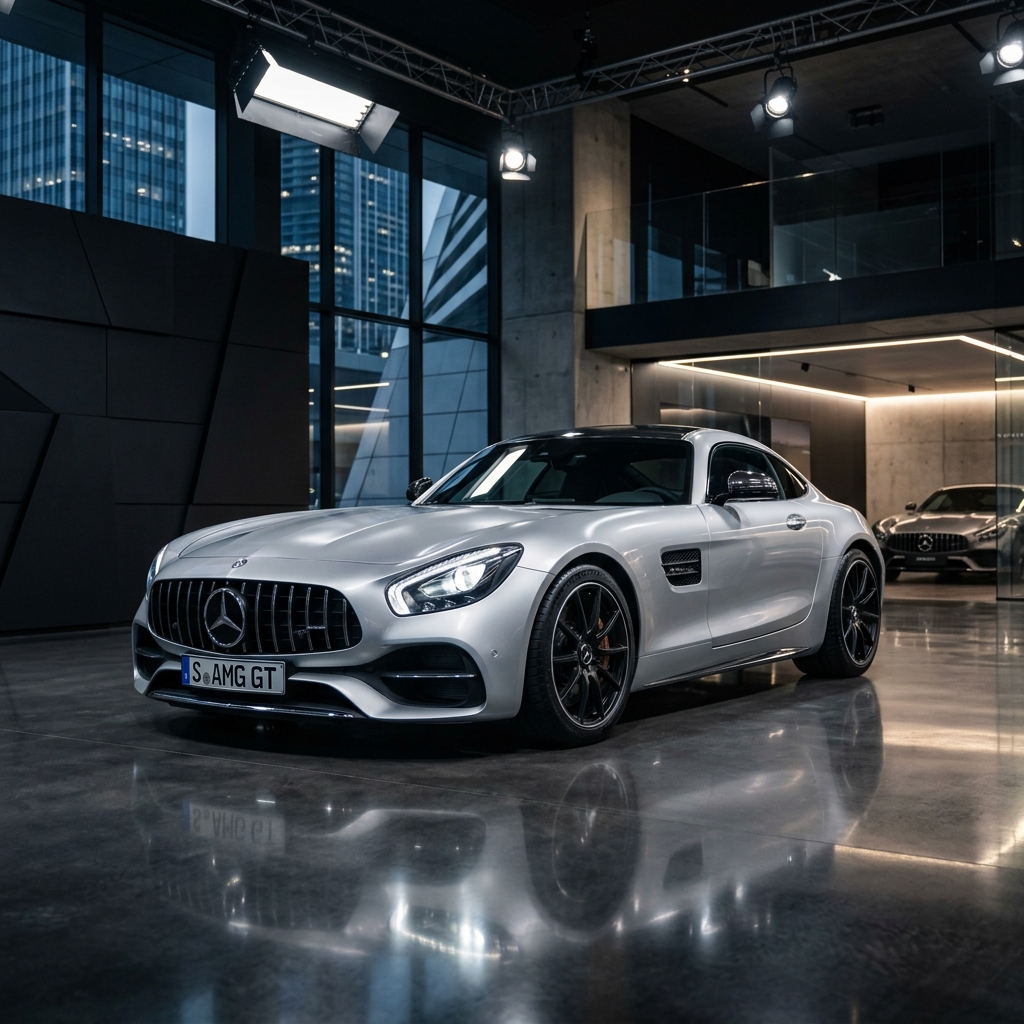
- AMG GT / GT S (2015 - 2023, 469 - 0 hp)
- AMG GT 4-Door (2018 - 2023, 577 - 0 hp)
- CLS 63 AMG (2018 - 2023, 577 hp)
- S63 AMG (2017 - 2020, 603 hp)
- GLE 63 AMG (2020 - 2023, 603 hp)
- GLS 63 AMG (2020 - 2023, 603 hp)
What this means:
Buying a different Mercedes-AMG model does not save you from M177 engine risk.
The valve cover oil leaks that plague a C63 W205 at 55,000 miles will plague an E63 W213 at 52,000 miles.
The thermostat failure that checks your engine light in an AMG GT is the same thermostat in the S63.
The engine follows you.
AMG M177 Oil Separator Failure: Everything You Need to Know
The crankcase ventilation oil separator failure on the Mercedes-AMG M177 is the single most discussed maintenance item on AMG forums worldwide. It is preventable, detectable, and only catastrophically expensive if ignored.
This guide explains exactly what it is, why it fails, how to detect it early, and what it costs to fix.
Executive Buying Advice
On any M177 car over 60,000 miles, budget $900 - $1,800 for a cooling system refresh, including pump, thermostat, and plastic pipe inspection. Never ignore a coolant warning light on this engine.