Used Porsche Taycan Buying Guide: Battery Warranty, Recalls & What to Check
"The Taycan lost half its value faster than almost any Porsche in history — and unlike most depreciation stories, the car itself didn't get worse. What separates a bargain from a liability is a battery warranty clock, one big recall, and a health report that takes a dealer an hour to produce."
Engine
7/10
Gearbox
8/10
Electric
6/10
Total Risk
6/10
Quick Verdict
Buy with WarrantyBuy the warranty runway, not the discount. A 2021-2023 Taycan with the battery recall completed, at least four years of HV battery warranty remaining, and a documented state-of-health report is one of the great used performance bargains. A cheap 2020 car with open recalls and no SoH data is a research project, not a bargain.
Reliability Verdict
The used Taycan is the most interesting value in the Porsche range: launch-era cars have depreciated so heavily that early 4S examples now list from the mid-$40,000s in US market listings, yet every Taycan carries Porsche's 8-year/100,000-mile high-voltage battery warranty, with a capacity guarantee (80% for the first 3 years/37,000 miles, 70% thereafter to the end of the warranty). Against that sits the generation's serious recall: 24V-732 (ARB6/ARB7), covering 27,527 cars from 2021-2024 whose LG-supplied battery modules can develop internal short circuits, with an interim 80% charging limit. The Taycan is not a car to buy on price. It is a car to buy on paperwork — recall completion, battery warranty runway, and a dealer state-of-health report.
Executive Intelligence Summary
Should you buy a used Porsche Taycan? Guide to the 8-year/100k-mile battery warranty, the ARB6/ARB7 battery recall (24V-732), EPA range by year, degradation, and pre-purchase checks.
In This Guide
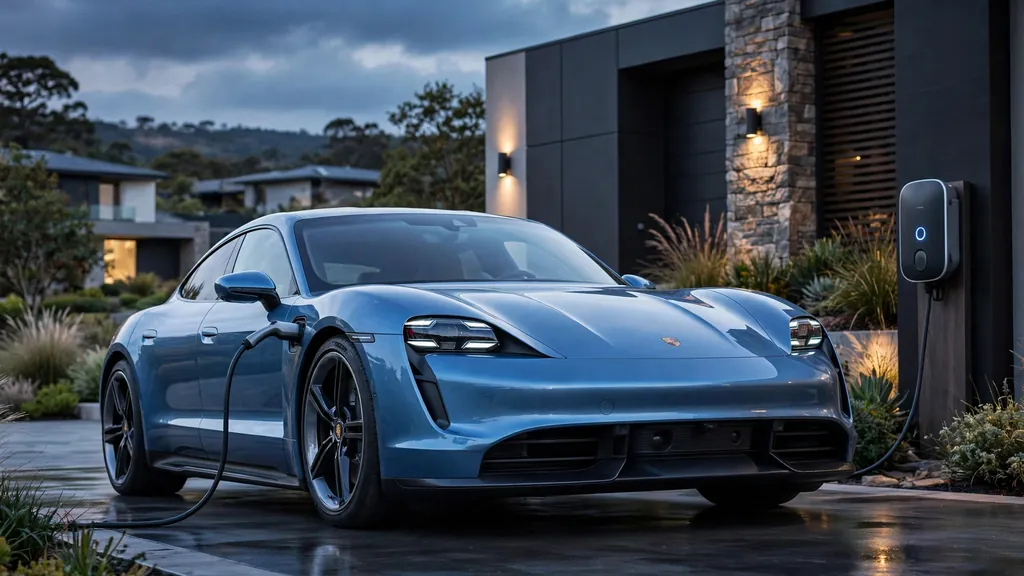
The Taycan is the first electric car on this site to get a full buying guide, and it earns it for one reason: no used performance car in America combines this much depreciation with this much factory battery cover. Early 4S cars that listed well into six figures now appear in US listings from the mid-$40,000s — while still carrying years of Porsche’s 8-year/100,000-mile high-voltage battery warranty. The opportunity is real. So is the homework.
An EV buying guide is structured differently from our combustion guides, because the failure model is different. There is no engine to score, no gearbox to service, no timing chain. There is a battery with a warranty clock, a recall history that includes one genuinely serious battery campaign, and a state-of-health number that decides what the car is worth. Everything in this guide flows from those three facts.
Failure Probability Timeline
The cheapest Taycans and the densest recall history — the 2020 model year alone carries 16 NHTSA campaigns in current counts. Buy only with every campaign closed and a battery health report.
- Battery module recall lineage (23V-840 → ARB6/ARB7)
- Early software & charger faults
- Shortest remaining battery warranty
More range, production maturity, and — critically — the longest remaining battery warranty runway of the affordable cars. The 2022 4S with Performance Battery Plus is EPA-rated at 227 miles.
- 24V-732 battery recall (verify completion)
- Front brake hose recall (24V-455)
- 12V battery aging
The final pre-facelift cars: maximum warranty runway, the battery recall still applies to some — verify by VIN, not by model year assumptions.
- 24V-732 applies to 2021-2024 production
- Consumables only otherwise
*Data based on owner-reported failures and specialist shop frequency reports.
1. The Battery Warranty: The Whole Ballgame
Porsche warrants the Taycan’s high-voltage battery for 8 years or 100,000 miles — and unlike most EV warranties, the capacity terms are published and specific: the battery is guaranteed to retain at least 80% of its original capacity for the first 3 years / 37,000 miles, and at least 70% for the remainder of the warranty. Porsche’s own published position is that it expects the majority of Taycans to remain above 70% capacity at the 8-year/100,000-mile mark under normal use.
This warranty is the used Taycan market’s load-bearing wall. It converts the single scariest EV question — “what if the battery dies?” — into a date on a calendar. Your job as a buyer is arithmetic: get the car’s in-service date (not its model year), add eight years, and count what remains. A 2022 car first registered in mid-2022 carries battery cover into 2030. A 2020 car is out of HV cover in 2028 — and should be priced like it.
Should you extend that cover? Porsche’s approved warranty programs and third-party EV cover are evolving quickly; the framework for deciding is the same one in our guides to extended warranties for luxury cars and whether an extended warranty is worth it — with the EV-specific twist that the component you most want covered (the battery) is the one most policies exclude or time-limit. Read any policy’s battery clause first, and its marketing second.
2. The Battery Recall (24V-732 / ARB6 & ARB7): Verify, Don’t Fear
In October 2024, Porsche recalled 27,527 Taycans (2021-2024) under NHTSA campaign 24V-732, Porsche codes ARB6/ARB7. Certain battery modules supplied by LG Energy Solution can develop internal short circuits. The campaign expanded and superseded an earlier chain of battery recalls (23V-840, 24V-215, 24V-217), and a companion campaign, 24V-731, addressed the same issue on additional 2020-2023 cars. As an interim measure, owners of affected cars were advised to limit charging to 80% until the remedy — diagnostic software and module replacement where required — was applied.
Read that correctly: this is a serious recall, and it is also exactly what the recall system is for. The defect is identified, the remedy is free, and completion is recorded against the VIN. The buyer’s task is purely administrative:
- Run the VIN at NHTSA.gov. 24V-732 (or 24V-731) must show completed, not merely “recall announced.”
- Ask for the dealer’s recall completion paperwork in the car’s file.
- If the car is still limited to 80% charging or awaiting modules, price it as an unfinished car — or walk.
Also verify 24V-455 (ARB0): front brake hoses on 2020-2025 cars can crack and leak fluid — a conventional, free, and non-negotiable fix. The 2020 model year, with 16 NHTSA campaigns in current counts, is the extreme case of a general Taycan truth: this was a new-technology flagship, and its early cars were recalled early and often. Completed campaigns are a sign of a cared-for car. Open ones are a sign of the opposite.
3. Range, Batteries, and Degradation: The Honest Numbers
Two batteries were offered. The Performance Battery holds 79.2 kWh gross (71 kWh net); the Performance Battery Plus holds 93.4 kWh gross (83.7 kWh net). Which one a car has matters more than its trim badge — ask, and verify against the build sheet.
EPA ratings tell the early story plainly. The 2020 cars were rated between 192 and 203 miles (Turbo S 192, Turbo 201, 4S Performance Battery Plus 203). Software and specification improvements moved the range quickly: by 2022, Porsche’s published EPA figures ran from 199 miles (4S) to 227 miles (4S Performance Battery Plus), with the Turbo PBP at 212. The Taycan was never the range champion of its class — it was the driver’s car of its class — and a used buyer should choose accordingly.
On degradation, be disciplined about evidence. There is no large, primary, public dataset for Taycan battery aging. Secondary analyses of EV fleets suggest modern packs typically lose on the order of 2-3% per year in early life, slowing thereafter — treat that as context, not as a Taycan measurement. The Taycan measurement exists, per car: a state-of-health report from a Porsche dealer, produced during a pre-purchase inspection. Porsche’s own expectation — most cars above 70% at 8 years/100,000 miles — is the floor the warranty enforces, not a prediction about the specific car in front of you. Get the number.
4. Running Costs: The EV Dividend, With Porsche Seasoning
The Taycan’s scheduled service interval is 2 years or 20,000 miles — brake fluid, cabin filter, inspections. There is no oil, no spark plugs, no belts, no gearbox fluid saga. Our recommended reserve of $800 - $1,500 per year covers the service rhythm plus the items that do wear: tires (a heavy, powerful car on staggered fitments — budget as you would for a 911) and brakes, which last well thanks to regenerative braking but are Porsche-priced when they do come due.
The known annoyance ledger is electrical rather than mechanical: the 12V battery is the Taycan’s most mundane failure point and the root of many warning-light cascades; on-board charger faults appear on early cars; software updates have historically required dealer visits. None of these is a five-figure event. The five-figure events on a Taycan live inside the battery case — which is why Section 1 of this guide is titled the way it is.
For the luxury-EV ownership picture at the very top of the market, our Mercedes-Maybach EQS SUV review covers how the other side does electric luxury.
5. The Buying Checklist
- In-service date documented; battery warranty expiry calculated (8 years / 100,000 miles from that date).
- NHTSA VIN check: 24V-732/24V-731 and 24V-455 showing completed, with dealer paperwork.
- State-of-health report from a Porsche dealer, printed, current.
- Battery identity confirmed: Performance Battery (79.2 kWh) or Plus (93.4 kWh) — from the build sheet, not the advert.
- Charging test: DC fast-charge the car during the inspection; confirm it charges at rate and to 100% (a car still software-limited to 80% has unfinished recall business).
- 12V battery age and health confirmed; warning-light-free cold start.
- Tires and brakes measured — the two real consumable bills.
Best buys: 2022-2023 4S with Performance Battery Plus — the 227-mile EPA rating, the long warranty runway, the mature production. Value play: a documented 2021 with the battery recall completed. Avoid: any 2020 car without a health report, and any car, of any year, with open battery recalls priced as if they were closed.
6. Frequently Asked Questions (FAQ)
Q: Is a used Porsche Taycan a good buy? A: It can be the best value in the Porsche range — early 4S cars list from the mid-$40,000s in the US while retaining years of the 8-year/100,000-mile battery warranty. It is a good buy only with the paperwork: battery recall completed, warranty runway calculated, and a dealer state-of-health report in hand.
Q: How long is the Porsche Taycan battery warranty? A: 8 years or 100,000 miles from the in-service date, with a published capacity guarantee: at least 80% capacity for the first 3 years/37,000 miles, and at least 70% for the rest of the warranty term.
Q: What is the Taycan battery recall? A: NHTSA campaign 24V-732 (Porsche ARB6/ARB7) covers 27,527 cars from 2021-2024: certain LG-supplied battery modules can develop internal short circuits. The remedy is free, an interim 80% charge limit applied to affected cars, and completion is verifiable by VIN. A companion campaign (24V-731) covers additional 2020-2023 cars.
Q: How much range does a used Taycan have? A: EPA ratings for 2020 cars ran 192-203 miles; by 2022 the range ran 199-227 miles depending on model and battery. The larger Performance Battery Plus (93.4 kWh) is the one to seek. Real range depends on the individual car’s battery health — get the state-of-health report.
Q: How much does a Taycan cost to maintain? A: Less than any combustion Porsche: services fall every 2 years/20,000 miles, and there is no engine or gearbox to maintain. Budget $800 - $1,500 per year as a reserve covering services, tires, and brakes.
Q: Which Taycan should I avoid? A: A 2020 car without a battery health report (the launch year carries 16 NHTSA campaigns), and any car with the battery recall still open. Also be wary of cars with under three years of battery warranty remaining unless the price fully reflects it.
7. Related Resources
- Extended Warranty for Luxury Cars: What It Covers
- Is an Extended Warranty Worth It? The Math
- Mercedes-Maybach EQS SUV Review: Electric Luxury Benchmark
- Porsche 911 (992) Reliability: The Combustion Benchmark
Real Owner Symptoms
"My 2021 4S had the battery recall completed before I bought it — the seller had the paperwork in a folder, which is exactly why I bought that car and not the cheaper one across town. Two years on, the battery health report still shows over 90%, and my running costs are tires and one brake fluid service."
Mechanic's Diagnosis Notes
EVs invert the inspection. There is no compression test, no oil analysis — there is a battery, and its state of health is a number the dealer can print. If a seller won't let you get that number, they already know it. Also check the 12V battery: a dying 12V system causes more Taycan 'electrical faults' than the high-voltage system ever will.
Cost Transparency: Parts + Labor Breakdown
| Repair Job | Est. Parts | Est. Labor | Total Worst-Case |
|---|---|---|---|
| Scheduled Service (2-year interval) | $200 | $400 | $500 - $900 |
| Tire Set (staggered, EV-rated) | $1,700 | $200 | $1,800 - $2,200 |
| 12V Battery Replacement | $300 | $200 | $400 - $600 |
| HV Battery Module Work (out of warranty) | Dealer-only | Dealer-only | Warranty item — buy cars with cover remaining |
Executive Buying Advice
Four documents decide a Taycan purchase: (1) NHTSA recall printout showing 24V-732/ARB6-ARB7 and 24V-455/ARB0 completed; (2) the in-service date, from which the 8-year/100,000-mile battery warranty expiry is calculated — walk away from cars with under three years of HV cover left unless the price truly reflects it; (3) a Porsche dealer state-of-health (SoH) report on the battery, measured, not described; (4) confirmation of which battery is fitted — Performance Battery (79.2 kWh) or Performance Battery Plus (93.4 kWh) — because it defines the car's real range.
What Owners Regret
"I bought a 2020 Turbo because it was the cheapest in the country and skipped the health report. The car is fine — but it has the smaller real-world range, the densest recall history of any year, and under two years of battery warranty left. I saved $3,000 and bought myself an expiry date."
Lower-Risk Alternatives
- Porsche Taycan (2025+ Facelift) The updated car brings more range, faster charging and the newest battery chemistry — at close to new-car money. The used J1 is the value play; the facelift is the capability play.
- Porsche Panamera (971) The combustion alternative: same luxury brief, a conventional warranty and maintenance profile, and no charging infrastructure required. Different risks, thoroughly documented elsewhere on this site.
- Mercedes-Benz EQS More range and a quieter luxury focus, with its own steep depreciation. Our Maybach EQS SUV review covers the top of that range and the EV luxury ownership picture.