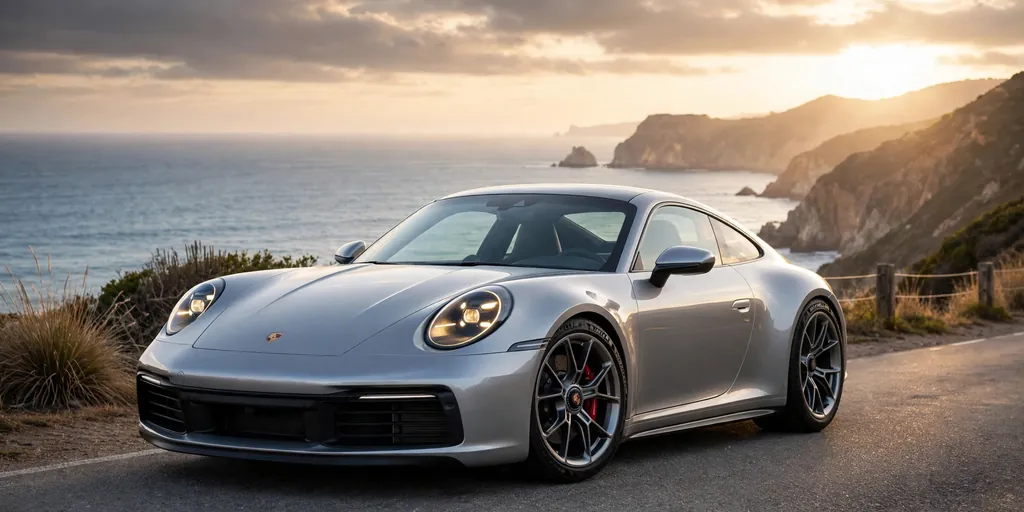
Porsche 911 (992) Reliability: Common Problems, Recalls & Maintenance Costs
"Every other car on this site comes with a list of ways it can financially ambush you. The 992's list is different: a recall you must verify, a gearbox you must service, and tires you will replace more often than you expect. That is what 'reliable' looks like at 190 mph."
Engine
9/10
Gearbox
9/10
Electric
8/10
Total Risk
3/10
Quick Verdict
BuyThe benchmark. If you want a modern supercar-class vehicle you can daily-drive for a decade, the 992 is the answer the data supports. Verify the center-lock and glass recalls are closed, service the PDK, and budget for tires.
Reliability Verdict
The 992 is the most dependable car in this site's entire database of modern performance cars. J.D. Power scores the 2025 911 at 89 out of 100 for Quality & Reliability, and the 3.0L twin-turbo flat-six has no endemic mechanical failure mode. Its recall history — roughly 20 NHTSA campaigns across the generation, headlined by the center-lock wheel bolt recall — is dominated by supplier and assembly issues rather than design flaws. RepairPal's 2.0/5.0 rating and $1,072 annual average reflect Porsche parts and labor pricing, not fragility: the 911 visits the shop just 0.5 times a year, the lowest frequency in its class. The costs you will actually pay are consumables — tires, brakes, and scheduled services.
Executive Intelligence Summary
Is the 992-generation Porsche 911 reliable? Guide to J.D. Power scores, RepairPal data, the center-lock wheel recall (24V-809), glass adhesion recall, PDK servicing and real running costs.
In This Guide
This is the shortest “problems” guide on this site, and that is the point. The 992-generation 911 is what the data says it is: the most reliable modern performance car you can buy. Its guide is mostly about two recalls, one service schedule, and the price of tires.
The 992 arrived for 2020 with an all-turbocharged Carrera range built around the 3.0L twin-turbo flat-six — 379 hp in the Carrera, 443 hp in the Carrera S — plus an 8-speed PDK or a 7-speed manual. Five model years of data now exist, and the pattern is unambiguous. J.D. Power scores the 2025 911 at 89/100 for Quality & Reliability, among the highest figures recorded for any performance car. The facelifted 992.2 (2025+) continues the trend, with the 2026 Carrera rated 91/100 in J.D. Power data.
RepairPal appears to contradict this: 2.0 out of 5.0, an average annual repair cost of $1,072, and a 22% probability that a repair is severe. Read the underlying numbers and the contradiction dissolves — the 911 averages just 0.5 unscheduled repair visits per year, the best frequency in its class. RepairPal’s model penalizes cost per incident, and every incident on a Porsche is priced in Porsche. The 911 rarely breaks; when it does, the invoice is written by a Porsche dealer. Both facts matter, but only one of them is about reliability.
Failure Probability Timeline
Warranty phase (4 years / 50,000 miles). Ownership is scheduled services, tires, and recall appointments.
- Center-lock wheel bolt recall (24V-809)
- Glass adhesion recall (24V-155)
- Rear tire wear
Consumables phase. Brakes, tires, and the first PDK service dominate. No endemic engine or gearbox failure mode has emerged.
- PDK service due
- Brake replacement (both axles over time)
- 12V battery & sensor aging
The long game. Early 992s are only now arriving here; the 991.2's record with the same engine architecture suggests durability rather than cliffs.
- Suspension bushings & dampers
- Cooling system hoses & pumps
- Clutch wear (manual cars)
*Data based on owner-reported failures and specialist shop frequency reports.
1. The Center-Lock Recall (24V-809): The One That Matters
In October 2024, Porsche recalled 2021-2024 center-lock-equipped 911s (alongside 718 and Panamera models) under NHTSA campaign 24V-809 (Porsche recall code ARC4): the center-lock wheel bolts had not been manufactured to specification and could fracture, potentially allowing a wheel to loosen or detach. Porsche’s instruction to owners was explicit — stop driving the car until the bolts were inspected and replaced as needed. The initial Part 573 filing covered 1,851 vehicles, and in October 2026 the campaign was expanded (26V-682) to add 548 more 2024-model-year cars found to carry suspect bolts.
Center-lock wheels are fitted to the Turbo S, the GT3 family, and GTS models optioned with them — not to standard Carrera cars with five-lug wheels. If you are buying a center-lock car, this recall is the first line of the inspection: the VIN must show 24V-809 as completed in NHTSA’s database. The work is free, permanently. A car with this recall still open has an owner who ignored a do-not-drive notice — walk away, whatever the price.
2. The Rest of the Recall List: Assembly, Not Design
Across its model years, the 992 has accumulated roughly 20 NHTSA campaigns — a normal count for a low-volume, high-complexity car, and notably free of engine or transmission design defects. The significant ones for buyers:
- 24V-155 (2024): The windshield and rear window on 8,101 cars (2020-2024) may not have been correctly bonded and could detach in a crash. Remedy: inspection and re-bonding or replacement, free.
- 21V-157 (2021): Suspension fasteners on some 2021 cars were not torqued to specification; dealers inspect and re-torque or replace.
- 23V-313 (2023): A small number of 2020 Carrera S and 2022 Carrera cars left the factory with missing body welds, addressed by inspection and repair.
The pattern across the list is supplier and assembly quality, caught and corrected under warranty-era campaigns — the profile of a sound design, not a flawed one. Every remedy is free for the life of the car; there is no excuse for a used 992 to carry an open recall.
3. The Engine and Gearbox: No Endemic Failures
The 3.0L twin-turbo flat-six (9A2 Evo family) is the turbocharged descendant of the engine in the 991.2, and it inherited that engine’s clean record — no bore scoring saga, no IMS-style bearing issue, no timing chain epidemic. Our 991.1 vs 991.2 reliability comparison explains how Porsche engineered its way out of the previous generation’s problems; the 992 is the continuation of that story, and our 991.2 Turbo guide covers the high-output branch of the family.
The 8-speed PDK is equally uneventful if serviced. Porsche’s intervals are long; specialists recommend fluid and filters on a 6-year cycle regardless. Budget $800 - $1,200 (the figure from our Porsche 911 maintenance cost guide, which breaks down 911 running costs line by line). The general PDK problems guide explains what neglect does to this gearbox family — the 992 gives you no excuse to find out personally.
4. What It Actually Costs to Run
The 992’s running costs are consumables, and they are Porsche-priced. These figures are the published values from our site’s 911 maintenance cost guide, which apply across the modern Carrera range:
| Item | Published Cost | Interval |
|---|---|---|
| Annual oil service | $400 - $600 | Yearly |
| PDK fluid & filter service | $800 - $1,200 | ~6 years |
| Brakes (per axle) | $1,500 - $2,000 | 25k - 40k miles |
| Tire set (staggered) | $1,800 - $2,200 | 10k - 20k miles (rears) |
Budget $1,500 - $2,500 per year all-in and the 992 will never surprise you. PCCB ceramic brakes deserve one warning: they last enormously long on the road, but a damaged rotor is a five-figure replacement, and track use consumes them — inspect them like the asset they are. Before any purchase, run through our Porsche 911 inspection checklist, which was written for exactly this process.
5. Best Years to Buy
Buy: 2022-2024 (992.1). The mature end of the first series — the early assembly recalls are behind them, the center-lock campaign is closed on any properly maintained car, and they predate the 992.2’s hybrid-assisted GTS complexity.
Buy: 2020-2021, with the same recall verification. These are now the value entry point into the generation.
Consider: 2025+ (992.2). J.D. Power’s early scores (89-91) are excellent, and the Carrera’s mild updates change little mechanically. The GTS’s T-Hybrid system is new technology — superb, but with the shortest track record in the range.
6. Frequently Asked Questions (FAQ)
Q: Is the Porsche 911 (992) reliable? A: Yes — it is the benchmark for its class. J.D. Power rates the 2025 911 at 89/100 for Quality & Reliability, and RepairPal’s data shows just 0.5 unscheduled repair visits per year. RepairPal’s low 2.0/5.0 score reflects Porsche repair pricing ($1,072 annual average), not failure frequency.
Q: What is the biggest problem with the 992? A: The center-lock wheel bolt recall (24V-809). On affected 2021-2024 cars the bolts could fracture, and Porsche issued a do-not-drive instruction. The fix is free — verify completion by VIN before buying any center-lock car.
Q: How much does it cost to maintain a 992 per year? A: Budget $1,500 - $2,500 per year including consumables. The big recurring items are tires ($1,800 - $2,200 a set), brakes ($1,500 - $2,000 per axle), and the PDK service ($800 - $1,200).
Q: Does the 992 have bore scoring or IMS problems? A: No. Those belong to earlier generations (997/991.1 era). The 992’s 3.0L twin-turbo flat-six has no endemic mechanical failure mode in five years of data.
Q: 992.1 or 992.2 — which is the safer used buy? A: The 992.1 (2020-2024) has the longer track record. The 992.2’s early J.D. Power scores are excellent, but its GTS hybrid system is new. For minimum risk, a late 992.1 Carrera S is the sweet spot.
7. Related Resources
- Porsche 911 (991.1 vs 991.2) Reliability Compared
- Porsche 911 Maintenance Costs: The Full Breakdown
- Porsche 911 Inspection Checklist: What to Check Before Buying
- Porsche 911 Turbo (991.2) Issues & Reliability
- Porsche PDK Reliability: Lifespan & Failure Modes
- Used Porsche Taycan Buying Guide: The Electric Alternative
Real Owner Symptoms
"My 2021 Carrera S has covered 41,000 miles with one unscheduled visit — a PCM software update. My annual spend is oil services, one set of rear tires, and front pads at 35,000 miles. The center-lock recall was the only drama: my dealer collected the car, inspected the bolts, and returned it within the week, free."
Mechanic's Diagnosis Notes
The 992 is the car we use to calibrate expectations. Owners arrive expecting Porsche horror stories and leave with a service bill and a tire quote. Mechanically, the 3.0 flat-six is the strongest turbo engine Porsche has built — the failures we see are almost always maintenance debt from previous owners, not the car.
Cost Transparency: Parts + Labor Breakdown
| Repair Job | Est. Parts | Est. Labor | Total Worst-Case |
|---|---|---|---|
| PDK Fluid & Filter Service | $300 | $700 | $800 - $1,200 |
| Brake Pads & Rotors (per axle) | $1,100 | $600 | $1,500 - $2,000 |
| Tire Set (Michelin PS4S, staggered) | $1,900 | $200 | $1,800 - $2,200 |
| Annual Oil Service (dealer) | $150 | $350 | $400 - $600 |
Executive Buying Advice
Run the VIN through NHTSA before anything else: on a center-lock car (Turbo S, GTS with the option, GT3 family), recall 24V-809 must show as completed — Porsche instructed owners not to drive affected cars until the bolts were inspected. Confirm 24V-155 (glass adhesion) on 2020-2024 cars. After that, buy on service history and tire/brake life remaining, not on mileage alone.
What Owners Regret
"I regret the options list, not the car. I skipped the front axle lift and scrape the splitter weekly, and I wish I had bought the extended warranty for resale value rather than repairs — I have never claimed on it."
Lower-Risk Alternatives
- Porsche 911 (991.2) The previous generation shares the 3.0L twin-turbo concept and much of the 992's reliability profile at a lower purchase price. Our 991.1 vs 991.2 guide explains which of the older cars to pick.
- Chevrolet Corvette (C8) Matches the 992's pace for far less money and offers cheaper consumables, with a younger and thinner long-term reliability record.
- Audi R8 (V10) The naturally aspirated alternative: a charismatic engine with a strong record, but older tech and supercar consumable pricing.