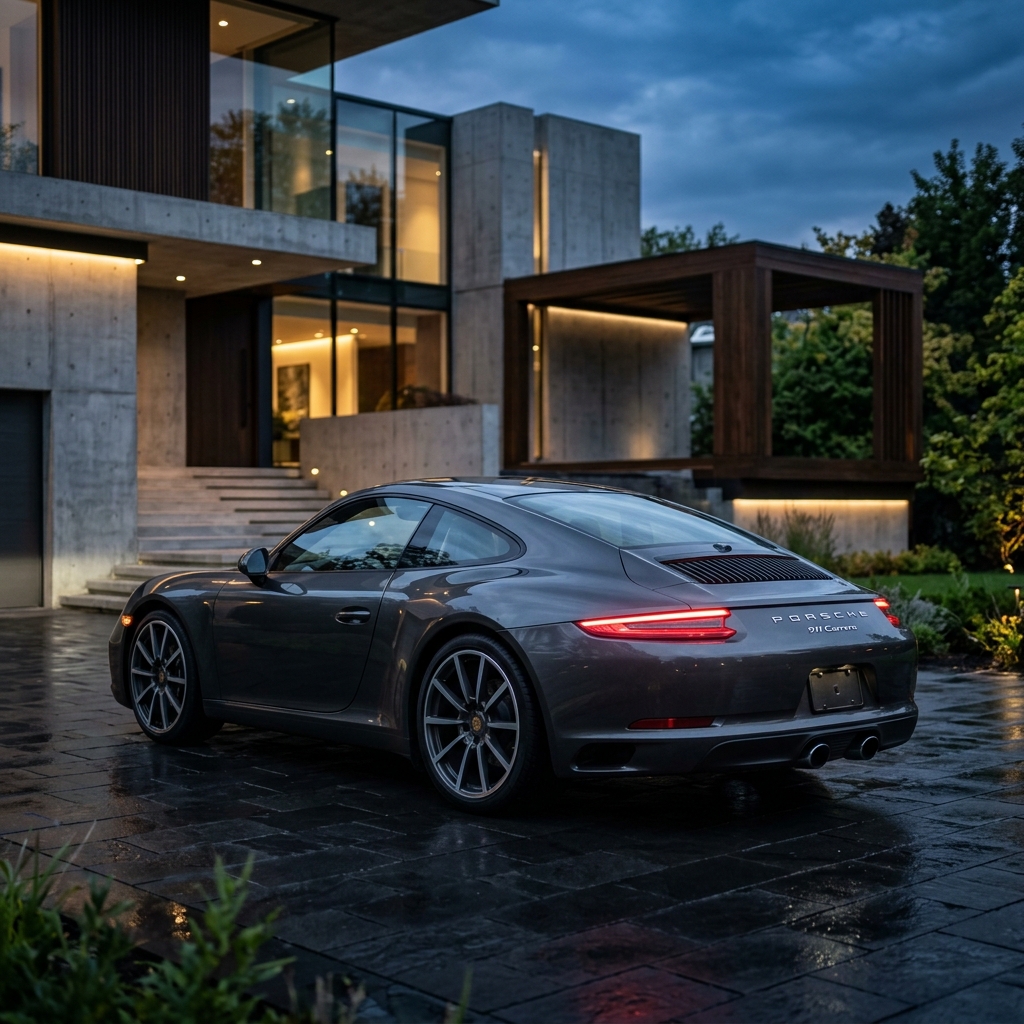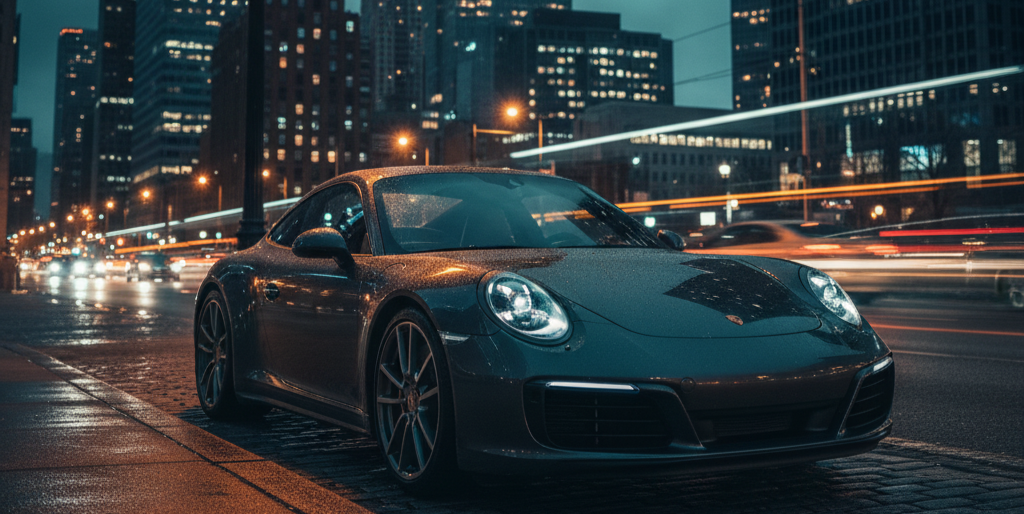
Porsche 911: Complete Maintenance Cost Guide & Service Intervals
"The 911 costs ,000-2,500 per year to maintain at an independent shop. That's less than most people expect. The brake job every 40,000 miles is the big expense at ,500."
Engine
8/10
Gearbox
7/10
Electric
9/10
Total Risk
3/10
Quick Verdict
BuyOne of the most financially rational high-performance cars available. If you budget correctly for the major service intervals, it is significantly cheaper to run than a comparable Ferrari or Aston Martin.
Reliability Verdict
Solid & Predictable: The 991 generation is largely free from the catastrophic IMS/bore-scoring fears of older models. It demands strict adherence to service schedules, but rarely introduces sudden, massive unforced errors.
Overview
Detailed financial analysis for maintaining a Porsche 911 (991). From routine PDK servicing to catastrophic risk evaluation and independent shop cost models.
In This Guide
The Porsche 911 (991 generation) occupies a rare space in the luxury sports car paradigm: it offers exotic-level performance with German-sedan reliability. However, “reliable” does not mean “cheap to service.”
This guide breaks down the true financial trajectory of running a 991, allowing prospective buyers to budget accurately and avoid deferred-maintenance traps.
Baseline 5-Year Ownership Projection
For a used 991 generation Porsche 911 driven typically, owners should budget roughly $6,000 to $10,000 USD over a 5-year period for routine maintenance and common wear items (utilizing a reputable independent specialist).
This is dramatically less than the $20,000+ budgets required for Italian exotics, but still necessitates disciplined financial planning.
The Realistic Annual Breakdown
Most owners report an average annual spend of $1,000 to $2,500. Critically, Porsche maintenance is heavily driven by time intervals, not just mileage.
- You must change the brake fluid every 2 years, regardless of miles.
- Minor services (oil, filters) alternate with Major services (adding spark plugs, drive belts) on a strict 2-year / 4-year cadence.
- A “Major” 4-year service at an independent shop typically costs $800 to $1,200, jumping to $1,500+ at a franchised dealer.
Critical Service Requirements
1. The PDK Transmission Trap
The PDK dual-clutch transmission is phenomenal, but it absolutely requires fresh fluid at the specified intervals (typically 60k miles/6 years, or 120k/12 years, depending on the exact sub-model and fluid loop).
Warning: Do not buy a 991 that has skipped its PDK service. While the gearboxes are mechanically solid, the internal electronics (specifically the distance sensor) can fail. A specialized repair is $7,000+, and a full dealer replacement is $25,000. Fresh fluid is cheap insurance.
2. Tires and Alignment
The 991 runs aggressive alignment geometry and massive rear tires. Depending on how you drive, rear tires may only last 12,000 to 18,000 miles. A high-quality set of Pilot Sport 4S or Cup 2 tires will cost $1,200 to $1,800. If you track the car, this becomes your largest recurring expense.
3. Coolant Leaks & Engine Mounts
As 991s age past the 7-year mark, the plastic cooling system components (such as the water pump and cross-over pipes) begin to weaken. A water pump replacement is a relatively standard ~$1,000 job. Dynamic engine mounts (PADM) are also known to trigger warning lights and require replacement, costing around $1,500 per corner.
Dealer vs. Independent Economics
While Ferrari owners are effectively tethered to the dealer network or hyper-elite specialists, the Porsche ecosystem is vast.
- Independent Specialists: You can easily find highly trained, Porsche-certified technicians operating independent shops. Their labor rates are often 30-40% lower than the dealer.
- Parts Accessibility: OEM supplier parts (e.g., Textar brake pads instead of “Porsche” branded boxes) can drastically reduce consumable costs without sacrificing an ounce of performance.
The Final Calculation
The 991 is perhaps the most heavily engineered, daily-drivable sports car on earth. To own one responsibly:
- Validate the service history. A car that missed its 4-year major service effectively “owes” you $1,500 right out of the gate.
- Ensure you have an independent Porsche specialist selected before purchase.
- Budget a flat $200 per month into a maintenance account, and you will likely never feel stressed by an invoice.
The Porsche 911 is famous for defying supercar logic. It offers extreme performance but operates with the reliability of a daily commuter. However, “reliable” does not mean “cheap.”
Here is the exact breakdown of annual maintenance costs and expected repairs for the water-cooled 991 (2012-2019) and 992 (2020+) generations of the Porsche 911.
Average Annual maintenance cost
A Porsche 911 driven 8,000 to 10,000 miles a year will run an average annual maintenance bill of $1,500 to $2,500 if serviced at an independent specialist, or $2,500 to $4,000 at a franchise dealership.
Routine Consumables
- Annual Oil Change: $250 - $400. The flat-six engine requires precise oiling; do not stretch intervals beyond 5,000 - 7,500 miles.
- Major Service (4-Year / 40,000-Mile): $1,500 to $2,500. This highly intensive service includes spark plugs (which requires removing the rear bumper and heat shields), filters, and drive belts.
- Brakes: A standard iron brake job (rotors and pads) runs $1,500 to $2,000 per axle.
- Tires: Rear tires on a 911 wear out roughly twice as fast as the fronts due to the rear-engine layout. A full set of premium tires runs $1,800 to $2,200.
Common Age-Related Repair Costs
While catastrophic failures are incredibly rare on 991/992 models, age does eventually induce wear and tear.
- PDK Transmission Fluid Service: The 7-speed (991) and 8-speed (992) PDK gearboxes require a precise fluid flush at the 40k or 60k mile mark, costing $800 to $1,200. Failure to do so will void the warranty and risk a $15,000+ replacement box.
- Coolant Valves / Changeover Valves (991): These small vacuum-operated valves control exhaust flaps and heating. They fail frequently, costing $200 to $500 to replace.
- Engine Mounts: Active engine mounts (PADM) are known to fail and display a warning light. Replacement is roughly $1,200 to $1,800 a pair.
Long-Term Ownership Context
Buying a well-maintained 991 or 992 model is arguably the safest financial bet in the luxury sports car market. Depreciation is glacial, and unpredictable, five-figure repair bills are practically non-existent. Budgeting $2,000 annually makes the 911 one of the cheapest supercars to own.
Reliability & Ongoing Maintenance
When considering the long-term cost of a Porsche 911, it is essential to understand that high-performance engineering carries a steep maintenance premium. Aging luxury vehicles demand proactive, preventative service to avoid catastrophic repair bills.
We highly recommend reviewing our dedicated guides on Luxury Car Maintenance Costs to understand typical annual budgets, or consulting our Common Problems Database to identify specific failure mileages before committing to a purchase. Always factor in a reliable $2,500+ annual cash reserve for out-of-warranty repairs.
When buyers cross the $100,000 threshold and begin looking for a legitimate sports car that won’t ruin their lives with constant check engine lights, two options inevitably dominate the conversation: The Porsche 911 (Carrera S / GTS) and the Audi R8 V10.
Both cars hail from the Volkswagen Auto Group (VAG), both feature lightning-fast dual-clutch transmissions, and both can be genuinely daily-driven in traffic.
But structurally, they are radically different. The 911 utilizes a rear-mounted, twin-turbo flat-six. The R8 is a mid-engine exotic powered by a naturally aspirated 5.2L V10 derived directly from the Lamborghini Huracan. How do their ownership costs compare over a 5-year timeline?
The Maintenance Burden: Porsche Tax vs Supercar Tax
Neither car is cheap to maintain, but they drain your wallet in different ways.
Porsche 911 (991.2 / 992 Generation)
The brilliance of the 911 is its simplicity, but the packaging makes it expensive to service. Because the engine is buried under the rear wing, accessing anything requires removing body panels.
- The Big Bill: The Porsche 40,000-mile (or 4-year) major service requires changing spark plugs, engine air filters, drive belts, and PDK fluid. It routinely costs $2,500 to $3,000 at a dealership because the rear bumper usually has to come off just to change the air filter.
- Parts: Porsche OEM parts carry a massive markup, but the aftermarket is incredibly solid, allowing independent shops to lower prices drastically.
- Read More: Porsche 911 Ownership Timeline
Audi R8 V10 (Type 4S)
The R8 benefits from sharing some parts-bin switches with standard Audis, but the V10 engine is pure Lamborghini.
- The Big Bill: Servicing a massive V10 requires significant oil volume and complex diagnostic procedures. But unlike the Porsche, the mid-engine layout under a glass hatch makes spark plug and coil pack access relatively straightforward for a competent mechanic.
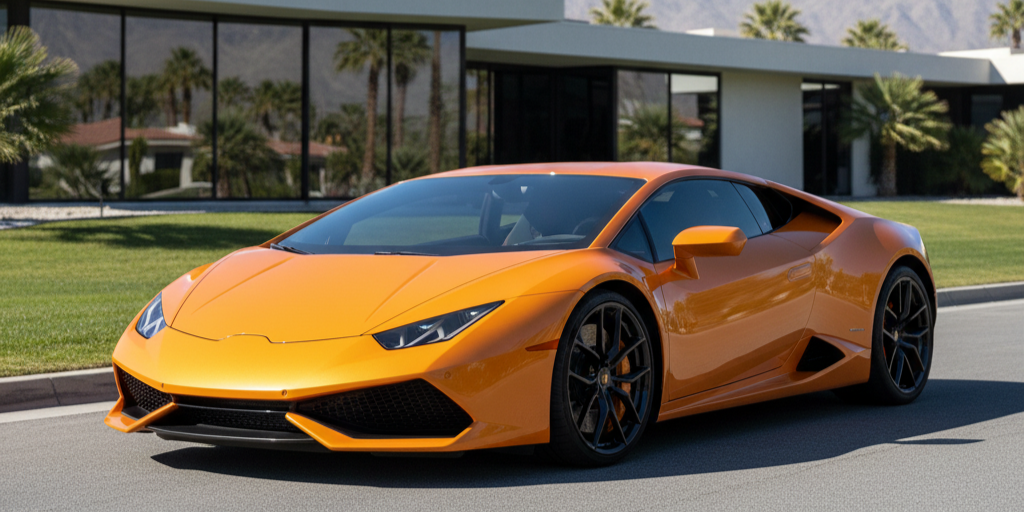
- The Weak Point: The Audi R8 (and its Huracan sibling) use Magnetic Ride Control suspension. These shocks are infamous for leaking hydraulic fluid as early as 30,000 miles. Replacing them often exceeds $7,000. Many owners swap them for high-end passive coilovers.
The Fuel and Tire Equation
If you are using these cars as intended, consumables will be your biggest yearly expense.
- Tires: The Porsche 911 runs an incredibly aggressive rear camber setup. The rear 305mm tires will be down to the cords in 12,000 miles, long before the fronts wear out. The Audi R8 wears its tires far more evenly due to its mid-engine balance and Quattro all-wheel drive.
- Fuel: The Porsche’s 3.0L twin-turbo flat-six can achieve 25+ MPG on the highway. The Audi’s V10 will struggle to crack 15 MPG. Over 5 years, the fuel cost delta is significant.
Depreciation: The Invisible Cost
This is where the Porsche annihilates the Audi R8 (and everything else in its class).
The Porsche 911 has the strongest resale value of almost any modern sports car. A well-optioned 911 GTS will lose very little of its value over a 5-year period compared to an Audi R8, which suffers from standard luxury-car depreciation curves.
If you buy a $130,000 used Audi R8, it may be worth $85,000 in five years. A $130,000 used Porsche 911 GTS may still be worth $110,000 in the same timeframe.
Conclusion
Financially, the Porsche 911 is the undisputed champion. Cheaper to fuel, cheaper to insure, and dramatically better at holding its value.
However, the Audi R8 provides an emotional, screaming, 8,500-RPM V10 supercar experience that the Porsche simply cannot match unless you spend double the money for a GT3. If you view the R8 as a discounted Lamborghini Huracan rather than an expensive Audi, its running costs actually seem like a bargain.
Keep Reading
- Ferrari 458 Italia vs Porsche 911 Turbo: Drama vs Precision
- Ferrari 458 Italia vs BMW M8: The Icon vs The Beast
- Porsche 911 Turbo vs BMW M5: The Surgeon vs The Sledgehammer
Real Owner Symptoms
"I was shocked at how 'normal' the bills are. My biggest expense over 3 years wasn't an engine failure, it was replacing the massive rear tires ($900) and doing the 4-year major service with spark plugs ($1,200)."
Mechanic's Diagnosis Notes
The 991 is solid. We mostly just do routine work. The only major pain point is changing spark plugs requires removing the rear wheels and heat shields, increasing the labor hours compared to a front-engine car.
Cost Transparency: Parts + Labor Breakdown
| Repair Job | Est. Parts | Est. Labor | Total Worst-Case |
|---|---|---|---|
| Major Service (Sparks, Plugs, Filters, Oil) | $400 | $600 | $800 - $1,200 |
| PDK Transmission Fluid & Filter Service | $350 | $400 | $700 - $900 |
| Brake Rotors & Pads (All 4 Corners) | $1,200 | $500 | $1,500 - $2,000 |
| Distance Sensor Repair (if PDK fails) | $1,500 | $4,500 | $6,000 - $10,000 |
Executive Buying Advice
Prioritize service history over absolute mileage. A 60k-mile car with documented PDK fluid changes, recent spark plugs, and fresh brake fluid is infinitely superior to a 30k-mile garage queen that has missed calendar-based services.
Lower-Risk Alternatives
- Audi R8 V8 (Type 42) Offers mid-engine exotic looks, but the 4.2L V8 and mag-ride suspension introduce higher maintenance floors and more expensive potential failures.
- Corvette C7 Grand Sport Massively cheaper to service and repair (Chevy parts), similar track capability, but lacks the premium interior quality and driving precision.