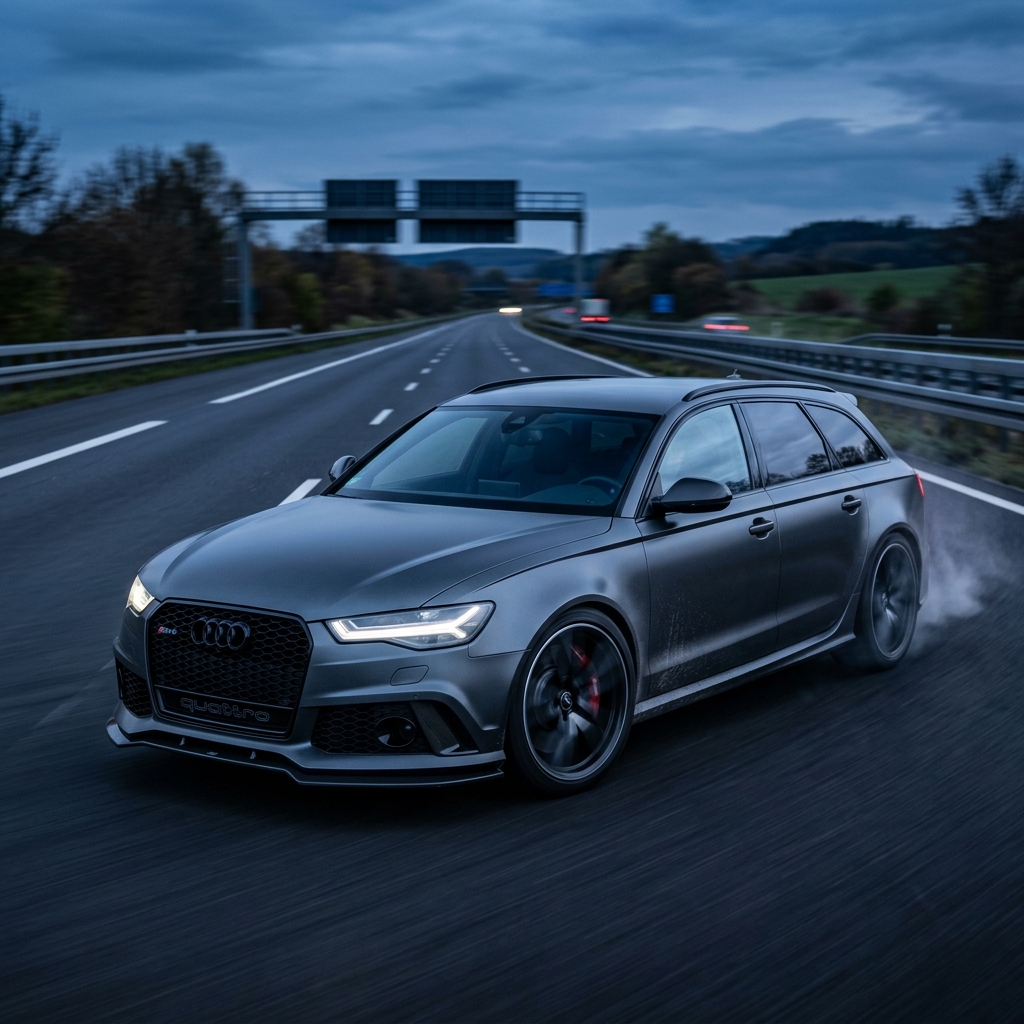
Audi RS6 C7 (4.0T): Reliability Guide & Critical Failure Points
"The C7 RS6 is the fast estate dream. But the 4.0T V8 has specific failure patterns around the turbo oil lines and the ZF transmission that most buyers discover too late."
Engine
6/10
Gearbox
6/10
Electric
5/10
Total Risk
5/10
Quick Verdict
Buy with CautionExpect significant running costs. Manageable if preventative maintenance is done.
Reliability Verdict
Intermediate risk profile. Balanced ownership experience with some known failure points in cooling and high-pressure fuel systems.
Executive Intelligence Summary
Is the Audi RS6 C7 (2014-2018) reliable? Detailed guide to the EA824 4.0T turbo oil screen, PCV failure, air suspension leaks, and repair costs.
In This Guide
This guide breaks down exactly what fails on the RS6 C7, distinguishing between the early C7 (2014-2015) and the improved C7.5 (2016-2018).
1. The RS6 C7 vs C7.5: Two Different Animals
You must understand the difference between the pre-facelift and facelift models.
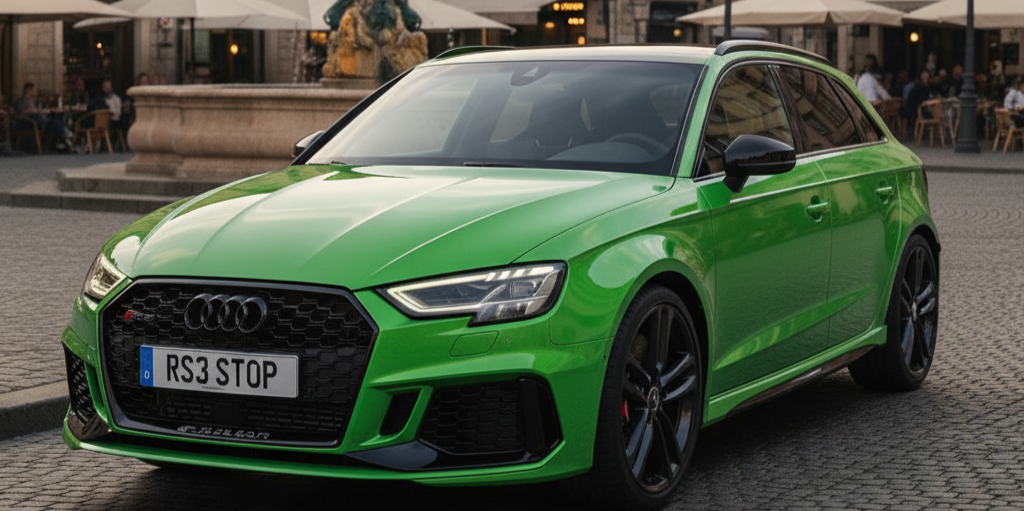
RS6 C7 (2014-2015)
- Engine: EA824 4.0T V8 (560hp)
- Risk Level: HIGH
- Why: Early oil screen design, higher turbo failure incidence, early PCV components.
- Recall Coverage: 2014-2017 RS7 is covered by TSB 2044640 (RS6 Avant was not sold in US, but same engine).
- Verdict: Buyable, but only with recall completion verified.
RS6 C7.5 (2016-2018)
- Engine: Updated EA824 4.0T V8 (605hp in Performance model)
- Risk Level: MODERATE
- Why: Revised oiling system, updated PCV, better build quality.
- Verdict: The smart buy. Still has carbon buildup and air suspension risk, but lower turbo failure rate.
2. Common Failures & Costs
A. Turbo Oil Screen (The Existential Risk)
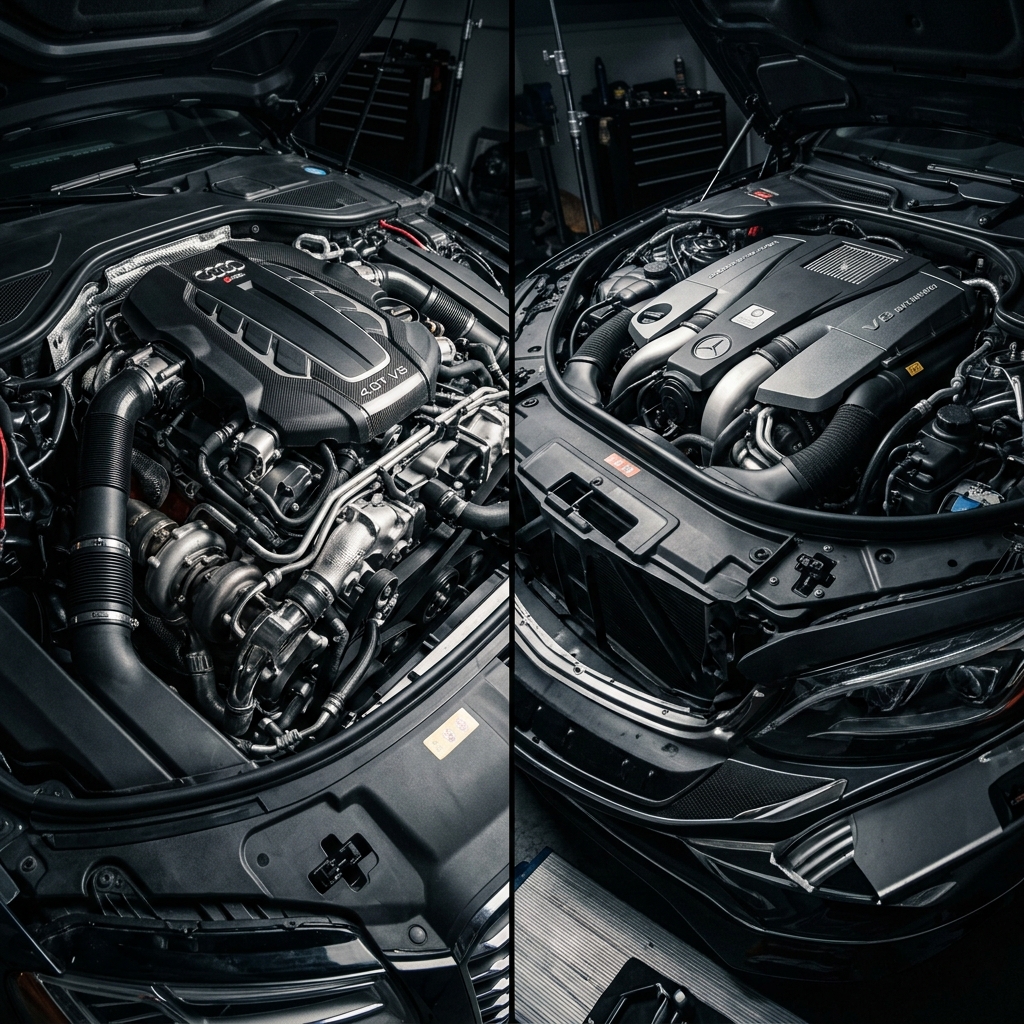
The RS6 shares the same turbo oil screen flaw as all 4.0T engines. See our Audi 4.0T V8 Pillar Page for the full technical breakdown.
- Symptom: Screeching noise, loss of power, check engine light.
- Test: Listen for a high-pitched screech on acceleration. If present, walk away.
- Cost: $8,000 - $10,000 for turbo replacement (many owners upgrade to RS7 turbos with screen delete).
Warning
Critical: If the oil screen recall (TSB 2044640) has not been completed, the car is a ticking time bomb. Verify recall completion before purchase.
B. PCV / Oil Separator Failure
The PCV system in the valley fails, causing whistling noises and idle instability.
- Symptom: Whistling noise from the engine bay, strong vacuum at oil cap, idle fluctuation.
- Test: Remove the oil cap while idling. If the idle changes dramatically or you hear loud hissing, the PCV is failing.
- Cost: $1,000 - $2,000.
C. Air Suspension Leaks
The RS6 uses air suspension with adaptive damping. The air springs dry rot and leak.
- Symptom: Car sagging on one corner, “Suspension Fault” warning.
- Risk: The rubber air bags dry rot and leak, especially in cold climates.
- Cost: $1,200 - $2,000 per corner (OEM). Arnott aftermarket struts are $800/corner.
D. Transmission Fluid Maintenance
The ZF 8-speed is excellent but high-performance driving requires shorter fluid intervals.
- Interval: Every 40,000 miles.
- Cost: $600 - $900.
Reliability & Ongoing Maintenance
When considering the long-term cost of a Premium Vehicle, it is essential to understand that high-performance engineering carries a steep maintenance premium. Aging luxury vehicles demand proactive, preventative service to avoid catastrophic repair bills.
We highly recommend reviewing our dedicated guides on Luxury Car Maintenance Costs to understand typical annual budgets, or consulting our Common Problems Database to identify specific failure mileages before committing to a purchase. Always factor in a reliable $2,500+ annual cash reserve for out-of-warranty repairs.