Cooling System Failure in Luxury Cars: Complete Repair & Prevention Guide
"A plastic coolant fitting fails. The engine overheats for 90 seconds. The head gasket warps. Now you have a ,000 problem. Cooling system failures are the #1 killer of luxury car engines."
Engine
6/10
Gearbox
6/10
Electric
5/10
Total Risk
5/10
Quick Verdict
Buy with CautionExpect significant running costs. Manageable if preventative maintenance is done.
Reliability Verdict
Cooling system failure is uniquely dangerous because it can develop silently and rapidly. A failed water pump at highway speed can overheat an engine in 2-3 minutes. The Jaguar AJ133 valley pipe failure is the most dangerous scenario - the plastic Y-pipe and crossover pipes degrade in the engine V, leak unseen, and cause sudden catastrophic overheating. The aluminum upgrade kit ($2k-4k) is the mandatory preventive fix.
Executive Intelligence Summary
Cooling system failure guide for luxury cars. Jaguar AJ133, Audi EA839, and BMW N63 cooling failures, mileage, and repair costs.
In This Guide
Cooling System Failure in Luxury Cars: The Engine Killer Nobody Talks About
Cooling system failure kills more high-performance engines than almost any other mechanical fault. Unlike a gradual wear process, a failed water pump or collapsed coolant pipe can destroy a perfect engine in under five minutes at highway speed.
This guide covers the most common cooling system failures across the major luxury platforms - with real costs and prevention strategies.
1. Jaguar AJ133 5.0L: The Valley Pipe Problem
The most dangerous cooling system failure in the luxury segment belongs to the Jaguar/Land Rover AJ133 5.0L supercharged V8.
The Design
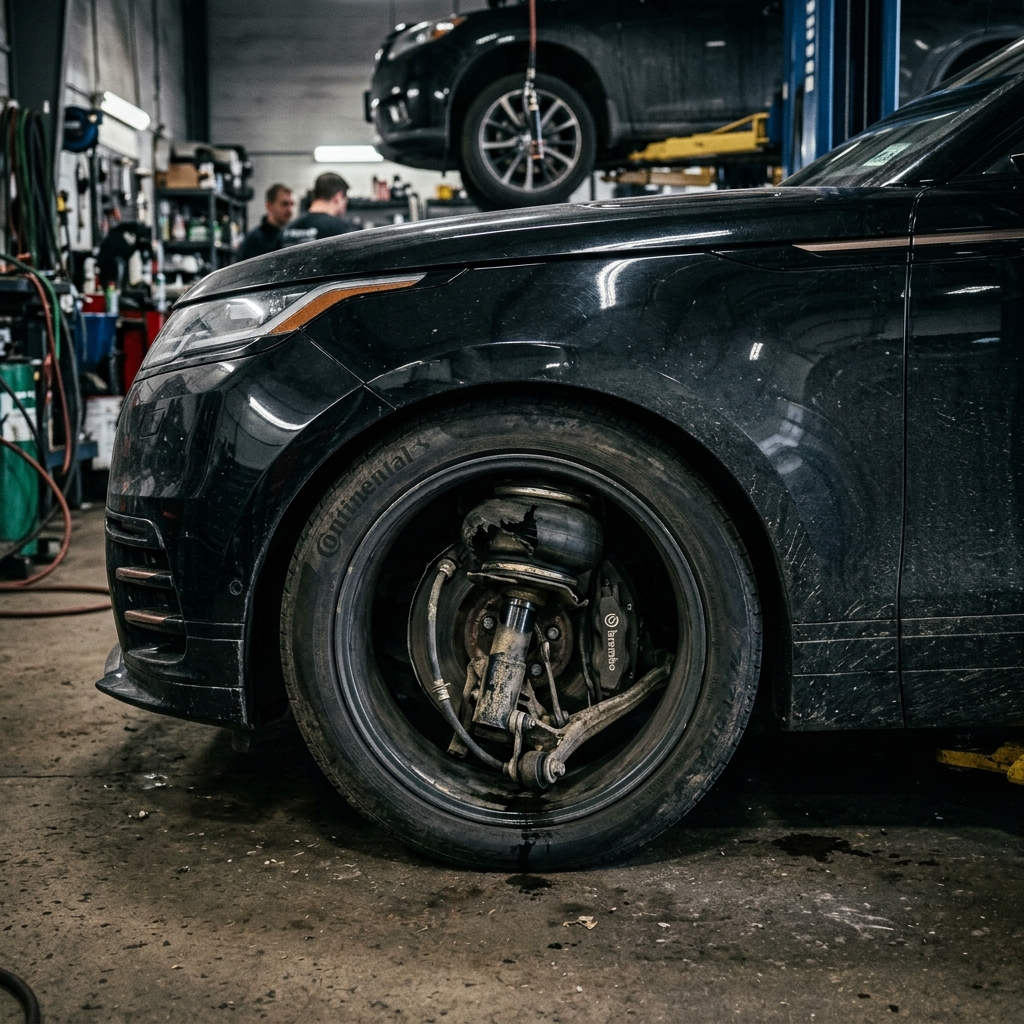
The AJ133 routes coolant through the engine valley via a plastic Y-pipe and crossover pipes that run in the V between the cylinder banks. The supercharger sits on top of them.
The Failure
- Thermal cycling: The valley is extremely hot adjacent to the supercharger. The plastic pipes bake and become brittle.
- Hidden leak position: The pipes are underneath the supercharger. A leak is invisible from standard underhood inspection.
- Consequence: The car loses coolant slowly. No warning light triggers until the system is critically low. Then sudden overheating.
- Mileage: 60,000-100,000 miles.
The Fix
Aluminum cooling kit replaces the OEM plastic valley pipes with fabricated aluminum alternatives:
- Cost: $2,000-$4,000 (parts and labor).
- Availability: Multiple aftermarket suppliers (Euro AMP and others).
- Recommendation: Mandatory on any AJ133 vehicle over 60,000 miles.
Caution
Do not buy a high-mileage Range Rover, F-Type, or XJ without verifying the valley cooling lines have been replaced. The failure is catastrophic, sudden, and totals the engine.
Related guide: Range Rover 5.0 SC Reliability: Common Problems & Repair Cost Guide ($5,000 - $25,000+)
2. Audi EA839 (2.9T) / BMW High-Output: Electric Pump Failure
Modern performance engines use electric water pumps for precise thermal management. The electric pump eliminates the parasitic drag of a belt-driven unit, but it introduces a different failure mode:
- Failure: Electric motor burnout or impeller failure. Pump simply stops working.
- Warning: Limited. Low coolant temperature gauge, P0128, or in the worst case overheating with very little warning.
- Mileage: 40,000-60,000 miles.
- Cost: $900-$1,800 (pump + coolant + adjacent plastic pipe inspection).
Affected platforms:
- Audi EA839 (2.9T) - RS4, RS5, SQ5.
- BMW N63 and S63 - ancillary cooling pump on turbo circuit.
- Mercedes M177 - primary and auxiliary pumps.
Warning
If a low coolant temperature light appears and the car is warm - pull over immediately. Electric pump failure at highway speed = destroyed head gaskets within 3 minutes.
3. BMW N63/S63: Plastic Coolant Pipe Network
The BMW N63 and S63 hot-V engines have a complex coolant circuit with multiple plastic components:
- Main engine circuit: Plastic expansion tank, thermostat housing, radiator hose connectors.
- Turbo cooling circuit: Separate small-bore plastic pipes serving the turbo cooling water circuit.
- Failure mileage: 60,000-80,000 miles.
- Detection: Coolant loss over time, smell of hot coolant, white residue near pipe joints.
- Cost: $500-$1,200 to replace brittle pipes. Radiator: $800-$1,500.
Related guide: BMW N63 Reliability - he $10,000 Hot Reliability: Common Problems & Repair Cost Guide ($5,000 - $25,000+) | BMW S63 Engine Reliability
4. Thermostat Failure (All Platforms)
A thermostat that sticks open prevents the engine from reaching operating temperature:
- Extended cold-running: Engine runs rich, fuel dilutes oil, more wear per mile than at temperature.
- Modern ECU response: Injects less fuel (economy mode) before engine is warm - reducing effective fuel injection quantity.
- Cost: $300-$700 (thermostat replacement, most platforms).
- Diagnosis: Engine takes over 10 minutes to reach normal temperature, even on a warm day.
5. Preventive Cooling System Checks
| Check | Frequency | What You’re Looking For |
|---|---|---|
| Coolant level (reservoir) | Monthly | At/above minimum mark |
| Expansion tank condition | Annually | Cracks, discoloration |
| Coolant color | Every 2 years | Should be clear/bright. Brown = degradation |
| System pressure test | Major service | Detects micro-leaks |
Affected Cars by System:
- BMW N63 Reliability - he $10,000 Hot Reliability: Common Problems & Repair Cost Guide ($5,000 - $25,000+)
- BMW S63 Engine Guide
- Mercedes-AMG C63 Reliability: Common Problems & Repair Cost Guide ($3,000 - $4,500+) (electric pump)
- Audi RS5 Reliability: Pre-2019 Rocker Arm Failure & The $25,000 Engine Risk (EA839 pump)
Executive Buying Advice
For Jaguar/Land Rover: verify the valley cooling lines have been replaced with aluminum. For BMW and Audi: verify water pump and thermostat history on cars over 60k miles. For all: check expansion tank level and inspect for coolant residue on the engine's underside.