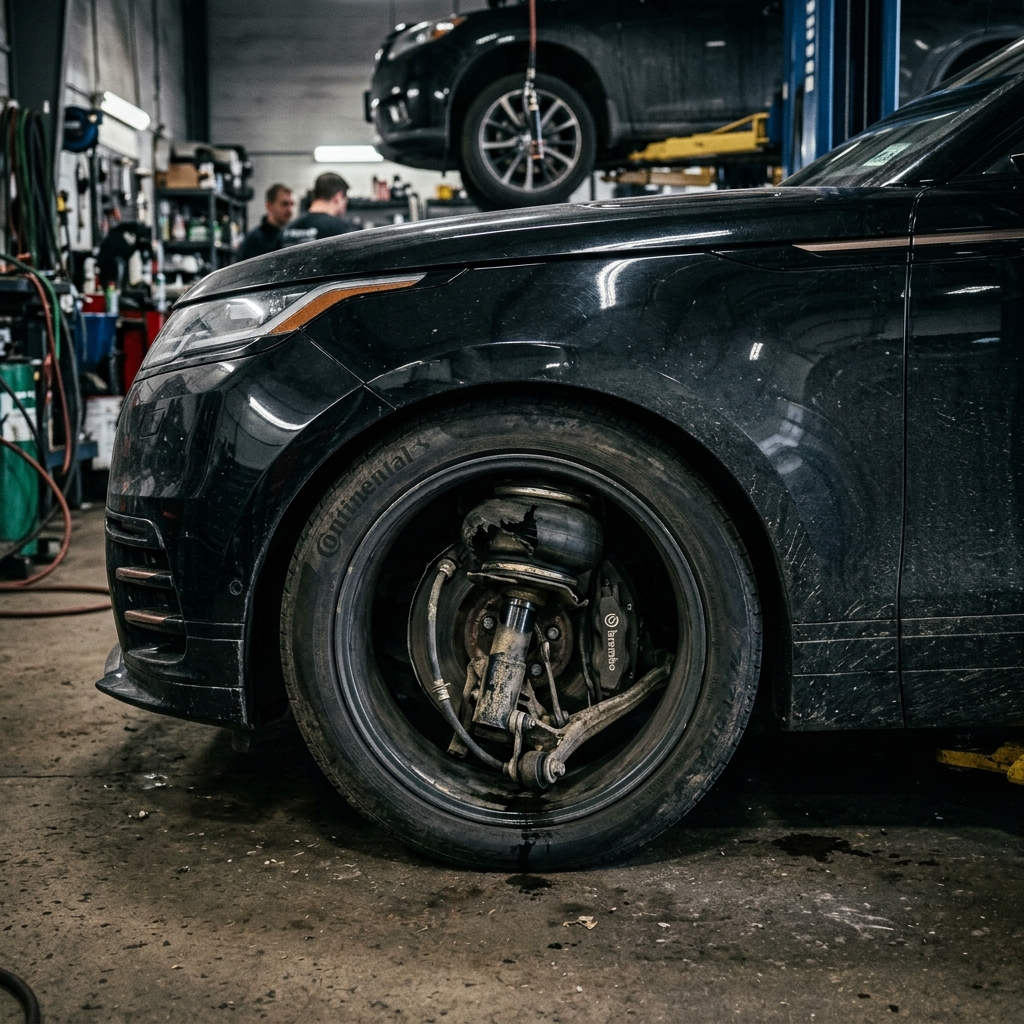
Air Suspension Failure Guide: Symptoms, Causes & Repair Costs
"Are you worried about a collapsed air suspension corner stranding your luxury car and forcing a $4,000+ dealer bill?"
Engine
7/10
Gearbox
8/10
Electric
5/10
Total Risk
6/10
Quick Verdict
Buy with CautionEssential to budget for every 7-10 years. Superior comfort with a high price tag.
Reliability Verdict
High maintenance burden. Components have a finite lifespan of 60,000 to 100,000 miles.
Executive Intelligence Summary
Air suspension failure diagnosis and repair. We cover leaking air springs, failed compressors, and valve block issues for Range Rover, Mercedes, and BMW.
In This Guide
Air Suspension Failure: The Complete Guide for Luxury Car Owners
Air suspension is one of the defining features of modern luxury car ownership - delivers ride quality that conventional coil springs cannot match, adapts to road conditions automatically, and raises the vehicle for off-road use or lowers it for aerodynamic efficiency.
However, air suspension is also one of the most common and expensive failure points in aging luxury vehicles. From the Range Rover’s “Easy Exit” stance to the S-Class’s “Airmatic” drop, understanding how these systems fail can save you thousands in diagnostic fees.
How Air Suspension Works
Unlike traditional suspension, air systems replace steel springs with rubber bags (air springs or struts) filled with compressed air.
- The Compressor: An electric pump that generates air pressure.
- The Valve Block: Distributes air to each individual wheel.
- The Air Lines: Plastic tubes that carry air from the pump to the struts.
- The Struts: The actual “springs” that hold the car’s weight.
Top 3 Failure Points
1. Air Spring / Strut Leaks
The most common failure. The rubber bladders dry-rot and develop micro-cracks over time (usually 7-10 years).
- The Symptom: One corner of the car is lower than the others after sitting overnight.
- The Danger: A leaking strut causes the compressor to run constantly to maintain height. This eventually burns out the $2,000 compressor.
2. Compressor Failure
When a compressor fails, the entire system stops working.
- The Symptom: “Suspension Fault” message on the dash. The car will not raise.
- The Root Cause: Usually a leak elsewhere in the system forced the pump to overheat and fail.
3. Valve Block and Sensor Malfunction
The car uses height sensors to “level” itself.
- The Symptom: The car sits at a bizarre angle while driving or refuses to level correctly on uneven ground.
- The Fix: Often simple sensor replacement or recalibration, but can require a new block.

Repair vs. Conversion
For older luxury cars where a full air suspension overhaul exceeds 50% of the vehicle’s value, many owners opt for coilover conversion kits.
- Pros: Zero future failure risk. Improved reliability.
- Cons: Loss of adjustable ride height. Slightly firmer ride. Lower resale value to purists.
Verdict
Air suspension is a magnificent luxury that carries a predictable expiration date. If your luxury car is approaching 80,000 miles, inspect the air bladders for cracking. Catching a leak early saves you the cost of a replacement compressor.
Related Guides
- Range Rover L405 Problems Deep Dive
- Mercedes S-Class Ownership Cost Analysis
- Porsche 911 Reliability & Real Costs