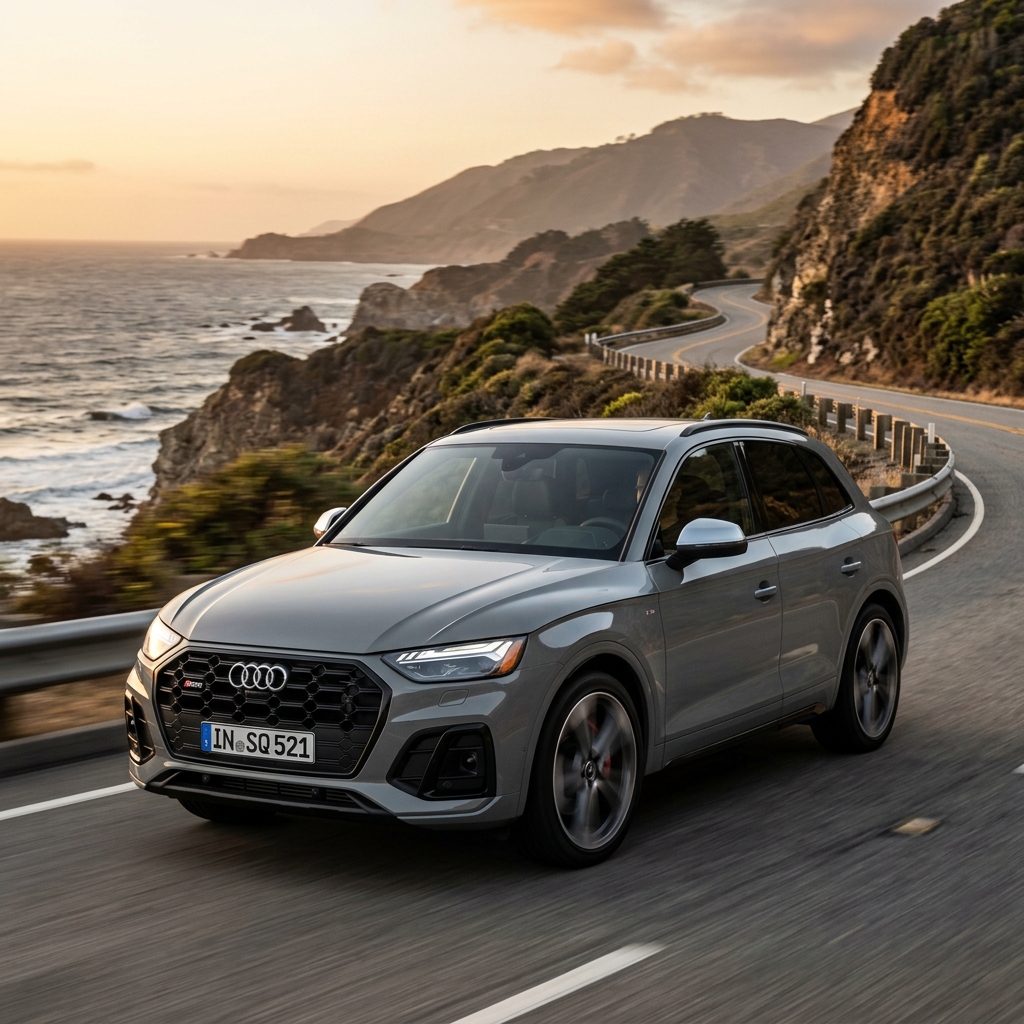
Audi RS5 B9 Reliability: The $15,000 Rocker Arm Risk
"Are you looking at a 2018 Audi RS5 and wondering why it's $10,000 cheaper than the 2020 model? There is a very specific, mechanical reason, and it lives inside the cylinder heads. This guide breaks down the mechanical reality of the EA839 rocker arm failure."
Engine
6/10
Gearbox
8/10
Electric
7/10
Total Risk
6/10
Quick Verdict
Buy with CautionA world-class daily driver provided you avoid the pre-revision rocker arms. The valvetrain is the deciding factor between a smart purchase and a financial catastrophe.
Reliability Verdict
The B9 RS5 is a dual-natured platform. 2020+ models are generally reliable, but 2018-2019 examples carry a catastrophic rocker arm design flaw that can destroy the entire engine valvetrain. Combined with a vulnerable plastic cooling system, the RS5 requires a 'supercar' maintenance budget.
Overview
Is the Audi RS5 B9 reliable? Technical guide to the EA839 rocker arm failure, charge-air cooler hydrolock risk, and why the July 2019 build date is the most important number in your purchase.
In This Guide
Audi RS5 B9 Reliability: The $15,000 Rocker Arm Truth
A world-class daily driver provided you avoid the pre-revision rocker arms. The valvetrain is the deciding factor between a smart purchase and a financial catastrophe.
The Audi RS5 B9 (2018-2023) is a masterclass in the “Swiss Army Knife” sports car. With the 2.9L Biturbo V6 developing 444 hp and Quattro AWD, it is as comfortable in a blizzard as it is on a track day. However, early owners have discovered that “German Engineering” sometimes comes with a $15,000 membership fee.
Point: The Audi RS5 B9 is not just one car; it is two distinct reliability profiles separated by a single date in July 2019.
Reason: Before this date, Audi utilized a needle-bearing rocker arm design that was prone to premature wear and catastrophic failure. After July 2019, a revised, thicker bearing was standard, fundamentally fixing the engine’s most significant flaw.
Example: A 2018 RS5 with 50,000 miles is statistically a “high risk” asset unless the build date has been verified or a borescope inspection has confirmed the revised parts. Conversely, a 2021 RS5 is a reliable, relatively worry-free performance machine.
Point: If you are buying a B9 RS5, your first question should not be about the color or the exhaust — it should be about the build date.
Repair costs for the 2.9T engine are dominated by the ‘engine out’ labor required for valvetrain work. Prepare accordingly.
Failure Probability Timeline
Generally reliable. Most issues at this stage are related to early software glitches.
- MMI Infotainment freezing
- Soft-close door sensor failure
- Parking sensor calibration
The 'Danger Zone' for early rocker arm failure and intercooler leaks.
- Rocker arm needle bearing failure (Pre-2019)
- Charge-air cooler internal cracks
- Water pump slow weep
General cooling system overhaul and carbon cleaning are baseline maintenance.
- Thermostat housing split
- Intake valve carbon buildup
- Control arm bushing cracks
*Data based on owner-reported failures and specialist shop frequency reports.
1. The Catastrophic Flaw: Needle Bearing Rocker Arms
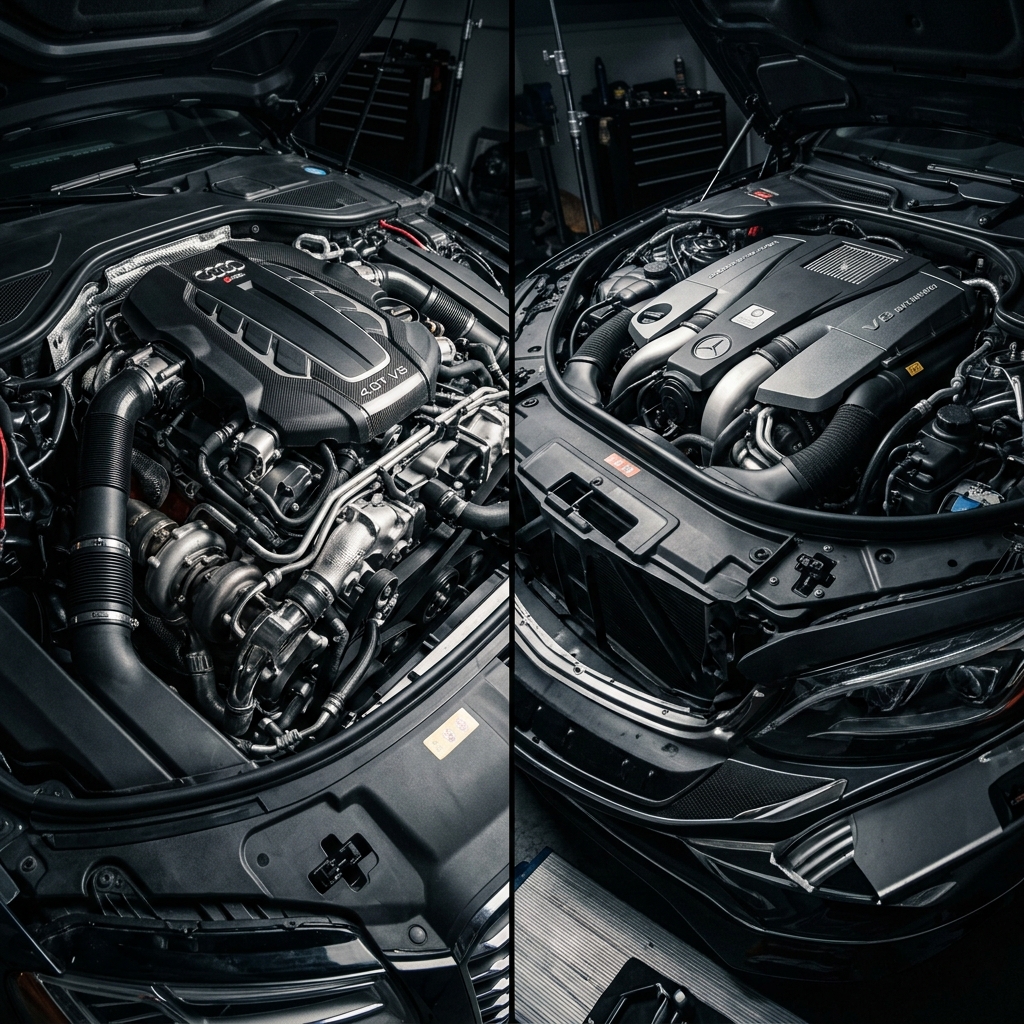
The EA839 2.9L V6 utilizes a complex valvetrain. In pre-July 2019 engines, the needle bearings inside the rocker arms were undersized and prone to shattering. When they fail, the rocker arm drops, leading to broken valve springs and, in worst-case scenarios, valves dropping into the cylinders.
Why it matters: Total engine destruction is the ultimate risk. If you hear a rhythmic “clicking” that is louder than the injectors, shut the engine off immediately. A full top-end rebuild costs between $10,000 and $15,000.
Caution
Build Date Verification: Check the sticker in the driver’s side door jamb. If the production date is 07/19 or later, the engine has the revised rocker arms. If it is earlier, you are playing the “Rocker Arm Lottery” unless you can verify a previous repair.
2. The Silent Killer: Charge-Air Cooler Hydrolock
When a plastic component causes a hydraulic lock.
The RS5 uses a “Water-to-Air” intercooler located in the front of the car. The end tanks are made of plastic and are known to crack or suffer from internal leaks.
Point: When the intercooler leaks internally, it allows coolant to be sucked directly into the intake tract.
Reason: Unlike air, coolant is a liquid and cannot be compressed. This leads to “Hydrolock,” where the pistons attempt to compress the liquid, usually resulting in bent connecting rods.
Example: An owner notices a “Low Coolant” warning with no visible leaks on the ground. Three days later, the engine shuts off with a loud clunk. The total diagnosis: $14,000 for a new short-block.
Solution: Proactively replace the factory plastic intercooler with an aluminum aftermarket unit (like Forge or Wagner) at 50,000 miles. It costs $1,800 but eliminates a $14,000 failure risk.
Continue Your Research
"At this stage, most RS5 buyers explore one of the following paths to refine their search:"
”The B9 RS5 is Audi’s most complete daily driver, but only if you respect the 60,000-mile maintenance wall.”
3. The “Plastic Refresh”: Cooling System Failure
Like all modern Audis, the cooling system is composed of heat-cycling plastic bit that eventually becomes brittle.
The Failure Points:
- Water Pump & Thermostat: Expect a leak between 50k and 70k miles. The leak often migrates into the vacuum lines, causing cascading sensor failures.
- Coolant Crossover Pipe: Located in the “Valley” of the V6, these pipes are a labor-intensive repair when they inevitably split.
Cost Reality: Budget $1,500 to $2,000 for a full cooling system “refresh” (Water pump, thermostat, and key hoses) if done at an independent shop. Dealers will quote closer to $3,500.
4. Transmission Intelligence: ZF 8HP Longevity
Dispelling the “Lifetime Fluid” Myth.
Audi claims the ZF 8-speed automatic is “sealed for life.” ZF, the company that actually builds the transmission, recommends fluid and filter changes every 40,000 to 50,000 miles, especially on high-output cars like the RS5.
Symptoms of Neglect:
- Harsh 2-1 downshifts when coming to a stop.
- “Lurching” in stop-and-go traffic.
- Hesitation during full-throttle upshifts.
Preventative Maintenance: A transmission service costs $600 to $900. Replacing a mechatronics unit or a full transmission costs $8,000+. The choice is simple.
RS5 B9 vs BMW M4 F82
The RS5 is the superior daily driver for most climates, provided the rocker arm revision is documented. Read the full RS5 vs M3 comparison
Final Verdict
"Target a 2020+ build to enjoy one of the market's most versatile performance cars with minimum anxiety."
You want a modern, twin-turbo V6 with AWD security and have verified the valvetrain is the revised design.
You are looking at the 'cheap' entry point and are prepared to pay for a top-end engine rebuild as an investment in the car's future.
Next Step: Based on your choice, here’s what to do next
Prepare for the ‘Quattro Tax’ — tires and brakes wear faster on AWD performance cars than their RWD counterparts.
Routine Maintenance Intervals (The Professional Path)
| Service | Interval | Cost (Indie) | Cost (Dealer) |
|---|---|---|---|
| Audi Oil Service (5W-40) | 5,000 Miles | $180 | $350 |
| Transmission Service (ZF 8HP) | 40,000 Miles | $650 | $1,100 |
| Spark Plugs (High Heat) | 30,000 Miles | $350 | $600 |
| Brake Fluid Flush | 2 Years | $150 | $300 |
| Front Brake Service (Pads/Rotors) | 30k Miles | $1,500 | $2,800 |
| Aluminum Intercooler Refresh | 50,000 Miles | $1,800 | N/A |
Before you finalize your purchase, verify the build date. If it’s pre-July 2019, the rocker arm history is the most valuable document in the folder.
Conclusion: The Ultimate All-Weather Instrument
The Audi RS5 B9 is one of the most complete performance cars ever created. It effortlessly blends Porsche-rivaling performance with the practicality of an A5. However, it is a high-strung mechanical ecosystem that does not tolerate deferred maintenance.
If you purchase a post-revision car and address the plastic cooling system before it fails, you are rewarded with a daily driver that feels like a supercar. If you ignore the build date, you may find yourself funding your mechanic’s retirement.
Related Authority Guides
- Audi 2.9T EA839 Engine: In-Depth Reliability Guide
- Maintenance Costs: RS5 B9 Year-over-Year Projections
- BMW M4 F82 Reliability: Addressing the $25,000 Crank Hub
Explore the Intelligence Hub
RS5 vs C63 vs M3: Maintenance Cost Showdown
We tracked the 3-year running costs of the big three German performance coupes. The results may surprise you.
B9 Plastic Refresh: A 60,000 Mile Survival Guide
The step-by-step priority list for keeping your Audi's cooling system from exploding.
RS5 Depreciation: When to Buy for Maximum Value
Analyzing the price floor of the B9 platform. Is now the time to move?
”Own the engineering, not just the badge. Stay informed.”
Unlock the $10,000 Pre-Purchase Inspection Checklist
Before you commit to a used luxury car, use a thorough inspection checklist to catch common failure points. Enter your email to download our pre-purchase inspection guide as a PDF.
The Final Decision: Worth It?
Worth it if:
- You have a trusted, brand-specialized independent mechanic.
- You maintain a strict $5,000-$10,000 liquid repair reserve.
- You value the driving experience over strict financial rationality.
Not worth it if:
- You are stretching your budget just to afford the purchase price.
- You rely exclusively on the dealership network for out-of-warranty maintenance.
- You expect Toyota-like reliability and predictable ownership costs.
Related Intelligence
Real Owner Symptoms
"I bought my 2018 RS5 with 42,000 miles. Three weeks later, I heard a metallic 'tap-tap-tap' that didn't sound like the normal injector tick. The shop found three fallen rockers on Bank 2. The bill was $11,800. If I had known about the July 2019 build cutoff, I would have waited."
Mechanic's Diagnosis Notes
We see RS5s for 'mystery coolant loss' constantly. 9 times out of 10, it's the plastic intercooler end tank cracking internally. If you don't catch it, you hydrolock the engine. Our advice: Replace the plastic intercooler with an aluminum unit at 50,000 miles regardless of condition. It's cheap insurance against a $20k short-block replacement.
Cost Transparency: Parts + Labor Breakdown
| Repair Job | Est. Parts | Est. Labor | Total Worst-Case |
|---|---|---|---|
| Rocker Arm Replacement (Both Banks) | $4,500 | $6,500 | $11,000 - $15,000 |
| Aluminum Intercooler (Charge-Air Cooler) Upgrade | $850 | $900 | $1,750 - $2,200 |
| Water Pump & Thermostat Refresh | $700 | $800 | $1,500 - $2,000 |
| PCV & Breather Hose Replacement | $350 | $400 | $750 - $1,000 |
| Carbon Cleaning (Walnut Blasting) | $200 | $800 | $1,000 - $1,300 |
| Front Lower Control Arms (Pair) | $800 | $700 | $1,500 - $1,800 |
Executive Buying Advice
Target a post-July 2019 build date (B9.5 or late B9) to avoid the needle-bearing rocker arm disaster. Always demand a pressure test of the charge-air cooler. Expect an annual maintenance reserve of $3,500.
What Owners Regret
"I wish I hadn't tuned my car before upgrading the intercooler. The extra boost pressure split the plastic end tank, and I ended up with a slightly bent rod on Cylinder 3. It turned a $1,500 upgrade into a $14,000 rebuild."
Lower-Risk Alternatives
- BMW M3 F80 (2015-2018) A more pure driver's car with its own 'Crank Hub' risk, but generally cheaper to maintain if the hub is addressed. Better steering feel, though lacks the RS5's all-weather confidence.
- Mercedes-AMG C63 W205 (2015-2021) The heart of a muscle car. The V8 soundtrack is unparalleled, but the rear-tire consumption and Hot-V heat issues create a higher annual running cost.
- Porsche Panamera 4S (971) Uses a detuned version of the same 2.9T engine but with Porsche's build quality. Higher entry price, but significantly better resale value and refined AWD systems.