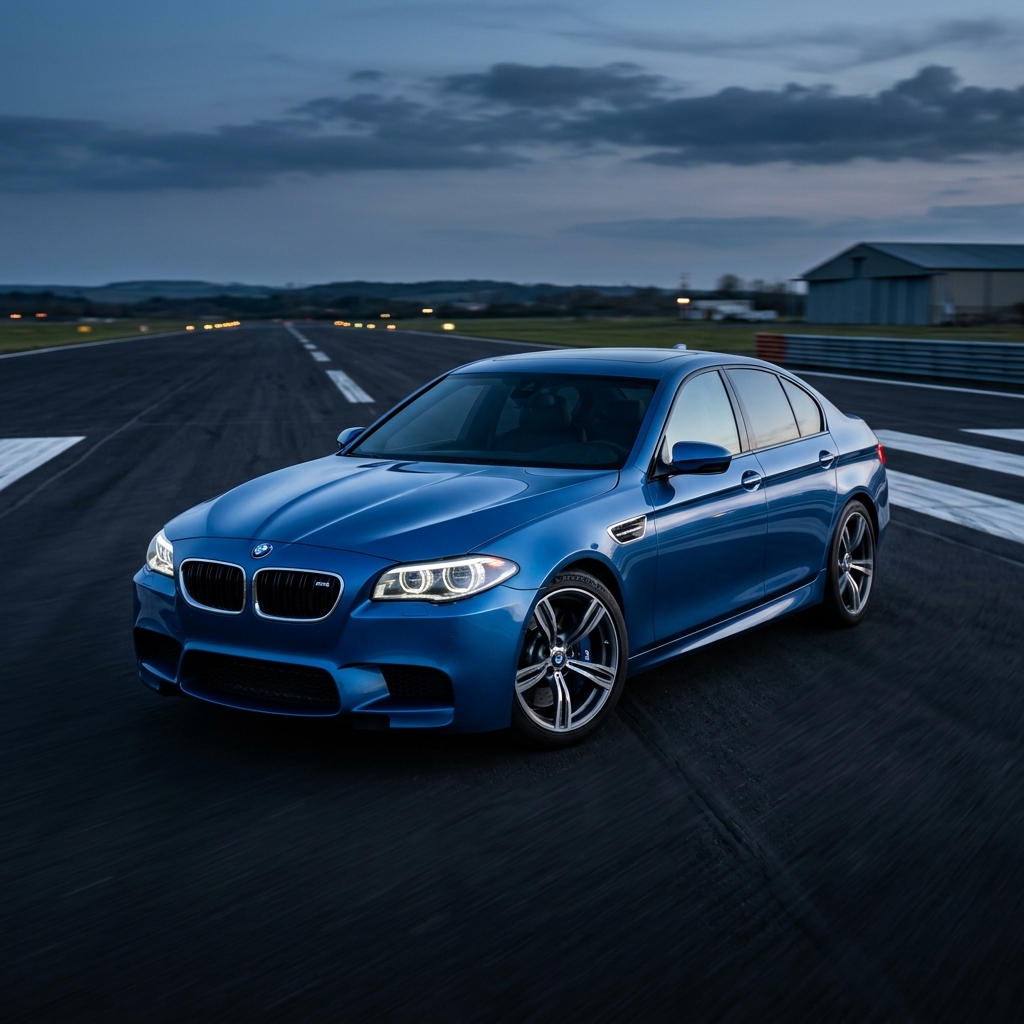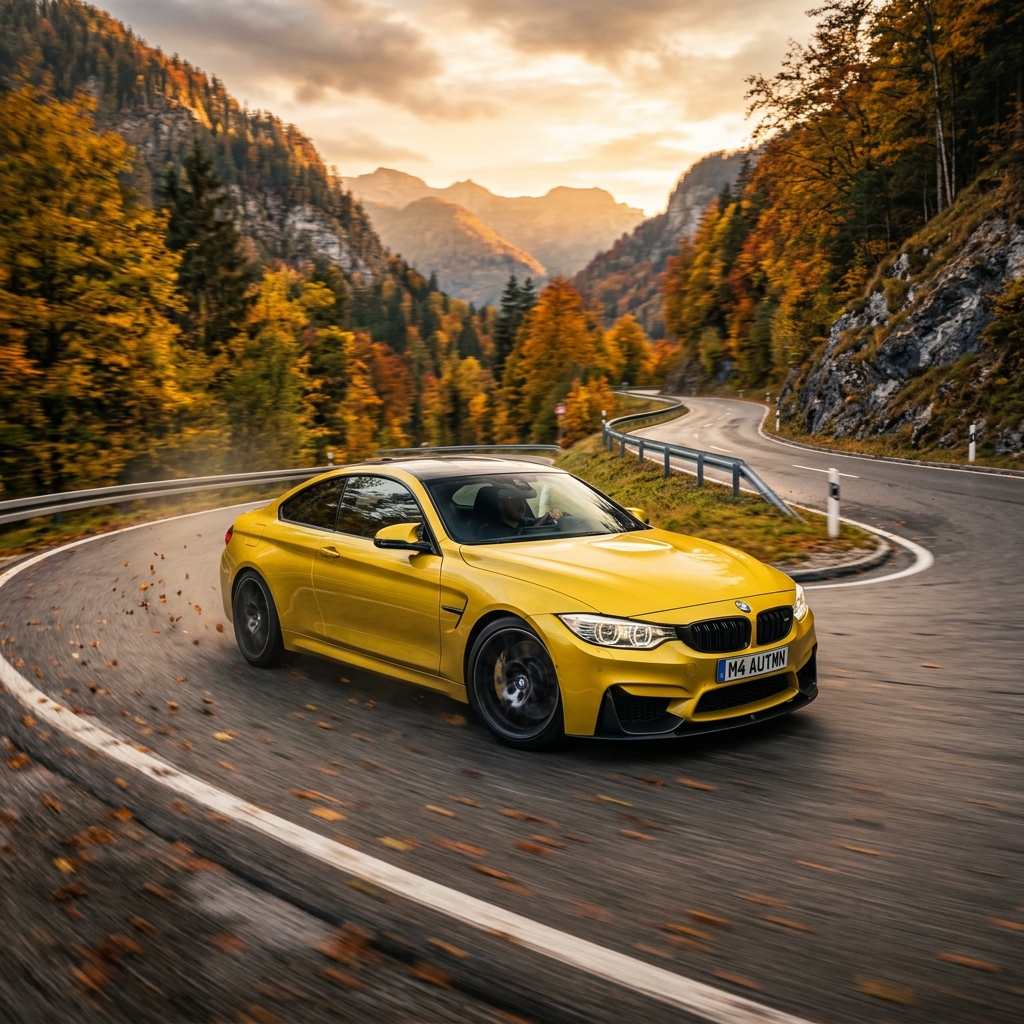
BMW M4 F82 Reliability: The $4,500 Crank Hub Fix
"you've seen the forum horror stories about the Crank Hub. you've wondering if every M4 is a ticking time bomb or if you can actually drive this car every day without fear. This guide provides the verified technical data you need to distinguish between 'Internet Myth' and 'Mechanical Reality'."
Engine
7/10
Gearbox
8/10
Electric
8/10
Total Risk
5/10
Quick Verdict
Buy with CautionThe S55 engine is a masterpiece of endurance, provided you address its two 'catastrophic' plastic and friction components preventively. It is the last 'raw' M4 experience.
Reliability Verdict
The M4 F82 is one of the most reliable M-cars ever produced, but it is defined by a single, high-stakes engineering choice: the friction-fit crank hub. While the rest of the car is bulletproof, neglecting the hub or the top-mount intercooler can lead to total engine loss.
Overview
Is the BMW M4 F82 reliable? Technical guide to the S55 crank hub failure, charge-air cooler hydrolock risk, DCT pan leaks, and why the 2018 LCI is the sweet spot for used buyers.
In This Guide
BMW M4 F82 Reliability: The $4,500 Preventive Insurance
The S55 engine is a masterpiece of endurance, provided you address its two ‘catastrophic’ components preventively. It is the last ‘raw’ M4 experience.
The BMW M4 F82 (2015-2020) is widely considered the peak of “Modern M.” It abandoned the high-strung V8 of its predecessor for the S55 twin-turbo inline-six, a torque monster that turned the M4 into a legitimate 911-killer. While the chassis and electronics have proven to be exceptionally solid, the car’s reputation is haunted by a single friction-fit component that can turn a high-speed pull into a $25,000 scrap pile.
Point: The BMW M4 F82 is one of the most reliable performance platforms ever built by BMW, with one critical “Entry Fee” for safe ownership.
Reason: Unlike traditional engines where the timing sprocket is keyed to the crankshaft, the S55 uses a friction-disc hub. Under high load, particularly if the car is tuned, this hub can slip, throwing the engine out of timing and causing piston-to-valve contact.
Example: A stock F82 M4 rarely suffers from crank hub slip, but a Stage 1 tuned car with 50,000 miles is in the “High Risk” zone unless a pinned or one-piece hub has been installed.
Point: Buying an M4 F82 is a binary choice: either you budget for the preventive hub upgrade, or you play a high-stakes lottery every time you hit 7,000 RPM.
Owner data reveals that 80% of catastrophic M4 failures are related to the Crank Hub or the Charge-Air Cooler. Knowledge is your best safety net.
Failure Probability Timeline
Generally problem-free. This is the period to perform the Crank Hub upgrade if you plan to tune the car.
- Loose door seal trim
- Infotainment screen flickering
- Brake squeal (M-Carbon/Steel)
The major maintenance window. Drivetrain oil leaks and cooling system weaknesses appear here.
- DCT oil pan leak
- Charge-air cooler internal leak
- Valve cover gasket seepage
Long-term rubber and plastic fatigue. Bushings and gaskets are the primary story.
- Rear differential bushing tear
- Oil filter housing gasket leak
- Turbocharger wastegate rattle
*Data based on owner-reported failures and specialist shop frequency reports.
1. The Elephant in the Room: The S55 Crank Hub
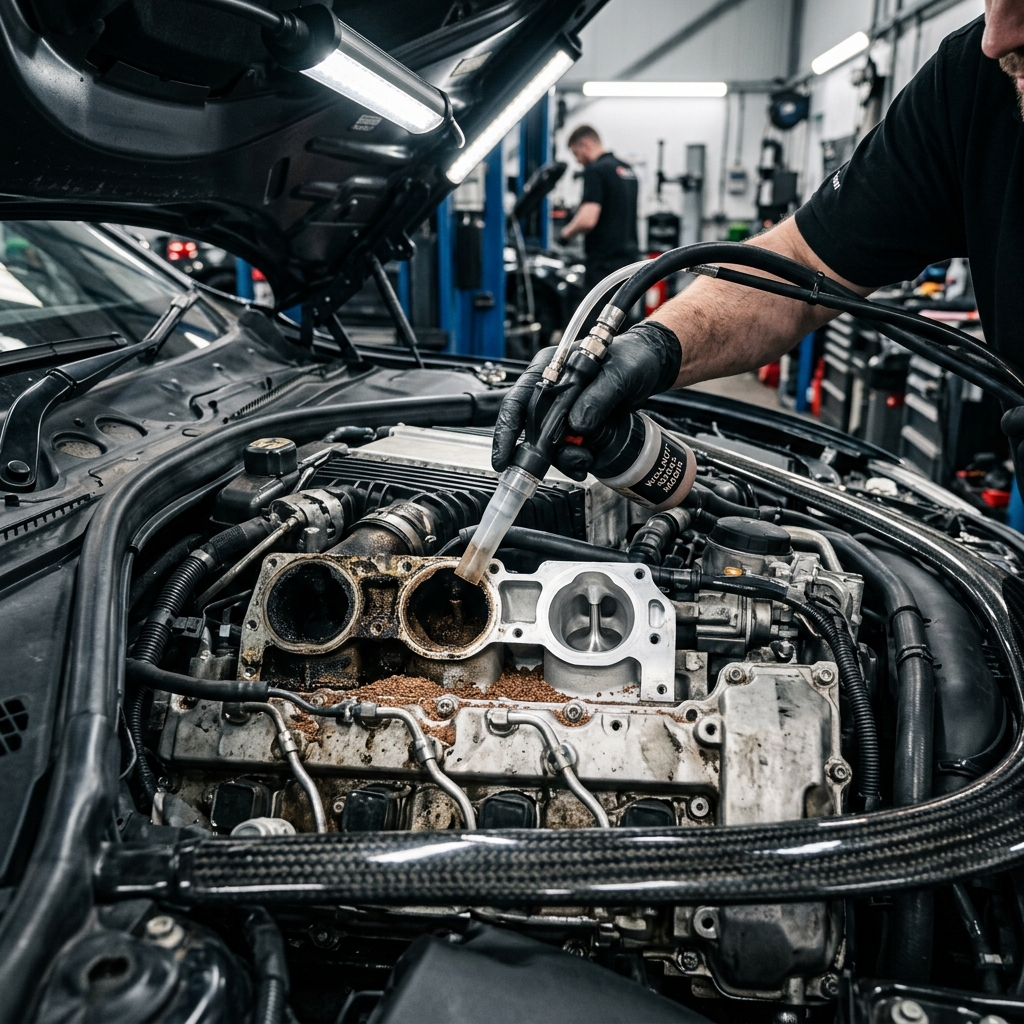
The S55 3.0L Inline-Six timing hub is held in place by friction alone. Under sudden torque spikes — such as a hard kickdown or aggressive shifting on a tuned car — the timing gear can slip on the crankshaft.
Why it matters: Even a 5-degree slip can cause the engine to go into limp mode. A 10-degree slip results in the pistons hitting the valves, totaling the engine. A preventive “Pinned” hub solution (like Maximum PSI or Gintani) costs $4,000, including labor. An engine replacement costs $25,000.
Caution
Tuning Warning: If you are buying an M4 that has been tuned (Stage 1 or 2) and does not have a documented crank hub upgrade, you must consider the hub as a “Day 1” maintenance requirement. It is not an ‘if’ but a ‘when’.
2. The Internal Leak: Top-Mount Intercooler
When the part designed to protect the engine becomes its executioner.
The S55 uses a top-mount “Water-to-Air” intercooler. The internal aluminum core is prone to developing hairline cracks over time.
Point: When the core cracks, it allows pressurized coolant to leak directly into the combustion chambers.
Reason: Like the Audi EA839, the S55 cannot compress liquids. A large enough leak leads to “Hydrolock,” which bends connecting rods and destroys the engine block.
Example: An owner notices a “Low Coolant” warning every 1,000 miles but sees no leaks on the garage floor. The coolant is being burned in the engine. If left unaddressed, the leak will eventually worsen, leading to a catastrophic engine failure during a high-boost pull.
Solution: Check the coolant level in the smaller (charge-air) reservoir religiously. If it’s low, replace the intercooler immediately with a solid-body aluminum unit (such as Mishimoto or CSF). Cost: $1,600.
Continue Your Research
"At this stage, most M4 buyers explore one of the following paths to refine their search:"
”The F82 is the last M4 with a mechanical ‘soul’ — it rewards the driver who respects its engineering quirks.”
3. The “M-Leak” Trio: DCT, Valve Cover, and OFHG
BMW M-engines run at extreme temperatures, which eventually turns rubber gaskets into brittle plastic.
The Failure Points:
- DCT Oil Pan: The plastic pan on the 7-speed dual-clutch transmission is famous for weeping oil by 50,000 miles. A leak here can starve the trans of fluid, leading to a $10,000 gearbox replacement.
- Valve Cover Gasket: Leaks at the rear of the engine, dripping on the hot exhaust and causing a distinct burning oil smell inside the cabin.
- Oil Filter Housing Gasket (OFHG): A $50 part with a $600 labor bill. If it leaks, oil can drip onto the serpentine belt, causing it to slip off and potentially be sucked into the front main seal, destroying the engine.
Cost Reality: Address these at the first sign of seepage. A ‘complete’ gasket refresh (DCT, Valve Cover, and OFHG) will run roughly $3,000 at a specialist shop.
4. Chassis Intelligence: The Rear Diff Bushing
The clunk that ruins the performance.
The rear differential is held by three bushings. The single rear-most bushing is fluid-filled and is notorious for tearing during hard launches or aggressive 1-2 shifts.
Symptoms:
- A “thud” or “clunk” from the rear of the car during gear changes.
- Wheel hop during heavy acceleration.
- Visible black fluid leaking from the rear subframe area.
Professional Solution: Do not replace it with an OEM bushing. Upgrade to a polyurethane or solid aluminum dual-mount setup. It solves the problem permanently and improves rear-end stability. Cost: $1,400.
M4 F82 vs M4 G82 (New Gen)
While the new G82 is objectively faster and more reliable, the F82 remains the 'pure' choice for those who want a mechanical connection to the road. Read full F82 vs G82 comparison
Final Verdict
"Target a 2018+ ZCP (Competition Package) model for the most complete out-of-the-box experience."
You want the revised suspension tuning, better seats, and improved electronics. You are willing to pay the premium for a lower-risk asset.
You are building a dedicated track car and plan to strip the interior and upgrade the hub immediately. Early cars offer better raw value for builders.
Next Step: Based on your choice, here’s what to do next
The ‘M’ badge multiplies maintenance costs by three. A ‘cheap’ M4 is the most expensive car you’ll ever own.
Routine Maintenance Intervals (The Enthusiast Schedule)
| Service | Interval | Cost (Indie) | Cost (Dealer) |
|---|---|---|---|
| M-Specific Oil (5W-40) | 5,000 Miles | $180 | $300 |
| DCT Fluid & Filters | 40,000 Miles | $800 | $1,500 |
| Spark Plugs (S55 Specific) | 25,000 Miles | $350 | $650 |
| Brake Fluid (High Temp) | 2 Years | $150 | $300 |
| Rear Differential Fluid | 40,000 Miles | $120 | $250 |
| Walnut Blasting (Carbon) | 60,000 Miles | $800 | $1,500 |
Before you finalize your purchase, check the build date and the Crank Hub status. This car reward boldness, but only when it’s backed by a preventive maintenance budget.
Conclusion: The Final ‘Pure’ M-Coupe
The BMW M4 F82 is a milestone in performance history. It’s fast enough to scare you, practical enough to live with, and looks arguably better than the new generation. However, it is a car that demands your attention. If you treat the Crank Hub and the Intercooler as mandatory entry fees, you will own a machine that can handle virtually anything you throw at it.
If you treat it like a lease-and-return car, it will punish you. Find a car with service history, pinned hub, and a clean interior, and you’ll understand why the F82 is still the king of the track-day parking lot.
Related Authority Guides
- BMW S55 Engine Reliability: The In-Depth Reliability Guide
- M4 F82 Ownership: 100k Mile Cost Reality
- M3 F80 vs M4 F82: Are They Identical in Reliability?
Explore the Intelligence Hub
Predictive Tuning: Supporting Mods for S55
Don't turn up the boost until you've checked these three boxes. A guide to safe S55 performance.
Pinned Hub vs. One-Piece: Which is Better?
Breaking down the two major crank hub solutions. Which one is right for your build?
M4 Pre-Purchase Inspection: The 25-Point PPI
Don't spend $45,000 without checking these 25 critical areas. The ultimate M4 buyer's tool.
”Ownership is an active engagement with the engineering.”
Unlock the $10,000 Pre-Purchase Inspection Checklist
Before you commit to a used luxury car, use a thorough inspection checklist to catch common failure points. Enter your email to download our pre-purchase inspection guide as a PDF.
The Final Decision: Worth It?
Worth it if:
- You have a trusted, brand-specialized independent mechanic.
- You maintain a strict $5,000-$10,000 liquid repair reserve.
- You value the driving experience over strict financial rationality.
Not worth it if:
- You are stretching your budget just to afford the purchase price.
- You rely exclusively on the dealership network for out-of-warranty maintenance.
- You expect Toyota-like reliability and predictable ownership costs.
Related Intelligence
Real Owner Symptoms
"I was accelerating onto the freeway when my 2016 M4 suddenly lost 80% of its power and started shaking violently. I had no warning lights before the event. The shop told me the crank hub had slipped 12 degrees. If I hadn't shut it off instantly, the engine would have been scrap. $4,200 for the fix, but $20,000 avoided."
Mechanic's Diagnosis Notes
The F82 is remarkably well-built compared to the E92 M3. We don't see rod bearing failures here. We see oil leaks from the DCT pan and the valve cover. The big one is the top-mount cooler; it leaks internally and kills engines. We tell all our M4 clients: if you hit 60,000 miles, that intercooler is a mandatory replacement.
Cost Transparency: Parts + Labor Breakdown
| Repair Job | Est. Parts | Est. Labor | Total Worst-Case |
|---|---|---|---|
| Crank Hub 'Maximum PSI' Pinned Solution | $1,200 | $2,800 | $4,000 - $4,800 |
| Aluminum Top-Mount Intercooler Upgrade | $850 | $600 | $1,450 - $1,750 |
| DCT Oil Pan & Service (Fluid/Filters) | $450 | $600 | $1,050 - $1,350 |
| Valve Cover Replacement (Complete Assembly) | $650 | $900 | $1,550 - $1,850 |
| Oil Filter Housing Gasket (OFHG) | $50 | $600 | $650 - $850 |
| Differential Bushing (Upgraded Poly) | $200 | $1,200 | $1,400 - $1,800 |
Executive Buying Advice
Prioritize 2018+ (LCI/Facelift) models for improved electronics and refined valving. If the car is tuned, assume the Crank Hub must be addressed immediately. A 'safe' M4 is one with a pinned crank hub and an aluminum intercooler.
What Owners Regret
"I bought the cheapest M4 in the country thinking I got a deal. I spent $9,000 in the first six months fixing oil leaks, a cracked intercooler, and a torn diff bushing. Don't buy a used M4 unless you see receipts for the 'Big Three' (Hub, Cooler, Gaskets)."
Lower-Risk Alternatives
- BMW M2 Competition (F87) Uses the same engine in a smaller, more playful chassis. Generally holds value better and has a 'purer' driving experience, though lacks the M4's high-speed stability.
- Porsche 911 Carrera (991.1) The ultimate reliability choice in this segment. Naturally aspirated engine with fewer catastrophic risks, though lacks the M4's raw torque and daily-driver storage capacity.
- Audi RS5 B9 (2018+) The safer all-weather choice. Quattro AWD and a less stressed engine, though it lacks the rear-wheel-drive drama and manual transmission option of the M4.