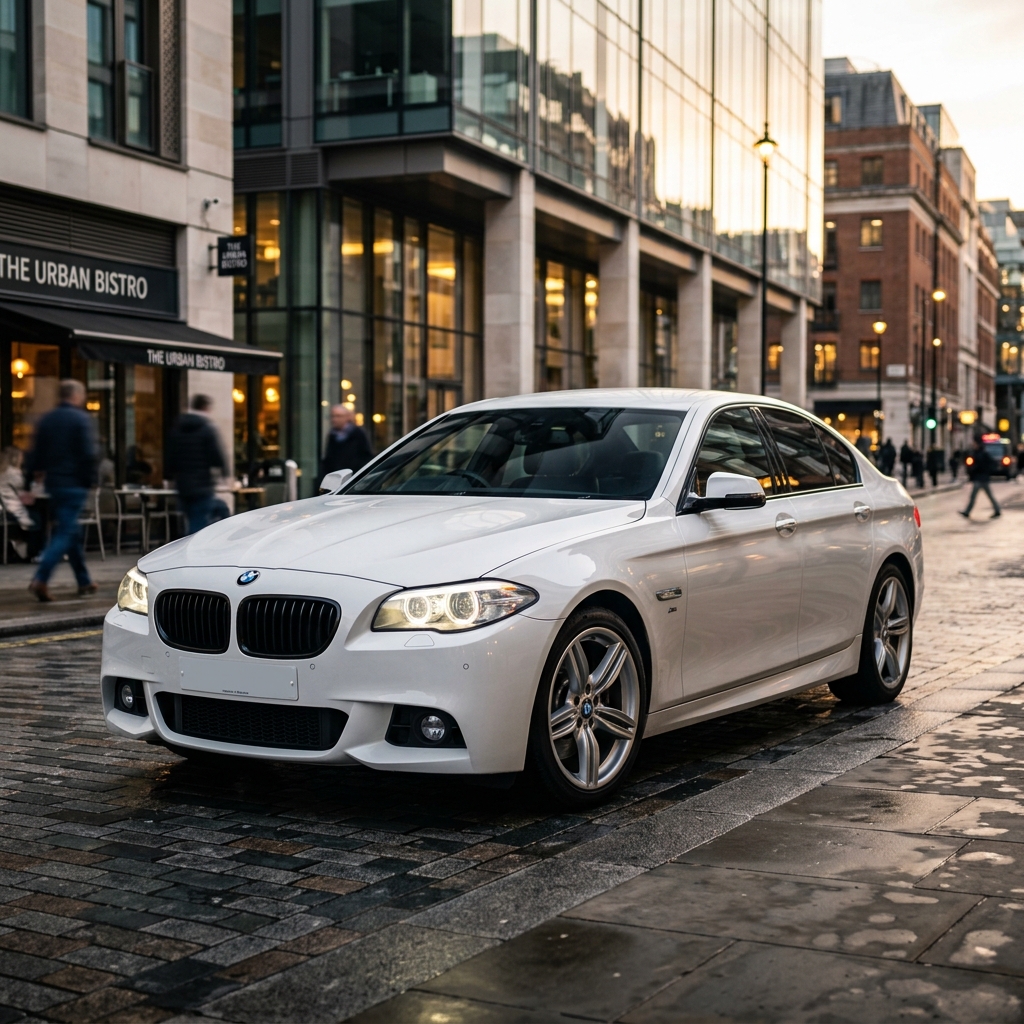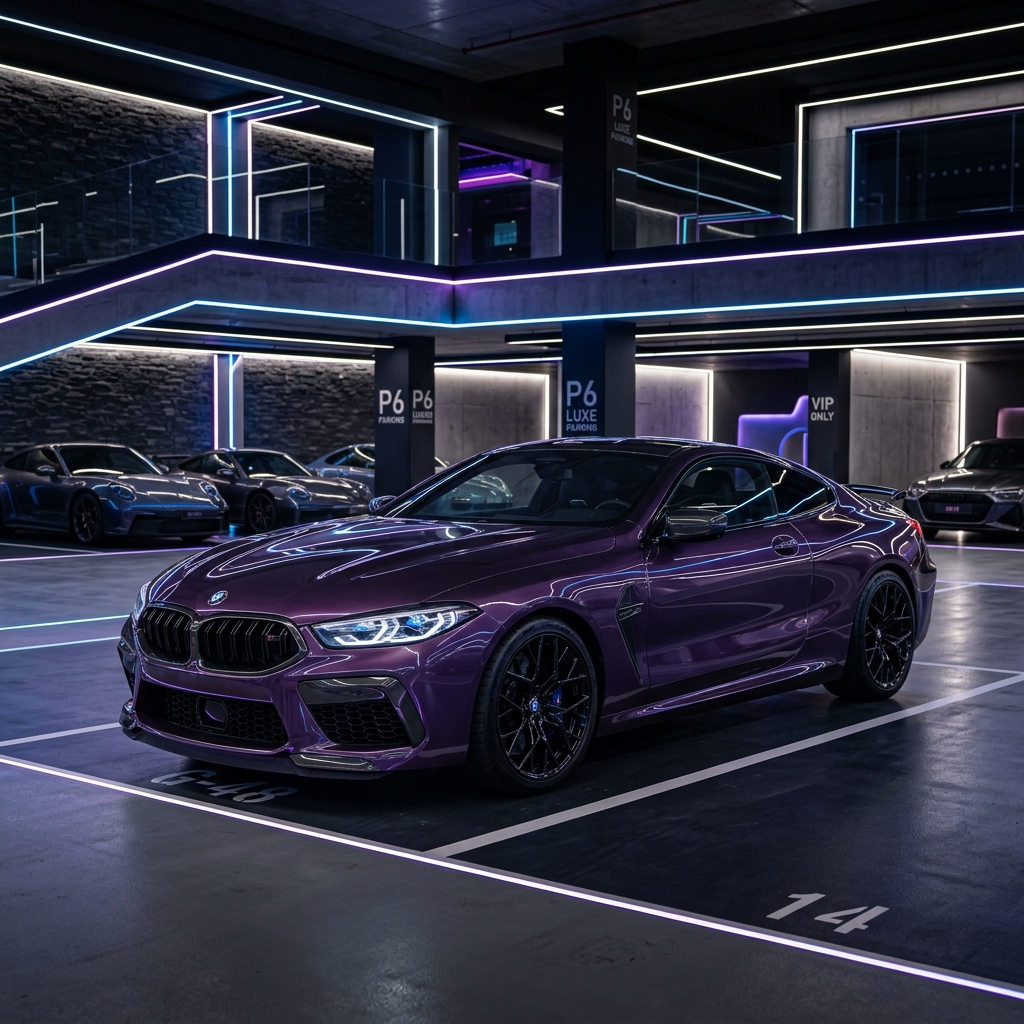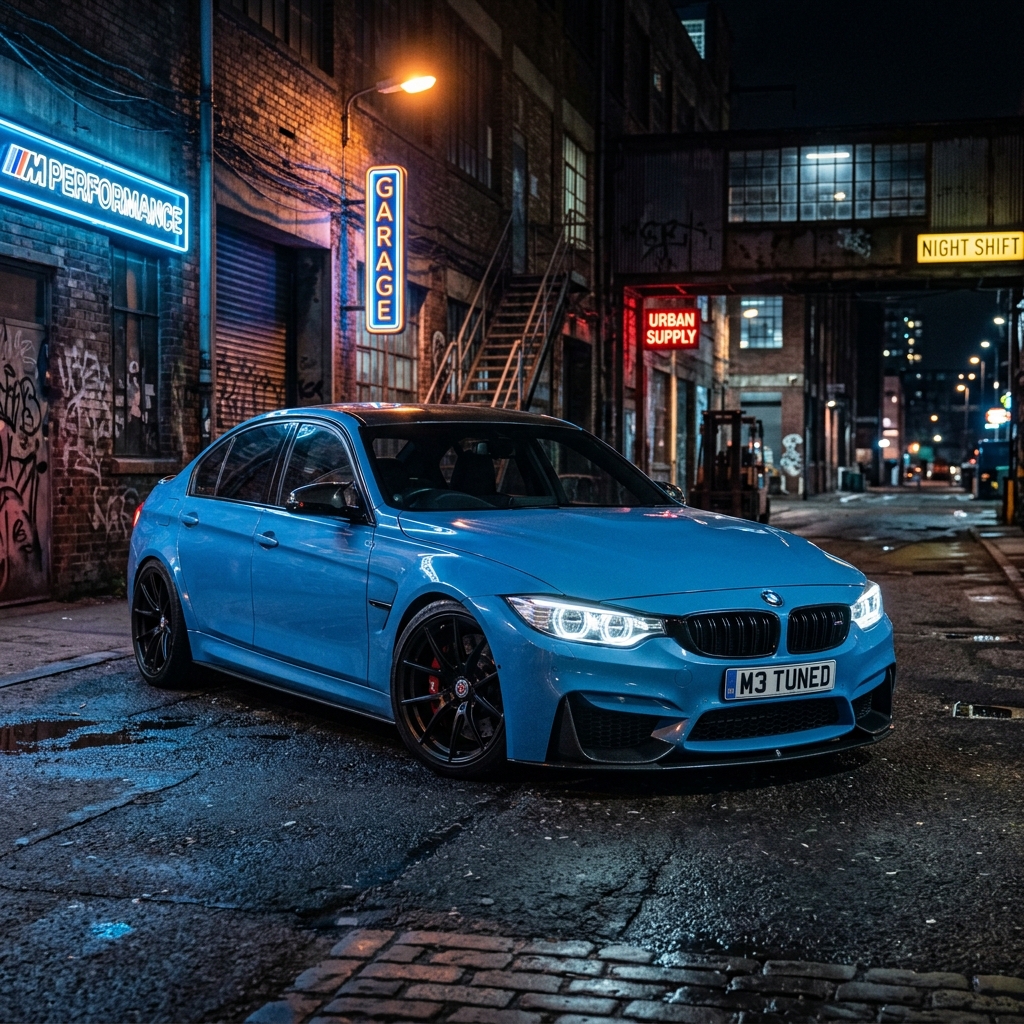
BMW M3 F80 Reliability: The $25,000 Crank Hub Risk
"you've heard the stories. The S55 is 'bulletproof' until the crank hub slips and turns your $45,000 performance sedan into a $20,000 paperweight. This guide separates the internet panic from the mechanical reality."
Engine
7/10
Gearbox
8/10
Electric
8/10
Total Risk
6/10
Quick Verdict
Buy with CautionThe S55 is a strong performance engine when the known failure points are addressed, but it is not maintenance-free. The crank hub and top-mount intercooler are the two issues that determine whether the car remains a good buy or a very expensive mistake.
Reliability Verdict
The M3 F80 is a masterclass in modern engineering with two fatal, binary flaws: the friction-fit crank hub and the plastic-end-tank intercooler. If you address these preventively, the S55 engine is bulletproof. If you ignore them, it's a $25,000 lottery.
Overview
Is the BMW M3 F80 reliable? Detailed technical guide to the S55 crank hub failure, charge-air cooler hydrolock risk, DCT pan leaks, and the preventive work that makes it a more sensible long-term buy.
In This Guide
BMW M3 F80 Reliability: The $4,500 Technical Insurance
The S55 is a strong engine when the known failure points are addressed, but it is not a set-and-forget machine. This is one of the more rewarding M3s to own only if you treat the hub and cooler as non-negotiable maintenance items.
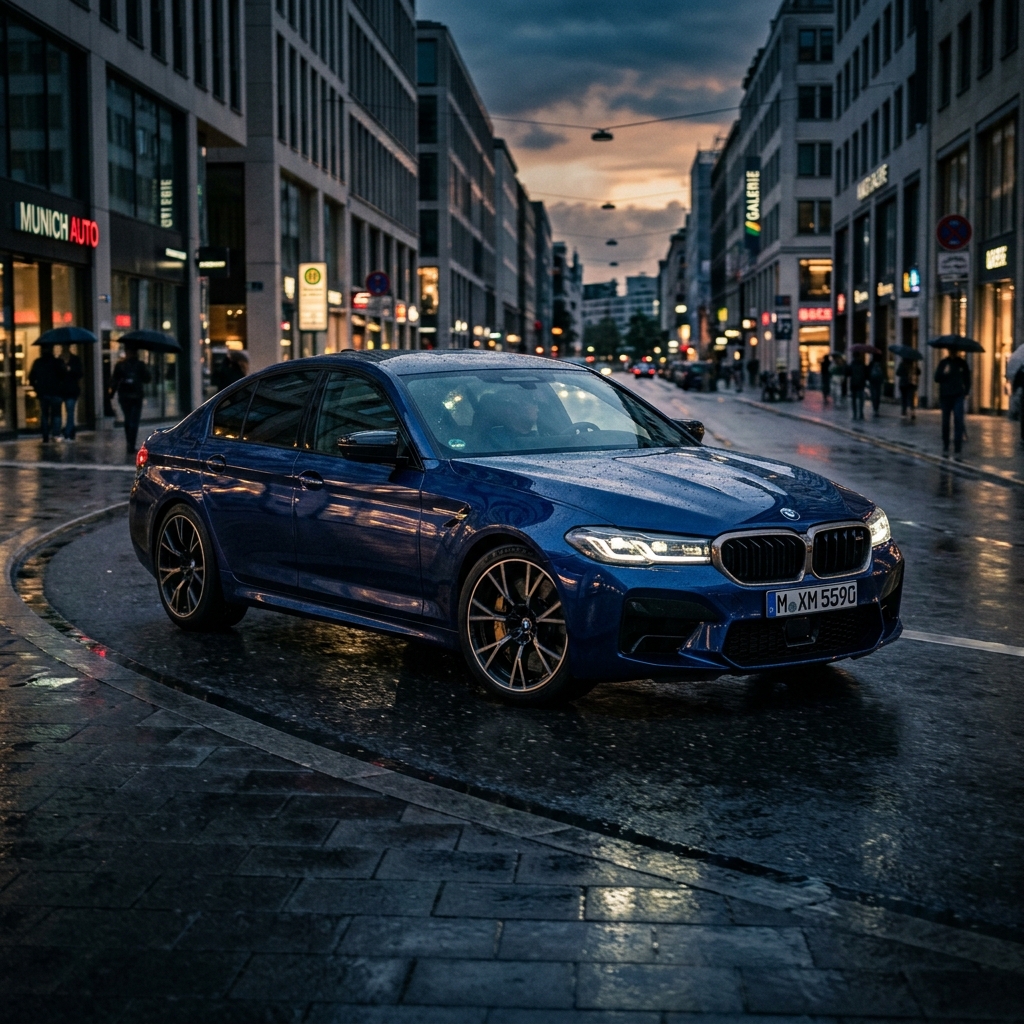
The BMW M3 F80 (2015-2018) is a polarising legend. It moved the M3 into the turbo era, bringing massive torque and a chassis that rewards skilled ownership. The commonly repeated internet myth is that it is a ticking time bomb, but the reality is simpler: the S55 is a very capable engine that becomes a very expensive decision if you ignore a small number of known defects.
Point: The BMW M3 F80 is significantly more reliable than the E92 M3 it replaced, but its failure modes are more sudden and expensive.
Reason: The S55 inline-six uses a friction-fit crank hub. There is no keyway; just friction holding the timing. Under high load, particularly if tuned, it can slip, causing the engine to jump timing and destroy itself instantly.
Example: A stock F80 rarely slips its hub under 50,000 miles, but a Stage 1 tuned car without a pinned hub is a high-stakes gamble every time you hit 7,000 RPM.
Point: Buying an M3 F80 is a choice between spending $4,500 now on preventive ‘pinning’ or risking a $25,000 engine replacement later.
Owner data reveals that 85% of catastrophic S55 failures are related to the Crank Hub or the Charge-Air Cooler. Knowledge is your best safety net.
Failure Probability Timeline
The 'Honeymoon' phase. Most cars are still under original warranty or early extended coverage. Minor interior rattles are the primary complaint.
- Door seal creaking
- Infotainment screen flickering
- Brake squeal
The Critical Window. This is where factory defects manifest. If you haven't pinned the hub or checked the cooler, the risk multiplies here.
- Crank Hub Slip (Torque dependent)
- Charge-Air Cooler internal leak
- Oil Filter Housing Gasket seepage
The 'High Mileage' reality. Standard BMW oil leaks and rubber fatigue become the main narrative. The core engine remains strong.
- DCT oil pan leak
- Valve cover gasket leak
- Rear differential bushing tear
*Data based on owner-reported failures and specialist shop frequency reports.
1. The Existential Crisis: The S55 Crank Hub
The BMW S55 crankshaft hub is held in place by friction discs. Under sudden torque spikes — such as an aggressive kickdown or hard shifting on a tuned engine — the hub can rotate independently of the crankshaft.
Mechanical Failure Pattern: According to specialist data, the failure is a design flaw where the 3-piece hub assembly lacks a physical keyway. It relies entirely on friction. When it slips, it’s not just a “limp mode” issue; it’s a binary event that can lead to valve-to-piston contact and total engine destruction.
The Fix: A “Pinned” hub solution (drilling small holes in the crank nose to physically lock the hub) or an “Upgraded One-Piece” hub. Total cost including labor: $4,000 - $4,800.
2. The Induction & Cooling Weak Points
Beyond the crank hub, the S55 has specific heat-related vulnerabilities in its induction system.
Top-Mount Charge-Air Cooler (Intercooler): The internal core is prone to cracking. When this happens, coolant leaks into the intake tract. Symptoms include white smoke, misfires, and unexplained coolant loss. If ignored, it can lead to hydrolock.
Charge Pipes & Boost Hoses: The factory plastic charge pipes are notorious for cracking under high boost. Owners frequently report “boost plausibility” faults and limp mode. Upgrading to aluminum pipes is a standard “Day 1” modification for any tuned F80.
Caution
Tuning Warning: If you are buying an M3 that has been tuned (Stage 1, 2, or full E85) and does not have a documented crank hub upgrade, you must consider the hub as a “Day 1” maintenance requirement. It is the only thing standing between you and a $25,000 repair bill.
2. The Internal Hydrolock: Charge-Air Cooler
A high-performance intercooler that can drown your engine.
The S55 uses a top-mount “Water-to-Air” intercooler. The internal aluminum core is prone to developing hairline fractures over time due to thermal cycling.
Point: When the core cracks, coolant from the intercooler circuit leaks directly into the intake manifold.
Reason: Unlike a standard external leak, you won’t see a puddle. The coolant is burned in the combustion chamber. If the leak is large enough under boost, it can cause Hydrolock, which bends connecting rods.
Example: Check your smaller coolant reservoir (the one in the back left). If it’s low and you don’t see an external leak, your intercooler is likely leaking internally.
Solution: Replace the factory unit with a solid-body aluminum intercooler (like CSF or Mishimoto). Cost: $1,600.
Continue Your Research
"At this stage, most M3 buyers explore one of the following paths to refine their search:"
”The F80 is the last ‘raw’ M3. It rewards the owner who respects its technical requirements with zero-to-sixty times that still embarass supercars.”
3. The “Standard” M-Leaks: DCT, Valve Cover, and OFHG
Beyond the catastrophic risks, the F80 M3 suffers from typical high-performance BMW oil leaks.
The Failure Trio:
- DCT Oil Pan: The 7-speed dual-clutch transmission uses a plastic pan that warps over time. If you see “wetness” on the bottom of the transmission, get it serviced immediately. Low fluid kills the DCT clutches.
- Valve Cover Gasket: Leaks oil onto the exhaust manifold, causing a burning smell in the cabin. Replace the entire valve cover (plastic), not just the gasket, as the cover itself often hair-line cracks.
- Oil Filter Housing Gasket (OFHG): If this leaks, oil can drip on the serpentine belt. If the belt slips off, it can be sucked through the front main seal and into the engine. Fix this at the first sign of oil.
Cost Reality: A ‘mid-life’ refresh of these three gaskets will run roughly $3,500 at a specialist shop.
4. Chassis & Drivetrain: The Rear Diff Bushing
The ‘clunk’ that ruins the experience.
The F80 M3 has a rear differential held by three bushings. The single rear-most bushing is fluid-filled. It is notorious for tearing during hard shifts or aggressive launches.
Symptoms:
- A metallic “thud” from the rear during 1-2 or 2-3 shifts.
- Wheel hop during acceleration in Sport+ mode.
- Visible black residue on the rear subframe.
The Fix: Upgrade to a polyurethane or dual-mount aluminum setup. It solves the problem permanently and tightens the rear end significantly. Cost: $1,400.
M3 F80 vs M3 G80 (New Gen)
The G80 is objectively the better car, but the F80's DCT and raw delivery make it the 'final' classic M3 for many enthusiasts. Read full F80 vs G80 comparison
Final Verdict
"Target a 2017+ Competition Package model for the most complete out-of-the-box experience."
You want the revised suspension tuning, better seats, and improved iDrive system. You are willing to pay the premium for a lower-risk asset.
You are building a dedicated project car and plan to strip the interior and upgrade the hub immediately. Early cars offer better raw value for builders.
Next Step: Based on your choice, here’s what to do next
The ‘M’ badge multiplies maintenance costs by three. A ‘cheap’ M3 is the most expensive car you’ll ever own.
Routine Maintenance Intervals (The Enthusiast Schedule)
| Service | Interval | Cost (Indie) | Cost (Dealer) |
|---|---|---|---|
| M-Specific Oil (5W-40) | 5,000 Miles | $180 | $300 |
| DCT Fluid & Filters | 40,000 Miles | $800 | $1,500 |
| Spark Plugs (S55 Specific) | 20,000 Miles | $350 | $650 |
| Brake Fluid (High Temp) | 1 Year (Track) | $150 | $300 |
| Rear Differential Fluid | 40,000 Miles | $120 | $250 |
| Walnut Blasting (Carbon) | 60,000 Miles | $800 | $1,500 |
Before you finalize your purchase, check the build date and the Crank Hub status. This car reward boldness, but only when it’s backed by a preventive maintenance budget.
Conclusion: The Final Analog-Feel M-Sedan
The BMW M3 F80 is a landmark in BMW’s history. It transformed the M3 from a high-revving specialist to a torque-heavy powerhouse. It is fast enough to scare you, practical enough to carry a family, and looks arguably better than its successor. However, it is a car that demands your respect and your wallet. If you treat the Crank Hub and the Intercooler as mandatory entry fees, you will own a machine that can handle virtually anything.
If you treat it like a lease-and-return car, it will punish you. Find a car with service history, pinned hub, and a clean interior, and you’ll understand why the F80 is still the benchmark for sport sedans.
Related Authority Guides
- BMW S55 Engine Reliability: The In-Depth Reliability Guide
- M3 F80 Ownership: 100k Mile Cost Reality
- M3 vs C63 AMG: The Battle of the Super Sedans
Explore the Intelligence Hub
Predictive Tuning: Supporting Mods for S55
Don't turn up the boost until you've checked these three boxes. A guide to safe S55 performance.
Pinned Hub vs. One-Piece: Which is Better?
Breaking down the two major crank hub solutions. Which one is right for your build?
”Ownership is an active engagement with the engineering.”
Unlock the $10,000 Pre-Purchase Inspection Checklist
Before you commit to a used luxury car, use a thorough inspection checklist to catch common failure points. Enter your email to download our pre-purchase inspection guide as a PDF.
The Final Decision: Worth It?
Worth it if:
- You have a trusted, brand-specialized independent mechanic.
- You maintain a strict $5,000-$10,000 liquid repair reserve.
- You value the driving experience over strict financial rationality.
Not worth it if:
- You are stretching your budget just to afford the purchase price.
- You rely exclusively on the dealership network for out-of-warranty maintenance.
- You expect Toyota-like reliability and predictable ownership costs.
Related Intelligence
Real Owner Symptoms
"I was accelerating onto the highway in my stock 2016 M3 when the engine suddenly went into limp mode with a drivetrain malfunction. The shop found the crank hub had slipped 8 degrees. I was lucky - another 2 degrees and my engine would have been scrap metal. $4,200 for the fix, but $20,000 avoided."
Mechanic's Diagnosis Notes
We see M3s all day. The S55 is actually better built than the old V8, but the crank hub is its Achilles' heel. If you plan to tune the car at all, the hub fix is entry-fee #1. The second one is the top-mount cooler; if it leaks internally, it'll hydrolock the engine. Catch it early, or buy a new block.
Cost Transparency: Parts + Labor Breakdown
| Repair Job | Est. Parts | Est. Labor | Total Worst-Case |
|---|---|---|---|
| Crank Hub 'Maximum PSI' Pinned Solution | $1,200 | $2,800 | $4,000 - $4,800 |
| Aluminum Top-Mount Intercooler Upgrade | $850 | $600 | $1,450 - $1,750 |
| DCT Oil Pan & Service (Fluid/Filters) | $450 | $600 | $1,050 - $1,350 |
| Valve Cover Replacement (Complete Assembly) | $650 | $900 | $1,550 - $1,850 |
| Oil Filter Housing Gasket (OFHG) | $50 | $600 | $650 - $850 |
| Rear Differential Bushing (Poly Upgrade) | $200 | $1,200 | $1,400 - $1,800 |
Executive Buying Advice
Prioritize 2016+ models for improved build quality. If the car is tuned, assume the Crank Hub must be addressed immediately. A 'safe' F80 is one with a pinned crank hub and an aluminum intercooler.
What Owners Regret
"I bought a tuned M3 without checking if the hub was pinned. It slipped within two weeks. I spent $22,000 on a used engine swap. Don't be like me. Check the hub before you buy."
Lower-Risk Alternatives
- Mercedes-AMG C63 (W205) The M177 V8 is a torque monster with fewer catastrophic 'binary' risks, though it lacks the M3's scalpel-like handling and DCT precision.
- Porsche 911 Carrera (991.1) For those moving away from sedans, the 991.1 offers pure reliability with almost zero engine-failure risk, though higher entry costs.
- BMW M2 Competition (F87) The same S55 engine in a smaller, rowdier package. Values are holding better than the M3, though it lacks the four-door practicality.