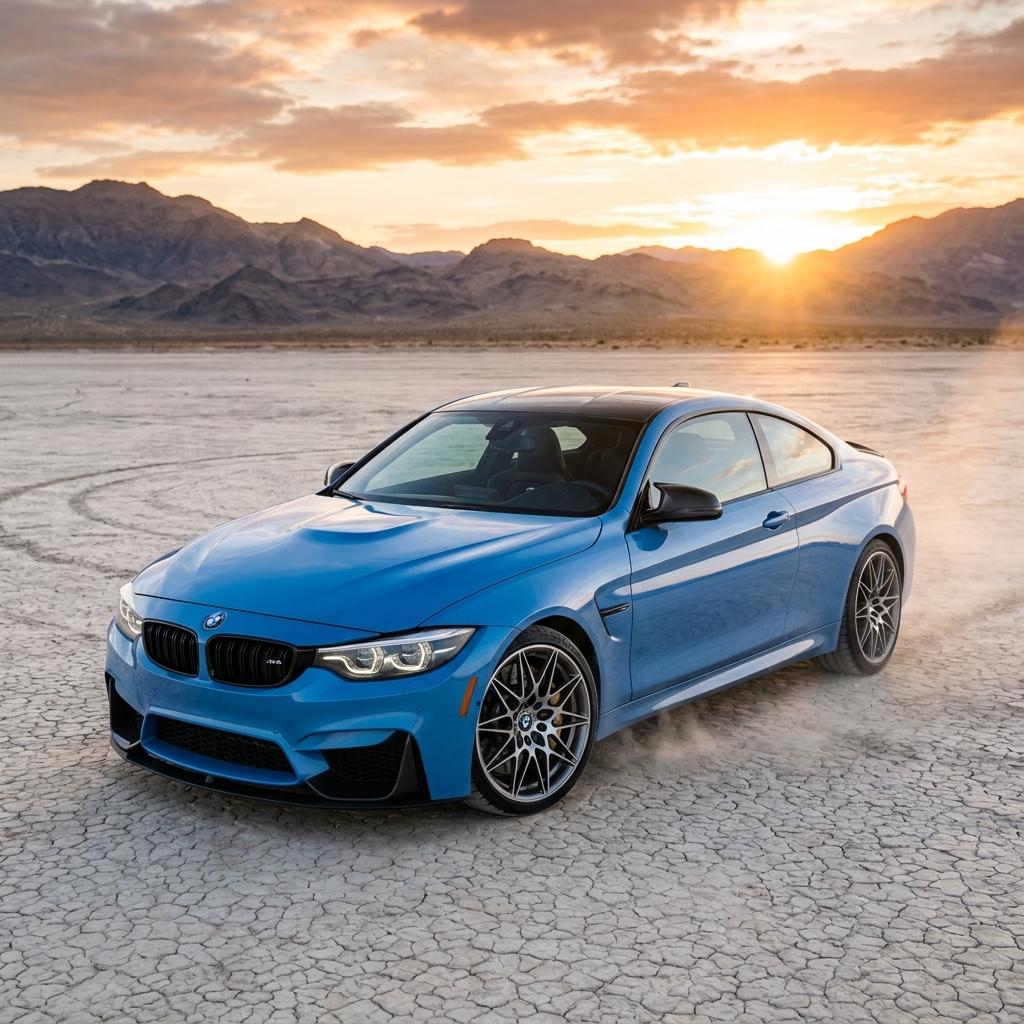
BMW S55 Engine Reliability: Crank Hub Failure & The $25,000 Rebuild Risk
"The S55 inline-6 powers the M3, M4, and M2 Competition. It's one of BMW's best engines, but the friction-fit crank hub is a ,000 gamble. Most owners don't know about it until it's too late."
Engine
6/10
Gearbox
6/10
Electric
5/10
Total Risk
5/10
Quick Verdict
Buy with CautionExpect significant running costs. Manageable if preventative maintenance is done.
Reliability Verdict
The S55 is an engineering marvel with an Achilles heel: the friction-fitted Crank Hub. It is not a matter of 'if' but 'when' for tuned examples, and a lottery for stock ones.
Overview
BMW S55 engine reliability: Crank hub failure risk, charge-air cooler issues, and oil consumption across M3 F80, M4 F82, M2 Competition.
In This Guide
1. Engine Overview: BMW S55 3.0L Twin-Turbo Inline-6
Vehicles Powered:
- BMW M3 F80 (2014 - 2018)
- BMW M4 F82/F83 (2014 - 2020)
- BMW M2 Competition F87 (2018 - 2020)
Output: 425 - 4 hp (stock), 550+ hp (tuned)
Architecture: 3.0L inline-6, twin mono-scroll turbochargers, direct injection
Reliability Score: 68/100 (Average for high-performance M engine)
Important
The S55 is “reliable for an M engine” but only with strict maintenance and proactive preventive work. Neglect or deferred maintenance leads to catastrophic failures.
2. The Critical Design Flaw: 3-Piece Crankshaft Hub
Engineering Background
Unlike traditional one-piece crankshaft designs, the S55 uses a 3-piece friction-fit hub assembly consisting of:
- Inner hub (pressed onto crankshaft)
- Friction disc (transfers torque)
- Outer timing sprocket (drives camshafts)
Design Intent: Reduce rotating mass, improve throttle response, enable higher RPM capability.
Fatal Weakness: The friction disc cannot reliably handle torque spikes from aggressive driving, launch control, or tuning. Under high load, the hub can slip, causing:
- Timing correlation faults
- Jumped timing (camshaft out of sync with crankshaft)
- Piston-to-valve contact
- Complete engine destruction
Failure Pattern (From Owner Data)
Mileage Range: Under 40,000 miles (tuned/track) to 80,000+ miles (stock)
Critical Finding: There is no reliable mileage threshold. Failures occur unpredictably, which drives constant owner anxiety.
Owner Rule: “High risk if tuned and driven hard without an upgraded hub, regardless of mileage.”
Failure Progression Timeline
Stage 1 (Silent Degradation):
- Hub begins slipping internally
- No audible warning
- No performance loss
- Duration: Days to months
Stage 2 (Fault Codes):
- Timing correlation codes appear (P0016, P0017)
- Rough idle
- Occasional misfires
- Duration: Hours to days
Stage 3 (Catastrophic Failure):
- Sudden loss of power during acceleration
- Piston-to-valve contact
- Bent valves, damaged pistons
- Engine rebuild or replacement required
Real Owner Experience
“I was on the highway doing a pull when the engine suddenly cut power. No warning, no noise — just dead. Tow truck, $18,000 engine replacement. I had 52,000 miles and the car was stock.” — F80 M3 owner, Bimmerpost
“The crank hub is the elephant in the room of S55 ownership. You either spend $3,000 preventively or gamble with a $15,000+ engine rebuild. There’s no middle ground.” — F82 M4 owner, Reddit
Cost Analysis
| Scenario | Cost (Independent) | Cost (Dealer) | Outcome |
|---|---|---|---|
| Preventive Upgrade | $2,000 - $4,000 | $4,000 - $7,000+ | Engine saved |
| Catastrophic Failure | $10,000 - $20,000+ | $15,000 - $25,000+ | Engine rebuild/replacement |
| Savings (Preventive) | $6,000 - $6,000 | $8,000 - $8,000 | - |
| Critical Window: 30,000 - 50,000 miles for preventive upgrade (especially if tuned or tracked). |
3. The Second Major Weakness: Charge-Air Cooler
Engineering Background
The S55 uses a top-mount water-to-air intercooler with plastic/aluminum end tanks and internal cooling cores. This design:
- Reduces intake air temperature (increases power)
- Fits within the engine bay packaging constraints
- Fails catastrophically when plastic cracks under heat/pressure cycles
Failure Pattern (From Owner Data)
Mileage Range: 60,000 - 80,000 miles (earlier on tuned/track cars)
Failure Mechanism:
- Plastic end tanks or core crack from heat cycling
- Coolant leaks internally into intake tract
- Coolant enters combustion chambers during boost
- Hydrolock: Coolant cannot compress, bends connecting rods
- Engine replacement required
Failure Progression Timeline
Stage 1 (Slow Leak):
- Unexplained coolant loss (1-2 cups per month)
- Sweet smell from exhaust
- No visible external leaks
- Duration: Weeks to months
Stage 2 (Active Leak):
- White smoke from exhaust (coolant burning)
- Misfires under boost
- Low coolant warnings
- Duration: Days to weeks
Stage 3 (Catastrophic Hydrolock):
- Sudden misfire during hard acceleration
- Bent connecting rods
- Cracked pistons
- Engine replacement required
Real Owner Experience
“I noticed a sweet smell from the exhaust but ignored it. Two weeks later, white smoke on a highway pull. Towed to the shop — bent rod from coolant ingestion. $12,000 for a used engine swap.” — F82 M4 owner, F80.Bimmerpost
“The charge-air cooler is a plastic time bomb. I upgraded to an aluminum aftermarket unit at 55k miles preventively. Best $1,800 I ever spent.” - 2 Competition owner, YouTube
Cost Analysis
| Scenario | Cost (Independent) | Cost (Dealer) | Outcome |
|---|---|---|---|
| Preventive Replacement | $1,200 - $2,500 | $2,500 - $4,500 | Engine saved |
| Catastrophic Failure | $10,000+ | $15,000+ | Engine replacement |
| Savings (Preventive) | $7,500+ | $10,500+ | - |
| Owner Rule: “Once past 60k, monitor coolant level and exhaust smoke; plan to address the cooler proactively if you’re tuned or track the car.” |
4. Other Common S55 Failures
Valve Cover Gasket
- Mileage: 50,000 - 70,000 miles
- Cost: $700 - $1,500 (independent) / $1,500 - $2,800 (dealer)
- Classification: Normal wear item / known weak point
Oil Pan Gasket
- Mileage: 70,000 - 90,000 miles
- Cost: $900 - $1,800 (independent) / $1,800 - $3,000+ (dealer)
- Classification: Normal wear item
- Note: Requires subframe drop (labor-intensive)
Turbocharger Oil Seals
- Mileage: 100,000+ miles (stock), 80,000 - 100,000 miles (tuned)
- Cost: $2,500 - $5,000+ (independent) / $5,000 - $9,000+ (dealer)
- Classification: Normal wear item / known weak point on modified cars
High-Pressure Fuel Injectors
- Mileage: 70,000 - 90,000 miles
- Cost: $800 - $1,800 (independent) / $1,800 - $3,000+ (dealer)
- Classification: Known weak point
5. S55 Reliability Score Breakdown
Overall Score: 68/100
| Category | Score | Rationale |
|---|---|---|
| Engine Reliability | 18/30 | Crank hub design flaw, charge-air cooler weakness |
| Drivetrain | 22/25 | DCT/6MT robust when serviced, driveline bushings wear normally |
| Electronics | 15/20 | Sensor failures common but not catastrophic |
| maintenance cost | 13/25 | High preventive costs required ($15k - 5k over vehicle life) |
6. Can the S55 Last 200,000 Miles?
Answer: Yes, but only if:
- Crank hub upgraded to pinned/one-piece design by 30,000 - 50,000 miles
- Oil changes every 5,000 miles (not factory 10,000-mile interval)
- Charge-air cooler replaced/upgraded proactively around 60,000 - 80,000 miles
- Valve cover, oil pan gaskets addressed at first sign of seepage
- $15,000 - $25,000 maintenance budget over vehicle life
Reality Check: Most S55-powered vehicles will not reach 200,000 miles due to:
- Deferred maintenance (owners skip preventive crank hub/cooler work)
- Catastrophic failures totaling the car
- Cost of ownership exceeding resale value
7. Vehicles Powered by S55 Engine
BMW M3 F80 (2014 - 2018)
- BMW M3 Reliability: 7 Common F80 Problems & The $15,000 Crank Hub Risk
- BMW M3 F80 Ownership Costs
- Used BMW M3 F80 Buying Guide Reliability & Real Costs
BMW M4 F82/F83 (2014 - 2020)
- M4 F82 Reliability & Real Costs
- BMW M4 F82 Ownership Costs
- Used BMW M4 F82 Buying Guide Reliability & Real Costs
8. Final Verdict
The S55 is a high-performance engine with two catastrophic design flaws:
- 3-piece crank hub (unpredictable failure, $10k - 0k+ repair)
- Plastic charge-air cooler (hydrolock risk, $10k+ repair)
Ownership Strategy:
- Budget $5,000 minimum emergency fund
- Perform preventive crank hub upgrade by 70,000 miles
- Replace charge-air cooler proactively around 60,000 - 80,000 miles
- Expect $2,500 - $4,000/year in maintenance
For Buyers:
- Avoid if you cannot afford preventive work
- Verify crank hub upgrade and charge-air cooler replacement on used cars
- Budget $15,000 - $25,000 in maintenance over 100,000 miles
Executive Buying Advice
If you plan to tune, the Crank Hub fix is mandatory, not optional. Use 5W-40 oil, change every 5k miles. Monitor charge cooler coolant levels weekly.