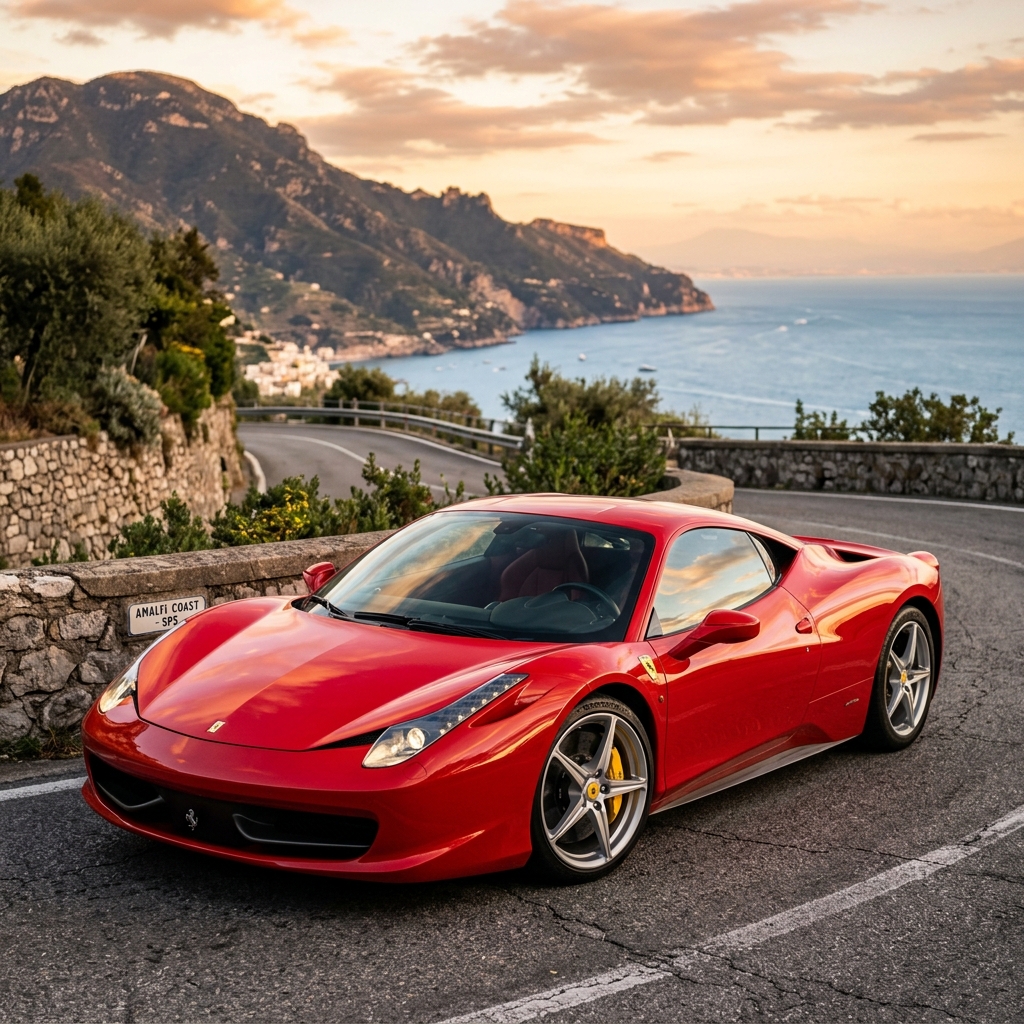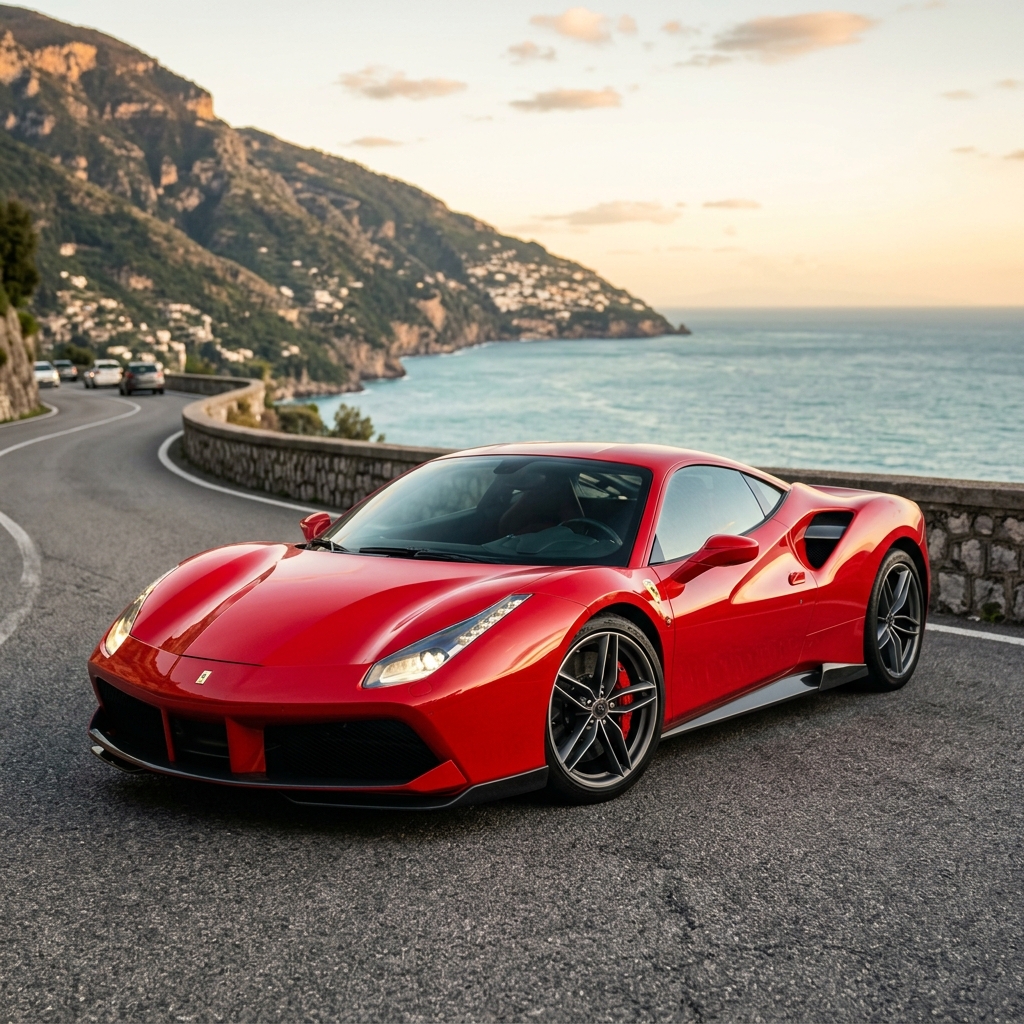
Ferrari 458 Italia: Complete Reliability & Issue Guide
"The Ferrari 458 might be the greatest mid-engine V8 ever made - but one failed speed sensor can cost more than a used Honda Civic. Before you sign, read the 3 recalls and 5 failure modes that separate dream ownership from financial disaster."
Engine
8/10
Gearbox
6/10
Electric
7/10
Total Risk
7/10
Quick Verdict
Buy with CautionExpect significant running costs. Manageable if preventative maintenance is done, but the DCT speed sensor is a known $8,000+ risk.
Reliability Verdict
The Ferrari 458 is mechanically solid but electrically complex. The primary 'death-sentence' repairs are the Getrag DCT sensor ($10k) and the Intake Manifold Actuators. Most cars also suffer from 'melting' interior buttons which is a mandatory $3k base-line repair.
Executive Intelligence Summary
Ferrari 458 Italia ownership truth: Getrag DCT speed sensor failure, PCV/oil separator risk, CCB brake overhauls, and a buy-or-avoid decision path backed by specialist data.
In This Guide
Ferrari 458 Reliability: The Final N/A V8 vs The $15,000 DCT Risk
Unexpected repair costs can quickly change the ownership experience.
The Ferrari 458 Italia is not just a supercar; it is a historical landmark representing the final evolution of the naturally aspirated Ferrari V8. It is widely considered the most accessible and reliable mid-engine Ferrari ever built.
But owning a Pininfarina icon built in Maranello means accepting the reality of Italian high-performance engineering. It is a vehicle where a single transmission sensor failure can trigger a five-figure repair bill.
Estimated baseline repair costs can vary significantly depending on total failure timing. Prepare accordingly.
Failure Probability Timeline
Electronic gremlins and battery-related faults dominate the early ownership phase.
- Weak factory battery causing Manettino errors
- TFT display delamination
- TPMS sensor batteries dying
The Getrag 7-speed DCT hits its specific speed sensor wear cycle.
- DCT Speed Sensor failure (Gearbox Failure light)
- Secondary gearbox oil pump leaks
- Main seals weepage
Mechanical wear in the intake and active chassis becomes prominent.
- Intake manifold actuator seizure ($10k)
- CCB brake disc pitting ($20k+)
- Magneride damper leaks
*Data based on owner-reported failures and specialist shop frequency reports.
1. Primary Powertrain Problem: The Getrag DCT Crisis
The 458 utilizes the Getrag 7DCL750 dual-clutch transmission. It shifts flawlessly, but it is notorious for a single internal failure: the speed sensor pack.
Why it matters: When the sensor fails, the car skips gears (R, 2, 4, 6) and throws a “Gearbox Failure” light. Ferrari dealers will not crack open the casing; they immediately quote a $25,000 - $32,000 factory crate replacement. Fortunately, independent specialists can open the gearbox, replace the $800 sensor kit, and reseal it for $8,000 - $12,000.
If you are buying a 458 with more than 20,000 miles, you must secure exact documentation that a 'Level 3' independent gearbox service has been completed, or negotiate $10,000 off the asking price.
At this point, most buyers explore independent service networks or evaluate different exotics.
2. Component Longevity: The Sticky Interior Reality
When heat turns luxury into a chemical disaster.
Ferrari used a soft-touch chemical coating on plastic interior parts (window switches, climate dials, reverse buttons) that degrades violently when exposed to UV light and ambient heat. Over time, it turns into a wet, sticky, black tar.
Why it matters: This is an inevitable flaw. You must remove every affected interior piece, chemically strip the coating, and laser-etch the icons back into the bare plastic. Depending on severity, this refinishing process costs $3,000 to $8,000.
Continue Your Research
"At this stage, most buyers explore one of the following paths to refine their search:"
”When parts fail out of warranty, you are exposed to dealership labor rates. Preventative maintenance is critical.”
3. High-Cost Issue: The Flat-Plane F136 V8 Durability
The 4.5L Flat-Plane Crank V8 (F136) is a masterpiece. It represents a massive leap forward from the F430 by utilizing timing chains rather than fragile belts.
Why it matters: The engine core is essentially bulletproof, but 2010 - 011 models had a massive crankshaft defect recall that could lead to engine seizure. All cars currently trading should have had this fixed. The primary long-term threat is the Intake Manifold Actuator. Its internal bearings seize from heat, requiring a $10,000 factory replacement.
Warning
Actionable Verdict: Prioritize 2012+ model years. The 2012 cars received a major software update that smoothed out DCT shifting, improved transaxle hardware, and avoided the early crankshaft and adhesive-fire recalls completely.
Ferrari 458 vs McLaren 720S
The McLaren 720S annihilates the 458 in speed, but the 458 is dramatically cheaper to own. The 458 has stopped depreciating, effectively offsetting its repair costs. Read full comparison
Final Verdict
"The Ferrari 458 is functionally 'free' to own due to exactly zero depreciation. If you can float a $15,000 emergency repair fund for the DCT, it is the best 21st-century supercar experience on the market."
You demand raw emotion, an appreciating V8 asset, and accept the inevitability of Italian gearbox bugs.
You require hyperspeed and modern tech, and are willing to absorb a massive six-figure depreciation hit.
Next Step: Based on your choice, here’s what to do next
This is where routine ownership costs begin to scale. Preparing an annual budget is simply the cost of entry.
Routine Maintenance Intervals (The Exotic Reality)
Can you afford to maintain a 458 off-warranty?
| Service | Interval | Cost (Indie) | Cost (Dealer) |
|---|---|---|---|
| Annual Fluid & Filter Service | 1 Year / 5,000 Miles | $1,200 | $1,800+ |
| Brake Flush & Battery Replacement | Every 2-3 Years | $800 | $2,100 |
| Sticky Button Interior Refinish | One-Off (Inevitable) | $4,000 | N/A (Factory Replace: $12k) |
| Getrag DCT Speed Sensor Service | 30k+ Miles (If Failed) | $10,000 | $30,000 (Crate Replace) |
Before you finalize your purchase decision, remember the golden rule of Italian exotics: Do not buy the cheapest one on the market. Buy the one with the thickest binder of independent service records.
Conclusion: An Investment in Emotion
The Ferrari 458 Italia is currently in an unprecedented sweet spot. As arguably the greatest naturally aspirated V8 of its era, its depreciation curve has plateaued and reversed.
While the DCT sensor and interior plastics are notorious, expensive flaws, the $15,000 you might spend fixing them is vastly outweighed by the $50,000 you save on depreciation compared to a modern McLaren or Lamborghini. It is highly capable, brilliantly emotional, and a relatively sound financial container for supercar ownership.
Related Authority Guides
- McLaren 720S Long Term Reliability
- Porsche 991 Turbo S Reliability Verdict
- Naturally Aspirated V8s: The Definite Ranking
Explore the Intelligence Hub
If you are finalizing a purchase, your research isn’t done. Explore the exact cost breakdown of major mechanical failures below.
Getrag DCT Failure: What Buyers Overlook
Learn exactly how independent specialists rescue a $30,000 gearbox for one third of the price.
Supercar Sledgehammer: 458 vs 991 Turbo S
Does zero-depreciation Italian drama beat clinical, bulletproof German engineering?
Ferrari 458 Used Market Guide
We benchmark the total lifecycle cost of owning an out-of-warranty V8 Ferrari.
”Protect your investment by staying informed on long-term data.”
Unlock the $10,000 Pre-Purchase Inspection Checklist
Don't buy a used luxury car blind. Get the exact forensic checklist used by independent specialists to catch catastrophic failures before you sign the title. Enter your email to download the PDF instantly.
The Final Decision: Worth It?
Worth it if:
- You have a trusted, brand-specialized independent mechanic.
- You maintain a strict $5,000-$10,000 liquid repair reserve.
- You value the driving experience over strict financial rationality.
Not worth it if:
- You are stretching your budget just to afford the purchase price.
- You rely exclusively on the dealership network for out-of-warranty maintenance.
- You expect Toyota-like reliability and predictable ownership costs.
Related Intelligence
Executive Buying Advice
Prioritize 2012+ models to avoid early DCT hardware revisions. Verify the 2010 adhesive fire recall and the 2011 crankshaft recall have been performed. Budget $5k for immediate sticky button and battery baselining.