Used Range Rover (L405) Buying Guide: Prices, Problems & What to Check
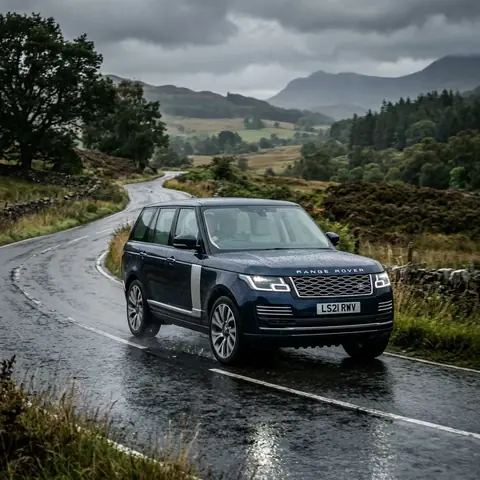
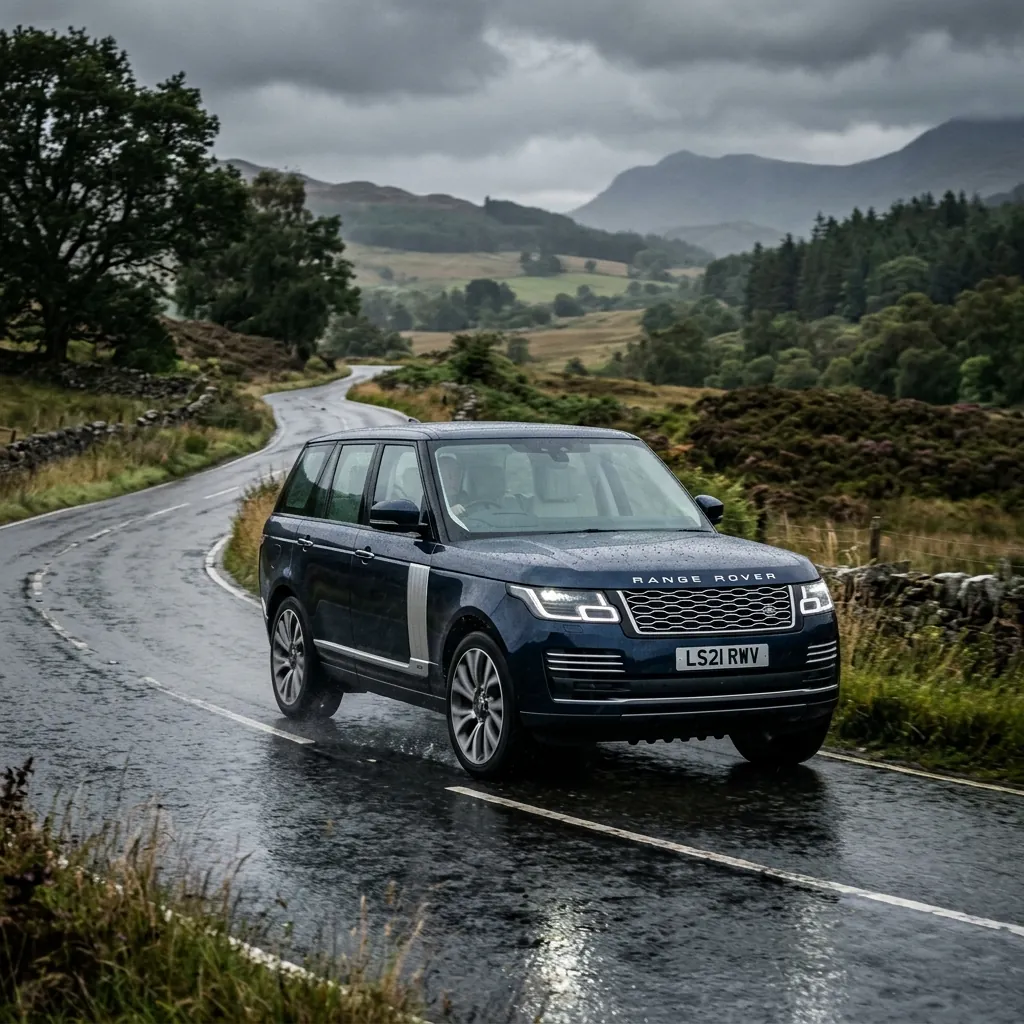
"Every L405 advertisement is the same photograph: a $120,000 silhouette for $25,000. The photograph is real. So is the invoice folder that should come with the car — and the difference between a bargain and a financial injury is whether that folder exists and what your bank balance looks like after the purchase, not before it."
Engine
4/10
Gearbox
7/10
Electric
4/10
Total Risk
8/10
Quick Verdict
Buy with CautionBuy the paperwork and the reserve fund, not the discount. A facelifted 2018+ car with a documented timing chain and coolant pipe history, bought with $8,000-$10,000 held back for sorting, is one of the great luxury bargains. A $20,000 early car bought with $20,000 is the most expensive Range Rover you will ever own.
Reliability Verdict
The L405 is the most seductive used-car proposition in the luxury market and the most dangerous one to buy casually. US market data (GarageScout's trailing-12-month sales records) puts the median sold price of a Supercharged car at $26,513 and an HSE at $30,188 — for an SUV that cost $90,000-$180,000 new. Against that price sits the failure stack documented in our reliability guide: timing chain guides ($6,000-$9,000), plastic coolant pipes whose failure can kill the engine ($1,800-$2,500 to prevent, up to $25,000 if it lets go at speed), and air suspension that collapses on schedule. The correct way to price an L405 is purchase price plus a sorting budget of $8,000-$10,000. Priced that way, it is a magnificent purchase. Priced any other way, it is a countdown.
Executive Intelligence Summary
Should you buy a used Range Rover L405? Real 2026 prices, timing chain and coolant pipe failures, air suspension checks, best years and the true cost of entry.
In This Guide
The L405 Range Rover is the best luxury SUV of its era and the most financially dangerous used car in this entire guide series — and those two facts have the same cause. Everything that makes it magnificent is complex, everything complex on it wears out between 50,000 and 90,000 miles, and the used market prices that wear as if it were a surprise. This guide is about buying one with the surprise removed.
The fourth-generation Range Rover (2013-2021 in the US, replaced by the L460) was a $90,000-$180,000 vehicle new. It is now, by the market data below, a $20,000-$45,000 vehicle. Our L405 reliability guide documents what breaks; this guide is about the money — what the cars actually sell for, what the first year actually costs, and the checks that separate the bargains from the injuries.
The headline data: GarageScout’s records of US sales over the trailing twelve months put the median sold price of a Range Rover Supercharged at $26,513 (102 sales, with the middle half between $20,475 and $34,125) and an HSE at $30,188 (77 sales). The SVAutobiography median is $66,413. By model year, HSE medians run from $19,425 for a 2016 car to $45,676 for a 2020. Current listings start around $10,495 — and the cars at that end of the listings are the subject of most of this guide’s warnings. Set those prices against the documented cost stack: $4,500-$8,000 per year in running costs and a worst case of $25,000 for an engine lost to a coolant pipe failure. The L405 is not cheap to buy. It is cheap to enter — a different thing, and the difference is the sorting budget.
Failure Probability Timeline
The transaction itself is where L405 ownership is won or lost. The checks are specific, mechanical, and non-negotiable — see the checklist in section 4.
- Cold-start timing chain rattle test
- Coolant pipe material & history check
- Overnight air suspension stance test
Budget $8,000-$10,000 above the purchase price for the deferred items the previous owner was avoiding: typically some combination of chain, pipes, air suspension, and bushings.
- Timing Chain Guides ($6,000 - $9,000)
- Valley Coolant Pipes ($1,800 - $2,500)
- Air Struts & Compressor ($1,200 - $2,200/corner)
A sorted L405 settles into its documented rhythm: $4,500-$8,000 a year, mostly suspension, cooling vigilance, and consumables. Owners who sorted the car describe this phase as worth every cent.
- Active Roll Control Leaks
- Control Arm Bushings
- Supercharger Snout Wear
*Data based on owner-reported failures and specialist shop frequency reports.
1. What They Actually Cost: The 2026 Market
Used L405 pricing, from GarageScout’s trailing-twelve-month US sales records (asking and sold data, late 2026):
- Supercharged (5.0 V8): median sold price $26,513 across 102 sales
- HSE (V6 and diesel): median sold price $30,188 across 77 sales — $19,425 at the 2016 model year, $45,676 at 2020
- SVAutobiography: median sold price $66,413 across 29 sales
- Listings currently begin around $10,495
Two readings of the same table: the optimist sees a flagship SUV at family-sedan money. The mechanic sees a market that has already subtracted the timing chain, the coolant pipes, and the air suspension from the value of the average car — because on the average car, at least one of the three is due. The correct purchase is the car priced above the median with the invoices proving the work is done, or a car priced at the median with the reserve to do it yourself. The incorrect purchase is the car priced below the median bought with the last of the budget.
2. The Three Failures That Decide Everything
This guide’s companion, our L405 reliability guide, covers the full failure catalogue. Three items dominate the buying decision:
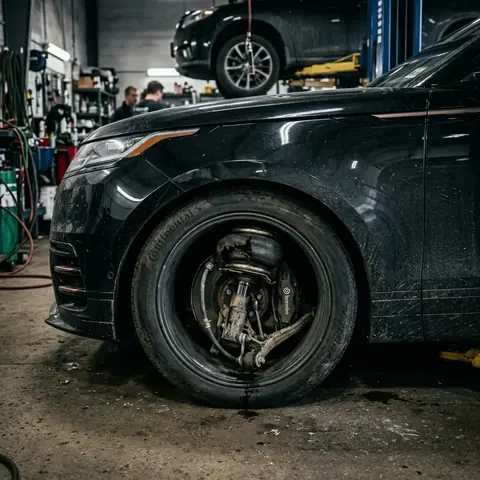
Timing chain guides (60,000-90,000 miles, worst on 2013-2015 cars). The AJ133 V8’s plastic chain guides disintegrate with age and mileage; the V6 shares the architecture and the exposure. The symptom is unmistakable — a loud metallic rattle for a few seconds on a cold start — and the repair is $6,000-$9,000. A jumped chain is an engine. Any car in the mileage window without an invoice for this job should be priced as if the job is yours, because it is.
Valley coolant pipes (50,000-80,000 miles). The factory plastic coolant pipes under the supercharger become brittle and can dump the coolant without warning. The preventive replacement — ideally with the aluminum upgrade — is $1,800-$2,500. The failure it prevents is a warped, overheated aluminum engine: the $25,000 worst case in this guide’s data. This is the single highest-value check on the car.
Air suspension (60,000-90,000 miles). Struts at $1,200-$2,200 per corner and a compressor at $900-$1,200 are not risks, they are schedule. The overnight stance test — park it level, look at it in the morning — tells you where in the schedule the car is.
Behind those three sit the active roll control hydraulics ($2,500-$4,500 when they leak) and control arm bushings ($800-$1,400), both documented in the reliability guide. The ZF 8-speed automatic, by contrast, is a strong unit, and the TD6 diesel (2016-2020) trades the V8’s chain exposure for diesel-specific diligence — a legitimate choice for high-mileage drivers, bought on the same paperwork rules.
3. Which Years and Engines to Buy
Buy: 2018-2021 (facelift cars). The facelift brought the dual-screen interior, updated lighting, and — more importantly — these cars sit past the worst of the early chain-guide production. The P400 inline-six (2020-2021) is the most modern powertrain in the range. Prices ($32,682 median for a 2018 HSE, $45,676 for a 2020 in the sales data) reflect the lower risk.
Buy with proof: 2013-2017, if the chain and coolant pipe invoices exist. At HSE medians around $19,000-$23,000 for these years, a documented car is the value play of the entire L405 market — the failures have been paid for by someone else.
The engine choice: the 5.0 Supercharged is the full experience and carries the full checklist. The 3.0 V6 is cheaper to buy and shares the chain architecture — do not mistake it for the safe option. The TD6 diesel is the economy choice with its own, smaller list.
Avoid: The cheapest car in any year, any car that cannot be cold-started in your presence, and any car whose seller describes a rattle as “they all do that.” They do not all do that. The ones that do are telling you the price of the repair.
4. The Buying Checklist
- Cold start, in person. Arrive before the car is warmed. Three seconds of chain rattle reprices the car by $6,000-$9,000.
- Invoices for the chain guides and coolant pipes. Part numbers and dates, from a Land Rover dealer or known specialist. “Done by the previous owner” without paper is not done.
- The overnight stance test. Photograph the car level in the evening; compare in the morning. A dropped corner is an air spring; a dropped car is a system.
- Look underneath for Dynamic Response fluid. The active roll control valve block and lines leak with age; hydraulic fluid under the car is a $2,500-$4,500 conversation.
- Run every electrical item. Screens, seats, tailgate, sunroof, fridge if fitted. The L405’s electrical reliability score in our data is 4 out of 10 — test like it matters, because it does.
- Do the total-budget arithmetic out loud. Asking price + $8,000-$10,000 sorting reserve + $4,500-$8,000 a year. If the sentence doesn’t work, the car doesn’t either.
Our Range Rover Sport L494 guide applies the same discipline to the L405’s smaller sibling, and our air suspension failure guide covers the stance test’s subject in depth.
5. Frequently Asked Questions (FAQ)
Q: How much does a used Range Rover L405 cost in 2026? A: By GarageScout’s trailing-twelve-month US sales records, the median sold price is $26,513 for a Supercharged and $30,188 for an HSE, with SVAutobiography cars at a $66,413 median. HSE medians by year run from $19,425 (2016) to $45,676 (2020). Listings start around $10,495 — those cars should be assumed to need the full sorting budget.
Q: Is a used L405 Range Rover a good buy? A: It is a good buy at the right total price and a bad one at the wrong one. The car itself is magnificent and its failures are known, priced, and checkable: timing chain guides ($6,000-$9,000), coolant pipes ($1,800-$2,500), air suspension ($1,200-$2,200 per corner). Buy a documented car or hold the $8,000-$10,000 reserve, and it is one of the great luxury bargains. Buy the cheapest car with no reserve and it will be the most expensive vehicle you ever own.
Q: What is the most important check when buying an L405? A: The cold start. Timing chain guide wear announces itself as a metallic rattle in the first seconds of a cold engine, and the repair is $6,000-$9,000 — with an engine replacement at stake if the chain jumps. Second is documentary proof that the plastic valley coolant pipes have been replaced.
Q: Which L405 years are best to buy? A: The facelifted 2018-2021 cars carry the lowest risk and the highest prices. The value play is a 2013-2017 car with invoices proving the timing chain and coolant pipe work is already done. Avoid any year sold without paperwork at a price that assumes the work is done.
Q: How much should I budget per year for an L405? A: $4,500-$8,000 per year all-in once the car is sorted, per the cost data in our L405 reliability guide — plus the one-time $8,000-$10,000 sorting budget in year one if the major items have not already been done.
6. Related Resources
- Range Rover L405 Reliability: The $10,000 Financial Reality
- Range Rover Sport (L494) Reliability
- Air Suspension Failure Guide
- Porsche Cayenne (9Y0) Reliability
- Aston Martin DBX Reliability & Buying Guide
- Used Mercedes-Benz S-Class (W222) Buying Guide
- Used BMW 7 Series (G11/G12) Buying Guide
- Extended Warranty for Luxury Cars
Real Owner Symptoms
"I bought my 2017 Supercharged with the chain already done and the invoice to prove it, and I still spent $3,800 in year one on an air strut, the compressor, and control arm bushings. I knew it was coming because I'd read the list. That's the difference between the owners who love these and the ones who feel robbed: nobody who budgets for it feels robbed."
Mechanic's Diagnosis Notes
The pre-purchase inspection on an L405 is not a formality, it is the whole transaction. Cold start for the chain. Pressure-test the cooling system and look for the plastic pipes' part numbers — if they're the original plastic and the car has 70,000 miles, they are a scheduled expense, not a possibility. Then the suspension: leave it parked and measure the stance twice. Everything on this car is knowable before money changes hands, which is why buying one without knowing is inexcusable.
Cost Transparency: Parts + Labor Breakdown
| Repair Job | Est. Parts | Est. Labor | Total Worst-Case |
|---|---|---|---|
| Timing Chain + Guides + Tensioners (both banks) | $1,800 | $4,500 | $6,000 - $7,500 |
| Valley Coolant Pipes (aluminum upgrade) | $500 | $1,400 | $1,800 - $2,200 |
| Air Strut Replacement (single front corner) | $800 | $500 | $1,200 - $1,500 |
| Air Suspension Compressor | $600 | $400 | $900 - $1,200 |
| Active Roll Control Valve Block & Lines | $1,500 | $2,200 | $3,500 - $4,200 |
Executive Buying Advice
Five checks decide an L405 purchase: (1) a cold start, in person, listening for three seconds of timing chain rattle; (2) written proof of whether the timing chain guides and the valley coolant pipes have been done — invoices, not assurances; (3) the overnight stance test for air suspension leaks; (4) a scan for Dynamic Response (active roll control) leaks under the car; (5) a total budget that is the asking price plus $8,000-$10,000. If the seller cannot support checks 1-4 and your budget cannot support check 5, the correct purchase is a different car.
What Owners Regret
"Mine is the standard story: cheapest Autobiography in three states, no inspection, chain rattle by month two, coolant pipe by month five. $14,000 in the first year on a $32,000 car. The car is wonderful now. It would have been wonderful for $8,000 less if I'd bought the sorted one I talked myself out of."
Lower-Risk Alternatives
- Lexus LX 570 The anti-Range Rover: a truck-based luxury SUV whose 5.7L V8 has no equivalent failure stack. Less magic, near-zero anxiety.
- Porsche Cayenne (9Y0) The driver's alternative with a far shorter problem list — see our Cayenne 9Y0 reliability guide. It lacks the L405's presence and ride, and that is the whole trade.
- Range Rover Sport (L494) The same engines and the same checks in a slightly cheaper, sportier package — see our Range Rover Sport L494 reliability guide. The buying rules in this guide apply to it almost unchanged.