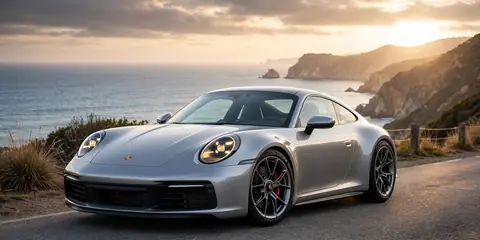
Porsche Cayenne (9Y0) Reliability: Water Pump Failures, Repair Costs & Best Years to Buy
"The 9Y0 Cayenne does not hide its weakness. Nearly every used example with the V6 engine will need a water pump — the only questions are whether it has already been done, whether Porsche's extended coverage still applies, and whether the coolant has already migrated into the vacuum system. All three are checkable before you buy."
Engine
6/10
Gearbox
8/10
Electric
6/10
Total Risk
5/10
Quick Verdict
Buy with CautionThe most rational big Porsche SUV to buy used — provided the water pump question is answered before money changes hands. A V6 car with a documented pump replacement (or live pump warranty coverage) is a sensible purchase. A V6 car with disappearing coolant and no paperwork is not.
Reliability Verdict
The third-generation Cayenne (9Y0) fixed the 958's transfer case saga and kept the 8-speed Tiptronic that rarely gives trouble. Its risk is concentrated in one component: the EA839 V6's vacuum-actuated water pump, whose internal seals fail often enough to generate Porsche technical bulletins, class-action discussion, and a reported 10-year warranty extension on the pump. Around that sit a cluster of free recall fixes — including a 2021 bore-cracking campaign on Turbo and GTS cars — and genuinely expensive optional hardware (air suspension, E-Hybrid battery). RepairPal rates the Cayenne nameplate 1.5 out of 5.0 with a $1,231 average annual repair cost, but that figure blends all generations; the 9Y0's real profile is narrower and more predictable than the headline suggests.
Executive Intelligence Summary
Is the 2019+ Porsche Cayenne reliable? Guide to EA839 water pump failure, the 2021 bore-cracking recall, fuel line and rear-axle recalls, real repair costs and the best 9Y0 years to buy.
In This Guide
The third-generation Cayenne is the SUV that finally made Porsche a volume manufacturer in the large-SUV class — 335 hp in base form at a $65,700 launch price, and a Turbo that outruns sports cars. Its reliability story is unusually simple for a Porsche: one epidemic component on the V6 cars, a stack of free recalls on the early cars, and everything else is consumables and options.
The 9Y0 arrived for the 2019 model year on the VW Group’s MLB Evo platform, with an 8-speed Tiptronic S automatic across the range. The lineup opened with the 335 hp 3.0L single-turbo V6 (EA839), the 434 hp 2.9L twin-turbo V6 in the S, and the 541 hp 4.0L twin-turbo V8 (EA825) in the Turbo, with the E-Hybrid plug-in alongside. If you know the previous generation, recalibrate: the 958 Cayenne’s transfer case and bore-scoring era is over. The 9Y0 replaced it with a cooling-system story.
The headline data: RepairPal rates the Cayenne 1.5 out of 5.0 — 14th out of 14 luxury midsize SUVs — with an average annual repair cost of $1,231, unscheduled repair visits of 1.1 per year, and a 21% probability that a repair is severe. Two cautions apply. First, RepairPal’s figure blends every Cayenne generation, and the 958’s record drags it down. Second, the 9Y0’s actual failure profile is dominated by a single, well-documented component — which makes it far more predictable than a 1.5 rating implies, provided you buy the right car.
Failure Probability Timeline
The warranty and recall phase. Factory coverage is 4 years / 50,000 miles. The early cars accumulate recall campaigns — mostly free, all time-consuming.
- Fuel Line Quick Connector Recall (20V-270)
- Rear Axle Lock Nut Recall (21V-271)
- Bore Cracking Recall, 2021 Turbo/GTS (21V-341)
The water pump window. The EA839's vacuum-actuated pump typically declares itself here on V6 cars; air suspension compressors follow on PASM-equipped cars.
- Water Pump & Thermostat Failure (V6)
- Vacuum System Coolant Contamination
- Air Suspension Compressor Wear
The sorting phase. Cars with a documented pump replacement settle into expensive-but-foreseeable running. Neglected cooling systems escalate; E-Hybrid batteries become the long-tail risk.
- Cooling System Aging
- E-Hybrid Battery Degradation
- Suspension & Brake Consumables
*Data based on owner-reported failures and specialist shop frequency reports.
1. The Water Pump: The 9Y0’s Defining Failure
Every V6 9Y0 — the 3.0L base car and the 2.9L Cayenne S — uses the EA839 engine family’s vacuum-actuated water pump, and it is the most documented weakness of the entire generation.
How it fails: The pump’s internal seals degrade. In the external failure mode, coolant weeps from the pump or the plastic thermostat housing, leaving pink residue at the front of the engine. In the internal mode — the expensive one — the failed seals let the engine’s vacuum system draw coolant out of the pump and distribute it through the vacuum lines, contaminating solenoids, the turbocharger wastegate controller and potentially the brake booster circuit. A “small coolant leak” becomes a multi-component repair.
When: Published failure data clusters between 50,000 and 90,000 miles, with owner reports of coolant loss on 2019-2022 cars from as low as 25,000 miles. Porsche addressed the pattern in technical service bulletins (including TSB 167/23), and the pump design was revised — the updated unit uses a 6-bolt pulley in place of the 4-bolt original. Porsche has also been reported to have extended the water pump warranty to 10 years on affected cars; verify the coverage status of any specific car by VIN before relying on it.
The fix: Published replacement estimates run $1,360 - $3,100 for the pump, with specialists recommending the pump, thermostat housing and coolant shut-off valve be replaced as a set because access labor dominates the bill. If coolant has already migrated into the vacuum system, expect the quote to climb from there.
The buying test: Check the coolant reservoir level, then inspect the front of the engine for dried pink residue. Coolant loss with a dry engine bay and no puddle is the signature of the internal failure mode — budget the full repair or walk away.
The same pump architecture sits in the Audi applications of this engine family, which is why our EA839 engine reliability guide reads like a companion piece to this one — and why the facelift Macan, which adopted the EA839 V6s, shares this section of the risk profile while escaping its own earlier transfer case problems only in revised form.
2. The 2021 Bore-Cracking Recall (21V-341)
In May 2021 Porsche recalled certain 2021 Cayenne Turbo, GTS and GTS Coupe models under NHTSA campaign 21V-341: cracks may develop on the cylinder bore surface, which can cause engine damage, a stall, or an oil leak. It is the same defect family that produced Audi’s 21V-339 campaign on the SQ7, SQ8, RS Q8, RS6 and RS7 — where the filed remedy was replacement of the engine, free of charge.
The affected population is narrow and the remedy is a dealer job at no cost, but the implication for buyers is absolute: on a 2021 Turbo or GTS, documented completion of 21V-341 is the first line of the inspection, before the test drive. A car whose engine was replaced under the campaign is arguably a better buy than a low-mileage car with the paperwork missing.
3. The Rest of the Recall Stack: Fuel, Axles and Steering
The early 9Y0 years carry the heaviest recall load in the Cayenne’s history — NHTSA’s file shows eight campaigns touching the 2019 model year alone. The significant ones:
- 20V-270 (2020): On 2019-2020 Cayenne Turbo, Turbo Coupe and Turbo S E-Hybrid Coupe models, the fuel line quick connector may not meet specification and can leak fuel in the engine compartment. Remedy: replacement of the fuel line including the connector, free of charge.
- 21V-271 (2021, Porsche AMA9): The lock nut on the rear axle trailing arm can break from stress corrosion on 2021 cars, misaligning the rear axle. Remedy: new lock nuts, free of charge.
- 22V-040 (2022): A follow-up to 21V-271 — rear axle alignment may not have been inspected after the lock-nut repair on 2021-2022 cars. Dealers inspect, align, and replace prematurely worn tires, free of charge.
- 21V-493 (2021): On certain 2021 Turbo and GTS models, a steering column screw can fail and detach the column.
- 20V-271 (2020): Transmission fluid can leak on certain 2020 cars.
Every one of these is free at a Porsche dealer, forever. What they cost you is time and certainty: a 2019-2021 car with a fully closed recall file has an attentive owner in its past. A car with open campaigns has the opposite.
4. The V8s, the Facelift, and the E-Hybrid Question
The 4.0L EA825 V8 in the Turbo (and, from 2021, the GTS) uses a different cooling arrangement from the V6, and published specialist assessments consistently rate it the more robust engine in this generation on the cooling front — the Turbo and Turbo GT are the picks if the water pump question is one you’d rather not ask. The V8’s own watch items are the recall set above and the usual hot-vee consumables rather than a single epidemic failure.
The 2024 facelift reshuffled the range in the used buyer’s favor: the base car rose to 348 hp, the Cayenne S switched to a 468 hp version of the 4.0L V8 — retiring the 2.9L V6 and its pump from the S entirely — and the Turbo GT climbed to 650 hp. A facelift S is the only Cayenne S that never had the EA839 cooling question.
The E-Hybrid adds the plug-in system’s long tail: the high-voltage battery degrades with age and use, and published replacement estimates run $12,000+. Porsche’s high-voltage battery warranty runs 8 years / 100,000 miles against defects — note that ordinary capacity loss is a wear item, not a defect. On a used E-Hybrid, a battery health report matters more than the odometer.
5. What It Actually Costs to Run
RepairPal’s nameplate average is $1,231 per year — against $807 for the average luxury midsize SUV — but again, that blends generations. For the 9Y0 specifically, budget against the published figures for its actual failure set:
| Job | Published Cost | Source Type |
|---|---|---|
| Water Pump & Thermostat Replacement (V6) | $1,360 - $3,100 | Specialist published estimates |
| Air Suspension Compressor Replacement | $3,500 | Specialist published estimates |
| Oil Pump Replacement | $3,395 - $4,543 | RepairPal Estimator |
| High-Voltage Battery Replacement (E-Hybrid) | $12,000+ | Published estimates |
Porsche’s service rhythm is an oil service every 10,000 miles or 12 months, an intermediate service at 2 years / 20,000 miles and a major service at 4 years / 40,000 miles. A realistic all-in reserve for an out-of-warranty V6 car is $1,500 - $3,000 per year, with the water pump year already budgeted rather than feared.
6. Best Years to Buy (and Which to Approach Carefully)
Buy: 2024+ (facelift). The S becomes a V8, the base V6 gains power, and the recall stack is behind the model. The lowest-risk Cayenne of the generation.
Buy: 2020-2023 V6 cars with the water pump already replaced (invoice showing the revised pump, ideally with thermostat housing and shut-off valve done as a set) or with live extended pump coverage. The failure is a known, priced event — a car that has had it is a car whose biggest bill is behind it.
Buy: Turbo and GTS V8 cars with 21V-341 (2021) and 21V-271 documented as complete. The V8 sidesteps the defining V6 failure.
Approach carefully: 2019. The first model year carries the longest recall list and the earliest pump production. It is not a bad car — it is a paperwork exam. Buy it only at a price that reflects the checking you will have to do.
Cross-shopping inside the family? The Macan guide covers the smaller SUV’s very different risk profile, and the Audi SQ5 (B9) delivers the same EA839 engine family in a cheaper package with the same water pump conversation attached.
7. Frequently Asked Questions (FAQ)
Q: Is the Porsche Cayenne (9Y0) reliable? A: More predictable than its ratings suggest. RepairPal scores the Cayenne nameplate 1.5 out of 5.0 with a $1,231 average annual repair cost, but that blends all generations. The 9Y0’s risk concentrates in one component — the EA839 V6’s water pump — plus a set of free recalls on early cars. Buy a car with the pump done or covered, and the profile is manageable.
Q: What is the most common 2019+ Cayenne problem? A: Water pump and thermostat failure on the V6 models. The vacuum-actuated pump’s seals degrade, causing external leaks or — worse — coolant migration into the vacuum system. Failures typically occur between 50,000 and 90,000 miles.
Q: How much does a Cayenne water pump replacement cost? A: Published estimates run $1,360 - $3,100 for the pump and thermostat work. If coolant has contaminated the vacuum system, the bill rises. Porsche has been reported to have extended water pump warranty coverage to 10 years on affected cars — check a specific VIN before paying out of pocket.
Q: Which Cayenne engine is most reliable in this generation? A: The 4.0L V8 (Turbo, GTS, and the facelift S) avoids the V6’s water pump weakness and has no equivalent epidemic failure. Among V6 cars, one with a documented revised-pump replacement is the safest buy.
Q: Is a high-mileage 9Y0 Cayenne worth buying? A: Yes, if the pump history is documented and the recall file is closed. A 90,000-mile car with a new pump is a lower-risk purchase than a 45,000-mile car approaching the failure window with no records.
8. Related Resources
- Porsche Cayenne 958 Reliability: Transfer Case, Cooling & Bore Scoring
- Porsche Macan Reliability: Common Problems, Repair Costs & Best Years to Buy
- Audi EA839 Engine Reliability (Cayenne & Macan V6)
- Audi SQ5 B9 Problems & Reliability
Real Owner Symptoms
"My 2020 Cayenne kept asking for coolant every few weeks, but there was never a puddle under the car. The specialist found dried pink residue at the pump and coolant in the vacuum lines. The pump, thermostat housing and shut-off valve went in as a set — and I was told I caught it before it took the wastegate solenoid with it."
Mechanic's Diagnosis Notes
On a 9Y0 inspection we start at the coolant reservoir and the front of the engine, not the test drive. A vacuum-actuated pump that is weeping internally shows up as coolant loss with a dry engine bay. If the car has boost faults alongside coolant loss, the vacuum system is already contaminated and the quote changes. The V8 cars get a different conversation — mostly recalls and consumables.
Cost Transparency: Parts + Labor Breakdown
| Repair Job | Est. Parts | Est. Labor | Total Worst-Case |
|---|---|---|---|
| Water Pump & Thermostat Replacement (EA839 V6) | $600 | $900 | $1,360 - $3,100 |
| Air Suspension Compressor Replacement | $1,800 | $1,700 | $3,500 |
| Oil Pump Replacement | $2,200 | $1,400 | $3,395 - $4,543 |
| High-Voltage Battery Replacement (E-Hybrid) | $10,000+ | $2,000 | $12,000+ |
Executive Buying Advice
On any V6 car, demand one of three things: an invoice for a water pump and thermostat replacement, confirmation that the car is still inside Porsche's extended water pump warranty coverage, or a price that budgets the job in. Then run the VIN through NHTSA and confirm the recall set for the car's year — 2019-2021 cars carry the heaviest campaign load, including the fuel line (20V-270), bore (21V-341) and rear-axle (21V-271) items.
What Owners Regret
"I bought a 2019 because it was the cheapest way into the new shape. Eight recall letters later I understood why the first model year was discounted. Every fix was free, but the time was mine."
Lower-Risk Alternatives
- Porsche Macan (95B) The smaller Porsche SUV shares the facelift EA839 V6 family with the 9Y0 and costs less to buy. It trades the Cayenne's water pump question for its own transfer case history on early cars — read both guides before choosing.
- Range Rover (L405) More luxury, more space, and a longer, more expensive list of known failures. The Cayenne is the rational choice of the two; the Range Rover is the emotional one.
- BMW X7 (G07) Three rows, a calmer ride, and the B58 six-cylinder with a strong record. Less sporting than the Cayenne, and BMW does not publish a model reliability score for it either — see our X7 guide for what the data does and does not say.