BMW X7 Reliability: Common Problems, Repair Costs & Best Years to Buy
"The X7's risks are not hidden — they are itemized. A two-stage starter recall, an air suspension with published five-figure pair pricing, and a V8 with a documented appetite for oil. The buyers who get hurt are the ones who never saw the list."
Engine
6/10
Gearbox
7/10
Electric
5/10
Total Risk
5/10
Quick Verdict
Buy with CautionA good used buy in B58 form with the recall file closed and the air suspension inspected. The V8 cars are the performance choice and the budget risk. The X7 is not a car to buy on a photograph and a service stamp — buy the specific car's paperwork.
Reliability Verdict
The X7 (G07) is the three-row BMW that launched at $73,900 in 2019, and its reliability profile splits cleanly by engine. The B58 six-cylinder in the xDrive40i carries that engine's strong record; the N63 V8 in the 50i and M50i imports the family's valve-seal, oil-consumption and turbo history. Over both sits standard two-axle air suspension with RepairPal estimator pricing to match, and a long recall tail — 33 NHTSA campaigns touch the model, including a two-stage starter motor saga (24V-576, then 25V-644) on 2019-2020 cars. Unusually, RepairPal publishes no X7 reliability rating at all: its own page states the data is insufficient. This guide works with what is actually published and labels it as such.
Executive Intelligence Summary
Is the BMW X7 reliable? Guide to the starter motor recalls, air suspension costs, B58 vs N63 V8 risk, RepairPal's missing rating and the best G07 years to buy used.
In This Guide
The BMW X7 is the easiest big BMW to recommend and the hardest to rate — because the industry’s standard rating source declines to rate it. This guide is built from what can actually be verified: NHTSA’s recall file, RepairPal’s estimator pricing and class data, and the published record of the two engines that power it.
The X7 (G07) launched for 2019 as BMW’s first three-row flagship SUV, from $73,900 for the xDrive40i. The range is a study in two engines: the 3.0L B58 turbocharged six (335 hp in 2019-2022 cars, 375 hp after the 2023 facelift) and the 4.4L twin-turbo V8 — the N63 in the 456 hp xDrive50i and 523 hp M50i, replaced by the S68 in the 523 hp M60i from 2023, with the Alpina XB7 (612-630 hp) above them all. Every X7 rides on two-axle air suspension and drives through the ZF 8-speed automatic.
The headline data — and its limits: RepairPal’s X7 page states there is no Reliability Rating for the BMW X7 due to insufficient data. What RepairPal does publish is the class context: luxury fullsize SUVs average $1,127 per year in repair costs, 0.7 unscheduled repair visits per year, and a 19% probability that a repair is severe — and model-specific estimator pricing, used throughout this guide and labeled as such. J.D. Power’s published scores for the X7 sit at 81 out of 100. CarEdge models the X7’s first-ten-year maintenance and repair total at $20,420, with a 56.41% chance of a major repair in that period. Anyone quoting you a single precise “X7 reliability score” is assembling it from pieces like these; we would rather show you the pieces.
Failure Probability Timeline
The warranty phase. Coverage is 4 years / 50,000 miles with 3 years / 36,000 miles of scheduled maintenance included. The early cars collect the recall stack — 2020 is the most-recalled X7 year, with 12 campaigns.
- Starter Motor Recalls (24V-576 / 25V-644)
- Third-Row Seat Backrest Recall (22V-670)
- Rearview Camera Recall (21V-096)
The suspension and V8 phase. Air struts and compressors age on every X7; on N63 cars the valve stem seals and oil consumption questions arrive in the same window.
- Air Suspension Struts & Compressor
- N63 Valve Stem Seals & Oil Consumption
- B58 Cooling System Items
The sorting phase. B58 cars with cooling-system maintenance settle into predictable running. V8 cars and neglected air suspension define the expensive tail.
- Turbocharger Wear
- ZF 8-Speed Service & Repair
- Electrical System Aging
*Data based on owner-reported failures and specialist shop frequency reports.
1. The Starter Motor Saga: Two Recalls, One Component
The X7’s most instructive recall is really two recalls about the same part:
24V-576 (2024): On 2019-2020 X7s (among other BMW models, 105,588 vehicles), the starter motor can fail, and repeated starting attempts can overheat it through electrical overload — in rare cases igniting nearby material in the engine compartment. BMW’s remedy was a software update to prevent the overload.
25V-644 (2025): The same failure, revisited. This campaign (145,102 vehicles) replaces the engine starter itself, free of charge — and it expressly includes vehicles already repaired under 24V-576, whose owners must have the car repaired again.
The buying lesson generalizes beyond BMW: a seller’s claim that “the starter recall was done” is ambiguous on a 2019-2020 X7. Ask which campaign number was completed. The answer you want is 25V-644.
The starter is the headline, not the whole file. NHTSA’s records show 33 campaigns touching the X7 across its life — 2020 alone accounts for 12 — including the third-row seat backrest that may not fully lock (22V-670, 2019-2022), a rearview camera campaign (21V-096), an early steering rack campaign (19V-631), a sunroof assembly campaign (22V-267, running to 2023 cars), and the integrated brake system control module campaign (26V-422) reaching 2023-2025 cars. None of this is unusual for a complex flagship; all of it is free; and the only way to know a specific car’s status is the VIN lookup.
2. Air Suspension: Standard on Every X7, Priced Accordingly
Unlike most rivals, the X7 gives you no steel-spring escape: two-axle air suspension is standard across the range. The system’s failure pattern is the classic one documented in our air suspension failure guide — a strut leaks, the compressor overworks to compensate, and an ignored leak becomes two bills.
RepairPal’s estimator pricing for the 2019 X7 puts air suspension shock/strut replacement at $6,429 - $6,611; published typical pricing for a compressor runs $1,200 - $2,500. Those numbers are why the X7 inspection is the overnight test: a car that sits level at the test drive and low by morning is telling you its struts are done, and the negotiation should happen with the estimator figures on the table.
3. Two Engines, Two Risk Profiles
The B58 six (xDrive40i) is the X7’s reliability argument. The engine’s full record — coolant leaks from the oil filter housing and water pump, charge-pipe and PCV items at mileage, and an otherwise strong core — is covered in our BMW B58 reliability guide, and nothing about its installation in the X7 changes the verdict: it is one of the most dependable modern BMW engines, in the brand’s biggest vehicle.
The N63 V8 (xDrive50i, M50i) is the opposite trade. The family’s documented pattern — valve stem seals and oil consumption, turbocharger wear in the hot vee, cooling system load — is laid out in our BMW N63 reliability guide, and published typical ranges for valve-seal and oil-consumption work run $4,000 - $9,000+, with turbocharger replacement at $2,500 - $5,000+ depending on whether one or both units are involved. The S68 in the M60i (2023+) is a thorough redesign of the same architecture; its long-term record is still being written, which is a statement of fact, not a criticism.
The ZF 8-speed automatic sits between them in risk: fundamentally durable, rarely the story, and priced at a published $5,000 - $6,500 when a repair or replacement is needed. Budget for its service rather than its failure.
NHTSA’s complaint file tells the same split story at the system level — roughly 300 complaints on record, with service brakes the most-reported system, followed by the electrical system and powertrain. On a used X7, a full fault scan is not theater; the electrical category is genuinely this car’s second language.
4. What It Actually Costs to Run
With no model-specific RepairPal rating to lean on, the honest budget is built from the class average, the estimator, and CarEdge’s modeling:
| Item | Published Figure | Source Type |
|---|---|---|
| Average Annual Repair Cost | $1,127 (luxury fullsize SUV class average) | RepairPal |
| Air Suspension Strut Replacement | $6,429 - $6,611 | RepairPal Estimator (2019 X7) |
| V8 Valve Seal / Oil Consumption Work | $4,000 - $9,000+ | Published typical ranges |
| ZF 8-Speed Repair / Replacement | $5,000 - $6,500 | Published typical ranges |
| 10-Year Maintenance & Repairs | $20,420 (56.41% major-repair probability) | CarEdge (modeled) |
A realistic reserve is $1,500 - $3,000 per year out of warranty — toward the bottom for a B58 car with healthy air suspension, toward the top (and beyond, in a valve-seal year) for an M50i.
5. Best Years to Buy (and Which to Approach Carefully)
Buy: 2023+ (facelift) xDrive40i. The 375 hp B58, the shortest recall list of the range, and air suspension young enough to inspect rather than budget. The M60i is the V8 choice here by default, with the S68’s record still forming.
Buy: 2019-2022 xDrive40i with the file closed. Both starter campaigns verified on 2019-2020 cars, the seat backrest campaign done, and an overnight suspension test passed.
Approach carefully: early M50i cars at the bottom of the market. The discount is the market pricing in the valve seals. If your budget cannot hold the published $4,000 - $9,000+ range in reserve, the correct X7 is the six-cylinder one.
Cross-shopping? The Porsche Cayenne (9Y0) trades the third row for a sportier drive and a cheaper defining failure. The Range Rover L405 out-luxuries both and out-bills both. And the BMW X5’s lifespan record is the closest in-family reference for how these drivetrains age.
6. Frequently Asked Questions (FAQ)
Q: Is the BMW X7 reliable? A: It depends on the engine — and unusually, there is no official headline score to hide behind. RepairPal publishes no X7-specific reliability rating (insufficient data), listing only the class averages of $1,127 per year and a 19% severe-repair probability for luxury fullsize SUVs. J.D. Power scores the X7 at 81 out of 100. The B58 six-cylinder cars have the strong record; the N63 V8 cars carry that family’s documented costs.
Q: What is the most common BMW X7 problem? A: By recall weight, the starter motor on 2019-2020 cars — addressed twice, in 24V-576 (software) and 25V-644 (starter replacement). By out-of-warranty cost, air suspension wear, which is standard on every X7 and priced at $6,429 - $6,611 per RepairPal’s estimator for strut replacement on a 2019 car.
Q: Which X7 engine is most reliable? A: The B58 3.0L six in the xDrive40i, and it is not close. The N63 V8 in the 50i and M50i brings documented valve stem seal, oil consumption and turbocharger costs. The S68 in the 2023+ M60i is a redesign whose record is still forming.
Q: How many recalls does the BMW X7 have? A: NHTSA’s file shows 33 campaigns touching the X7 since 2019, with 2020 the heaviest year at 12. All recall work is free at a BMW dealer; verify a specific car by VIN.
Q: Is a high-mileage X7 worth buying? A: A B58 car with documented cooling-system maintenance and healthy air suspension, yes. A V8 car with rising oil consumption and no reserve, no — the published repair ranges for the N63 assume money the purchase price suggests you are trying not to spend.
7. Related Resources
- BMW B58 Engine Reliability
- BMW N63 Engine Reliability
- BMW X5 Lifespan: How Long Do They Last?
- Porsche Cayenne (9Y0) Reliability: Water Pump Failures, Repair Costs & Best Years to Buy
- Air Suspension Failure: Symptoms, Causes & Costs
Real Owner Symptoms
"Our 2020 X7 got the software update for the starter recall in 2024, and I assumed that chapter was closed. Then the second letter arrived: the starter itself now had to be replaced, including on cars already repaired. Same component, two recalls, two dealer visits. Check both campaign numbers, not just 'the starter one'."
Mechanic's Diagnosis Notes
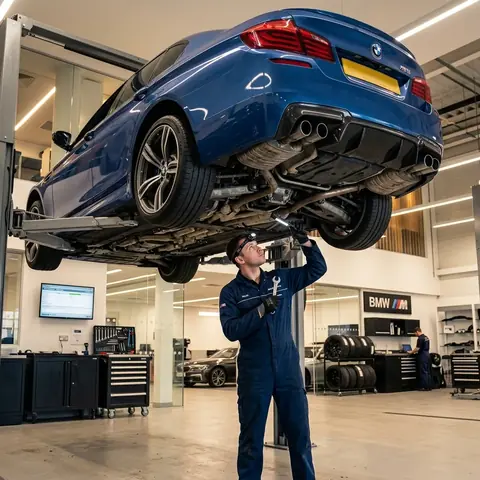
The inspection that matters on an X7 is the overnight one. Air struts that hold pressure on the test drive can settle by morning. After that: coolant residue around the B58's oil filter housing and water pump, oil consumption questions on the V8, and a scan for the electrical faults that make up a large share of this car's NHTSA complaint file.
Cost Transparency: Parts + Labor Breakdown
| Repair Job | Est. Parts | Est. Labor | Total Worst-Case |
|---|---|---|---|
| Air Suspension Strut Replacement (RepairPal Estimator, 2019 X7) | $4,600 | $1,900 | $6,429 - $6,611 |
| Air Suspension Compressor Replacement | $800 | $700 | $1,200 - $2,500 |
| V8 Valve Stem Seal & Oil Consumption Work (N63) | $1,500 | $3,500 | $4,000 - $9,000+ |
| ZF 8-Speed Transmission Repair / Replacement | $3,800 | $1,800 | $5,000 - $6,500 |
Executive Buying Advice
Three checks, in order. First, the VIN against NHTSA: 2019-2020 cars need both starter campaigns understood (25V-644 supersedes the 24V-576 software fix with a starter replacement — a car 'done' under the first may need the second). Second, the air suspension: park the car overnight if you can, and price any sagging corner against RepairPal's estimator figures before negotiating. Third, on V8 cars, an oil-consumption history — ask directly how much oil it uses between services.
What Owners Regret
"I bought the M50i because the six-cylinder felt like the compromise. The compromise turned out to be mine: valve stem seals at 78,000 miles. The B58 car would have been slower and several thousand dollars cheaper to own."
Lower-Risk Alternatives
- Porsche Cayenne (9Y0) Two rows instead of three and a sportier drive, with its own single defining failure — the V6 water pump — that is cheaper to fix than the X7's air suspension. See our Cayenne 9Y0 reliability guide.
- Range Rover (L405) The luxury benchmark with three-row space in LWB form and a longer, pricier failure list than the BMW's. Buy it for the interior, budget for the rest.
- Mercedes-Benz GLS The X7's direct rival, with a similarly complex air suspension and V8 story. Cross-shop the specific cars, not the badges — condition and paperwork decide this comparison.