Lexus LC 500 Reliability: Common Problems, Repair Costs & Best Years to Buy
"Every other guide on this site asks how much you should reserve for the failure you cannot see. The LC 500 guide asks a different question: has the previous owner bothered to get four free repairs done? That is the whole inspection."
Engine
9/10
Gearbox
8/10
Electric
8/10
Total Risk
2/10
Quick Verdict
BuyThe most reliable car in this site's entire database, and the only flagship luxury coupe whose buying checklist is dominated by recall paperwork rather than failure budgeting. Buy the car, verify four campaigns, drive it.
Reliability Verdict
The LC 500 is the exception that tests this entire website. Its complete NHTSA recall history is four campaigns — three of them fuel-pump or brake-booster items fixed free — and its 5.0L 2UR-GSE V8 is a naturally aspirated, port-and-direct-injected engine with no turbos, no air suspension and no dual-clutch gearbox to fail. J.D. Power scored the 2024 LC at 92 out of 100 for Quality & Reliability. RepairPal publishes no LC 500-specific rating (the production volume is too low for statistical significance) but rates the Lexus brand 4.0 out of 5.0 with a $551 average annual repair cost — the ownership risk here is depreciation and tires, not the driveline.
Executive Intelligence Summary
Is the Lexus LC 500 reliable? Guide to the fuel pump recalls, brake booster campaign, 2UR-GSE V8 durability, real repair costs and why the LC is the outlier of this entire site.
In This Guide
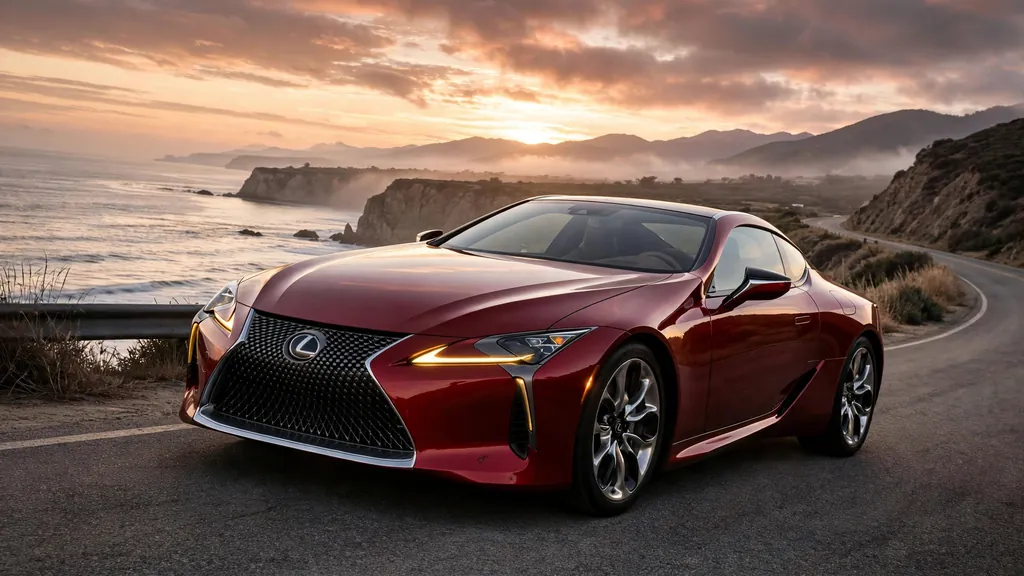
This is the shortest failure list on the entire site. The Lexus LC 500 — a 471 hp, naturally aspirated V8 flagship coupe launched at $92,000 — has accumulated exactly four NHTSA recall campaigns in eight model years, no pattern engine failure, and a J.D. Power score most German flagships never approach. If you came here braced for a five-figure trap, the trap is that there mostly isn’t one.
The LC arrived for the 2018 model year as Lexus’s halo car: a production version of the LF-LC concept, built around the 5.0L 2UR-GSE V8 — an engine family with a decade of service in the IS F, GS F and RC F behind it — and a 10-speed automatic. A convertible followed for 2021, and the LC 500h hybrid (3.5L V6, multi-stage hybrid system) sat alongside throughout. Lexus has confirmed the LC ends after the 2026 model year, which makes the used market the whole future of this car.
The headline data: J.D. Power’s Quality & Reliability score for the 2024 LC is 92 out of 100 — the top of its segment. RepairPal publishes no LC 500-specific reliability rating, stating plainly that submissions are insufficient for a model-level figure; its Lexus brand rating is 4.0 out of 5.0 (7th of 32 brands) with a $551 average annual repair cost, and we use it here labeled as exactly that — a brand figure, not an LC figure. CarEdge’s modeled 10-year maintenance estimate for the LC is $7,334, with a first-year cost around $395. For calibration, the German cars in this class carry RepairPal averages of $1,000-$1,300 per year where data exists.
Failure Probability Timeline
The warranty phase — and the recall phase. Basic coverage is 4 years / 50,000 miles and the powertrain warranty runs 6 years / 70,000 miles, the longest factory powertrain cover in this class.
- Low-Pressure Fuel Pump Recall (20V-012 / 20V-682)
- High-Pressure Fuel Pump Cover Recall (18V-107)
- Brake Booster Recall (19V-544)
The consumables phase. Scheduled services every 6 months / 5,000 miles, staggered run-flat tires, and brake wear dominate the bills. Pattern failures do not emerge.
- Tire & Brake Consumables
- 12V Battery & Age-Related Sensors
- High-Pressure Fuel Pump Chirp (Noise Only)
The age phase. The 2UR-GSE's record in its other applications suggests long service life; costs become the generic high-mileage luxury items priced in RepairPal's modeled ranges.
- Fuel Injectors (Modeled $1,430 - $1,997)
- Heater Core (Modeled $1,861 - $2,431)
- Suspension Bushings & Dampers
*Data based on owner-reported failures and specialist shop frequency reports.
1. The Recall List Is the Whole Story — and It Is About Fuel Pumps
The LC’s entire NHTSA recall history fits in a short list, and three of the four entries trace back to fuel delivery:
18V-107 (2018): On 2018 LC 500s (9,905 vehicles), the cover of the high-pressure fuel pump can crack and leak fuel. Symptom: fuel smell from the engine bay. Remedy: free dealer repair.
20V-012 and 20V-682 (2020): The Denso low-pressure in-tank fuel pump fitted across Toyota and Lexus — its impeller can deform, stopping the pump and stalling the engine. The original campaign and its expansion cover 2018-2020 LC 500 and LC 500h models. Remedy: an improved fuel pump assembly, free of charge.
19V-544 (2019): On 2019 LC 500s, the brake booster pump can fail, increasing pedal effort. Remedy: free dealer repair.
24V-124 (2024): A rearview camera image delay on 2024 cars, resolved by software.
That is the list. There is no LC equivalent of the transfer case, the timing cover, the bore scoring or the starter-generator — no component that fails in pattern, at mileage, at four-figure cost, outside the recall system. The buying implication is correspondingly simple: the single most valuable document in an LC purchase is the NHTSA printout showing these campaigns closed.
2. What Owners Actually Report: A Chirp, Not a Failure
The most widely documented LC 500 complaint is not a breakdown at all. The high-pressure fuel pump on the 2UR-GSE can produce a chirping or cricket-like noise at idle — a characteristic owners have documented across the engine’s applications for years. It is audible, it is annoying to some owners, and it has no established connection to pump failure. Budget $0, expect to possibly hear it, and do not let a seller or a shop convert it into a four-figure “preventative” repair without a fault code and a diagnosis.
Beyond that, the owner record is consumables: the staggered run-flat tires wear quickly and cost accordingly, the 10-speed automatic’s low-speed manners draw occasional comment, and the touchpad infotainment belongs to a different era. These are ownership frictions, not reliability defects, and we list them as such rather than dressing them up as problems.
3. The 2UR-GSE: Why This Engine Has No Section of Its Own
Most engine chapters on this site run long. This one is short because the evidence is short. The 2UR-GSE is naturally aspirated — no turbochargers, no hot-vee packaging, no intercooler plumbing — and it combines port and direct injection, which keeps intake valves washed and avoids the carbon-buildup pattern of direct-injection-only engines. In its IS F, GS F and RC F applications it built a record for surviving sustained high-rpm use that few modern performance engines match.
Its known age-related items are the generic ones priced in RepairPal’s modeled ranges for the model — fuel injectors at $1,430 - $1,997, a heater core at $1,861 - $2,431, and at the far end a camshaft replacement modeled at $4,993 - $6,789. Note the word modeled: RepairPal publishes these as estimator ranges for the LC, not as records of common failures, and we present them that way. A “worst case” built from estimator ranges rather than documented pattern failures is itself the LC’s reliability story.
The LC 500h hybrid swaps the V8 for a 3.5L V6 and Lexus’s multi-stage hybrid system. It shares the fuel pump recalls and adds a hybrid battery as a theoretical long-term item, but the system’s Toyota-family record is strong and the 500h’s buyer is rarely cross-shopping this guide’s alternatives. The V8 is the one to buy.
4. What It Actually Costs to Run
Lexus specifies scheduled maintenance every 6 months or 5,000 miles — a shorter interval than the German brands — with the first two scheduled services complimentary on new cars. The factory warranty package was the class’s most generous where it matters: 4 years / 50,000 miles basic and 6 years / 70,000 miles powertrain, which is why a 2021 LC only recently left powertrain coverage and a 2023 car still has it.
| Item | Published Figure | Source Type |
|---|---|---|
| Average Annual Repair Cost | $551 (Lexus brand; no LC-specific figure) | RepairPal |
| 10-Year Maintenance Estimate | $7,334 | CarEdge (modeled) |
| Fuel Injector Replacement | $1,430 - $1,997 | RepairPal Estimator (modeled) |
| Heater Core Replacement | $1,861 - $2,431 | RepairPal Estimator (modeled) |
| Camshaft Replacement | $4,993 - $6,789 | RepairPal Estimator (modeled) |
A realistic all-in annual reserve is $600 - $1,200 for a serviced car — and unlike the German guides on this site, that figure is mostly scheduled maintenance and tires rather than a failure fund. Depreciation, not repair, is the LC’s big ownership number: five-year value loss is estimated in the $50,000-$60,000 range on early cars, which is precisely why the used buy is so strong.
5. Best Years to Buy
Buy: 2021-2026. These cars sit outside both fuel pump campaigns entirely. The convertible (2021+) is mechanically identical where it matters. A 2023+ car may still carry factory powertrain coverage.
Buy with paperwork: 2018-2020. The same car, plus a recall checklist. With 18V-107 (2018), 19V-544 (2019) and 20V-012/20V-682 (2018-2020) all confirmed complete, an early LC is not a riskier car — it is the same car with more of its depreciation already done.
Avoid: Nothing in the range is an avoid on reliability grounds. Avoid individual cars with patchy service history, accident records, or open recalls the seller “never got around to” — on this model, neglect is a character signal with no compensating discount logic.
For the sedan-shaped version of Lexus flagship ownership, our Lexus LS reliability guide and LS ownership costs guide cover the V6 hybrid flagship. Cross-shopping the sharp end instead? The Porsche 911 (992) guide is the driver’s alternative, and the BMW M8 guide is the power alternative — both with longer problem lists than this one.
6. Frequently Asked Questions (FAQ)
Q: Is the Lexus LC 500 reliable? A: Yes — by the available evidence it is the most reliable flagship luxury coupe of its era. J.D. Power scored the 2024 LC 92 out of 100 for Quality & Reliability, its entire recall history is four campaigns, and its V8 has no documented pattern failure. RepairPal publishes no model-specific rating due to low volume, but rates the Lexus brand 4.0 out of 5.0 with a $551 average annual repair cost.
Q: What is the most common Lexus LC 500 problem? A: The recalled fuel pumps. The low-pressure in-tank pump (20V-012 / 20V-682, 2018-2020 cars) can fail and stall the engine, and the 2018 car’s high-pressure fuel pump cover (18V-107) can crack and leak. Both are free dealer repairs — the “problem” is buying a car where they were never done.
Q: How much does it cost to maintain an LC 500? A: Budget $600 - $1,200 per year for scheduled services (every 6 months / 5,000 miles) and consumables. CarEdge models 10-year maintenance at $7,334. The large numbers in LC ownership are depreciation and tires, not repairs.
Q: Which LC 500 years should I avoid? A: None on reliability grounds. The 2018-2020 cars simply require proof that the fuel pump and brake booster recalls were completed. The 2021 and later cars avoid those campaigns entirely.
Q: Is a high-mileage LC 500 worth buying? A: It is one of the few cars in this class where the answer is straightforwardly yes, with a full service history. The 2UR-GSE V8’s record in the IS F, GS F and RC F supports long service life, and there is no mileage-triggered pattern failure waiting in this guide.
7. Related Resources
- Lexus LS Reliability: The Hybrid Flagship’s Record
- Lexus LS Ownership Costs
- Porsche 911 (992) Reliability: Common Problems, Recalls & Maintenance Costs
- BMW M8 Reliability & Ownership Costs
- Mercedes-AMG GT Reliability
Real Owner Symptoms
"My 2019 LC 500 has asked for tires, brake pads and its scheduled services in three years. The only surprise was a chirping noise at idle from the high-pressure fuel pump, which owners document widely and which has never affected how the car runs. Compared to the German V8 coupe it replaced, the service file is almost empty."
Mechanic's Diagnosis Notes
We see LCs for services and consumables, not failures. The inspection is a paperwork exercise: recall completion, service history at the six-month schedule, tire wear on the inside shoulders, and a check that the low-pressure fuel pump campaign was actually done on the early cars. The 2UR V8 is one of the most over-engineered engines fitted to a modern luxury car.
Cost Transparency: Parts + Labor Breakdown
| Repair Job | Est. Parts | Est. Labor | Total Worst-Case |
|---|---|---|---|
| Fuel Injector Replacement | $900 | $700 | $1,430 - $1,997 |
| Heater Core Replacement | $600 | $1,500 | $1,861 - $2,431 |
| Camshaft Replacement | $3,400 | $2,400 | $4,993 - $6,789 |
| Exhaust Pipe Replacement | $4,600 | $1,000 | $5,520 - $5,748 |
Executive Buying Advice
Run the VIN through NHTSA and confirm the fuel pump campaigns (20V-012 / 20V-682 on 2018-2020 cars, 18V-107 on 2018 cars) and the brake booster campaign (19V-544 on 2019 cars) show as completed. Then check the two things that actually cost money on an LC: tire condition (the staggered run-flats are not cheap and wear quickly) and a full Lexus dealer service history at the 6-month / 5,000-mile schedule.
What Owners Regret
"I cross-shopped the LC against a German coupe with 100 more horsepower and a much longer options list. Three years on, the other car's forum threads are full of repair invoices. Mine is full of tire prices. I chose correctly and it still stings a little every time I buy rear tires."
Lower-Risk Alternatives
- Porsche 911 (992) The sharper sports car, with a real recall stack of its own and RepairPal data showing a $1,072 average annual repair cost. Better steering, worse warranty math — see our 992 reliability guide.
- BMW M850i / M8 (F92) More power and all-weather traction from the S63 V8, at the price of the N63/S63 family's oil, cooling and valve-seal history. The LC is the ownership play; the BMW is the performance play.
- Mercedes-AMG GT The M177 V8 coupe is the closest philosophical rival — front-engine, rear-drive, theatrical. Its engine has a far longer documented issue list than the 2UR-GSE.