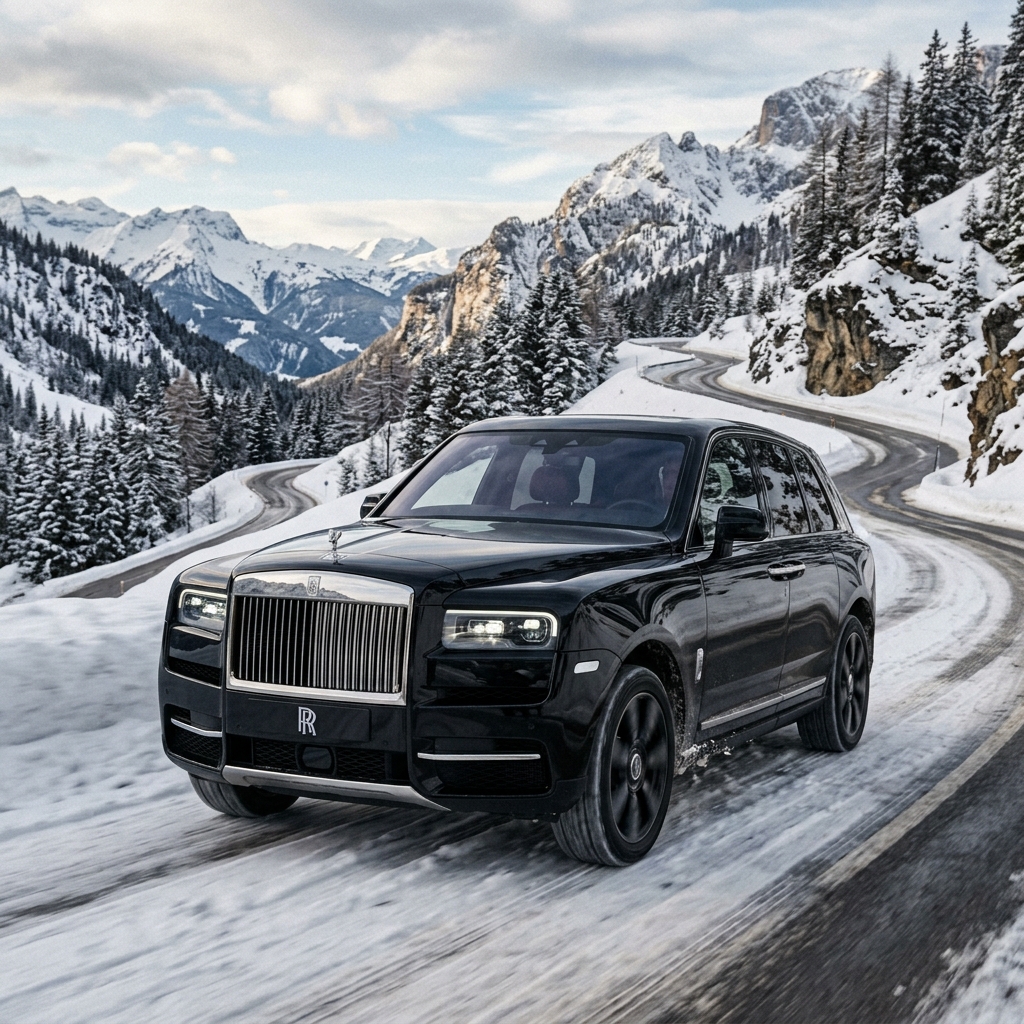
Rolls-Royce Cullinan: The $15,000 Ownership Reality
"You’ve seen the Cullinan listed for 'only' $220,000 and the dream feels attainable. But the used market prices in the weight of its 2,600kg chassis—which eats $5,000 brakes for breakfast. This guide tells you what the showroom brochure won't."
Engine
6/10
Gearbox
8/10
Electric
7/10
Total Risk
5/10
Quick Verdict
Buy with CautionThe absolute pinnacle of luxury SUVs—but one that requires a $15,000/year 'subscription' to maintain factory-perfect ride quality.
Reliability Verdict
The Cullinan is an engineering masterpiece taxed by its own mass. At over 2,600kg, it places extreme stress on its BMW-derived N74 V12 and air suspension system. While mechanically robust, the 'consumable' costs (brakes, tires, suspension) are among the highest in the automotive world.
📋 In This Guide
Rolls-Royce Cullinan: The $15,000 Ownership Reality
It is the most imposing, silent, and luxurious SUV ever created. It is also an engineering fortress that requires a high-end maintenance garrison to survive the used market.
The Rolls-Royce Cullinan (2018-Present) defined a new category of automotive excellence. By combining the “Architecture of Luxury” aluminum spaceframe with the legendary 6.75L Twin-Turbo V12, Rolls-Royce created a 2,600kg (5,800 lb) SUV that ignores the laws of road noise and surface imperfection.
But physics is a cruel landlord. To maintain a “Magic Carpet Ride” at nearly 3 tons requires systems that wear at a rate that would shock a BMW X7 or Range Rover owner.
Point: The Cullinan’s reliability is physically tied to its weight.
Reason: Every time you stop, every time you corner, and every time you hit a bump, the Cullinan’s 2,600kg mass applies 30-50% more stress to its consumables than a Ghost or a Phantom.
Example: Brake rotors that would last 30,000 miles on a Ghost are frequently consumed in as little as 10,000 miles in heavy city use on a Cullinan.
Point: A used Cullinan is a financial instrument where the maintenance budget is as important as the purchase price.
Owner data shows typical out-of-warranty annual repair spend for a Cullinan exceeds $12,000, excluding routine service.
Failure Probability Timeline
The Perfection Phase. The interior is silent, the power is effortless. The only visits to the shop are for $600 oil changes.
- iDrive software lag
- Rear seat entertainment glitches
- Premature tire wear (Outer edge)
The Consumables Wall. The weight of the chassis begins to tax the air suspension and braking systems.
- Front air strut leak
- HPFP Failure (N74)
- Brake rotor warping
- Air compressor burnout
The Overhaul Window. The V12 engine now demands depth-level maintenance on its valvetrain and cooling.
- VANOS Solenoid failure
- Valve Stem Seal smoke
- Turbocharger coolant line leaks
- Water pump failure
*Data based on owner-reported failures and specialist shop frequency reports.
1. The N74 V12: Heavy-Duty Duty Cycle
The 6.75L Twin-Turbo V12 is one of the smoothest engines ever built. However, in the Cullinan, it operates under a higher thermal load than in any other Rolls-Royce.
The Design Reality: Moving 5,800 lbs from a stoplight requires massive low-end torque. This generates significant heat in the “Hot-V” section where the turbos sit.
The Consequence: The plastic and rubber components in the engine bay—specifically the coolant hoses and turbo seals—brittle and fail faster than in the Ghost.
The Solution: Strictly ignore the factory 15,000-mile oil intervals. Change the oil every 5,000 miles to keep the VANOS solenoids clean and the turbo bearings lubricated. Annual Service: $1,500 - $3,000.
Caution
Valve Stem Seals: If a used Cullinan puff blue smoke after idling for 5 minutes, it needs a $14,000 top-end rebuild. This is typically caused by carbon buildup from extended oil change intervals.
2. The Weight Penalty: Brakes and Tires
Physics is non-negotiable. 2,600kg must be stopped.
The Cullinan eats brakes at an alarming rate compared to other luxury vehicles.
Point: The kinetic energy generated when stopping 3 tons is massive.
Reason: Rolls-Royce prioritizes smooth, progressive braking feel over raw track performance. This requires softer pad and rotor compounds.
Example: In city use (London, NYC, Dubai), front rotors are frequently dead by 10,000 miles.
The Bill: Rebuilding the front axle brakes at a specialist will cost $3,500 - $5,000. If you do this every 12-18 months, it becomes your single largest ownership cost.
Continue Your Research
"If you're considering entering the world of Rolls-Royce ownership, these technical breakdowns are mandatory reading:"
”You are not buying a car; you are becoming the steward of an engineering monument. Treat it with the reverence it deserves.”
3. The Stance: Architecture of Luxury Suspension
The Cullinan rides on a dedicated aluminum spaceframe. Its air suspension is designed to maintain 100% horizontal level regardless of the surface.
The Fragility: The air struts on the Cullinan are incredibly complex. They don’t just hold the car up; they actively push down or pull up to counter road waves (using the Flagbearer camera system).
The Failure Chain:
- At 50,000 miles, a tiny crack develops in a front strut rubber bladder.
- The car sags overnight.
- The compressor works 400% more than usual to keep the car level while driving.
- The compressor burns out.
The Financial Damage: You now need two front struts ($5,000) and a new compressor ($2,500). Prevention: If you see any sagging, stop driving immediately and flatbed it.
Cullinan vs Bentley Bentayga
The Cullinan is the definitive luxury statement. While it costs slightly more to maintain than the Bentayga, its value retention and sheer presence make it the better overall asset. Read the full ultra-SUV shootout
Final Verdict
"Only purchase a used Cullinan with a 100% complete dealer service history and a recently performed air suspension pressure test."
You want the undisputed king of SUVs, possession of a V12 is a requirement, and your net worth can comfortably absorb a $15k annual maintenance fee.
You want a magnificent luxury SUV for 20% of the price but are willing to accept lower brand prestige and more frequent (though cheaper) electronic gremlins.
Next Strategic Steps
”Authorized dealers charge $400/hr. Finding an independent Rolls-Royce specialist is the difference between enjoyment and bankruptcy.”
Minimum Consumables & Maintenance Intervals
| Service | Interval | Cost (Indie Shop) | Cost (Dealer) |
|---|---|---|---|
| Bespoke Synthetic Oil Change | 5,000 Miles | $450 | $750 |
| Brake Rotors & Pads (Front) | 12,000 Miles | $3,800 | $6,000 |
| Air Suspension Calibration | Annually | $400 | $800 |
| Transmission Fluids (ZF 8-Speed) | 40,000 Miles | $900 | $1,800 |
| Tires (Set of 4, Foam-Lined) | 18,000 Miles | $2,800 | $4,500 |
| Wiper Blade Set (Heated) | 2 Years | $300 | $600 |
Note: Rolls-Royce tires are special. They contain acoustic foam on the inside to reduce road noise. Replacing them with standard tires will ruin the “Rolls-Royce Experience.”
🔍 The Reality Layer: What Owners Underestimate
Buying Rolls-Royce Cullinan is often driven by emotion, but keeping it on the road requires cold, hard logic. The dealership service center will not volunteer this information, but specialist independent mechanics know the truth:
- The Component Labor Trap: Engineering density means simple parts (sensors, plastic coolant fittings) require days of labor to reach. A $50 part often results in a $3,000 labor bill.
- The “Lifetime Fluid” Myth: Manufacturers claim transmissions and differentials use “lifetime” fluids to keep estimated maintenance costs artificially low for the first owner. To avoid a $25,000+ (Engine Top-End Rebuild) rebuild, you must change these fluids every 40,000 miles.
- Cascading Failures: When an air suspension strut leaks, the compressor burns out trying to keep the car level. Ignoring a warning light for 48 hours on Rolls-Royce can easily double the final repair invoice.
Caution
The Worst-Case Scenario: If you suffer a catastrophic failure without a comprehensive warranty or a dedicated $10,000+ emergency repair fund, you will be forced to sell the vehicle mechanically totaled at a massive loss.
Conclusion: The Irrational Masterpiece
The Rolls-Royce Cullinan is the absolute peak of automotive comfort. It is not a vehicle built to be “affordable” or “sensible.” It is a rolling vault of silence and luxury.
If you buy a used Cullinan with deferred maintenance, you are purchasing a $400,000 liability. But if you purchase a well-maintained example, keep a $15,000 emergency fund liquid, and change the oil every 5,000 miles, the Cullinan provides an ownership experience that transforms the very concept of travel.
Related Authority Guides
- Air Suspension Failure: What You Need to Know
- The N74 V12 Engine: Rolls-Royce’s Masterpiece
- Rolls-Royce Ghost vs Cullinan: The Real Cost Gap
Explore the Intelligence Hub
N74 Valve Stem Seals
The $14,000 'Engine Smoke' issue on high-mileage Rolls-Royce V12s.
Bentley vs Rolls-Royce
Which British Marque holds its value (and its oil) better?
”It’s not 60,000 miles of driving; it’s 60,000 miles of meticulous stewardship.”
Unlock the $10,000 Pre-Purchase Inspection Checklist
Don't buy a used luxury car blind. Get the exact forensic checklist used by independent specialists to catch catastrophic failures before you sign the title. Enter your email to download the PDF instantly.
The Final Decision: Worth It?
Worth it if:
- You have a trusted, brand-specialized independent mechanic.
- You maintain a strict $5,000-$10,000 liquid repair reserve.
- You value the driving experience over strict financial rationality.
Not worth it if:
- You are stretching your budget just to afford the purchase price.
- You rely exclusively on the dealership network for out-of-warranty maintenance.
- You expect Toyota-like reliability and predictable ownership costs.
Related Intelligence
⚠️ Real Owner Symptoms
"At 42,000 miles, I noticed my Cullinan started sagging on the front-left corner after sitting for two days. The next week, I got a 'Low Coolant' warning followed by a rough idle. The bill for a new air strut and water pump was $7,400. It's the price of perfection, I suppose."
🔧 Mechanic's Diagnosis Notes
The Cullinan is the heaviest application of the N74 V12. We see VANOS solenoids getting clogged because owners follow the factory 15,000-mile oil intervals. If you want this engine to last 100k miles, you MUST change the oil every 5,000 miles. Period.
Cost Transparency: Parts + Labor Breakdown
| Repair Job | Est. Parts | Est. Labor | Total Worst-Case |
|---|---|---|---|
| Full Air Suspension Refresh (4 Corners + Pump) | $5,500 | $3,000 | $8,500 - $11,000 |
| VANOS Solenoid & Actuator Service | $1,800 | $2,200 | $4,000 - $5,500 |
| High Pressure Fuel Pump Replacement (Pair) | $1,400 | $1,800 | $3,200 - $4,200 |
| Front Brake Overhaul (Rotors & Pads) | $2,800 | $900 | $3,700 - $4,500 |
| Turbocharger Seal Replacement | $3,000 | $5,000 | $8,000 - $12,000 |
What Owners Regret
"I bought a high-mileage 2019 Cullinan thinking I got a deal. Within six months, the valve stem seals failed and it started smoking like an old bus. The repair was $14,000. I love the car, but it's a financial ocean where $5k bills are just ripples."
Lower-Risk Alternatives
- Bentley Bentayga (W12) Offers more performance-oriented handling and a different brand of British luxury. Similar maintenance costs but slightly more prone to cooling system leaks.
- Range Rover L405 Autobiography Provides 80% of the luxury for 30% of the price. However, its reliability record is significantly worse than the Rolls-Royce's over the long term.
- Mercedes-Maybach GLS600 The tech-heavy alternative. More features and massage options, but lacks the hand-built soul and the peerless silence of the Cullinan's V12.