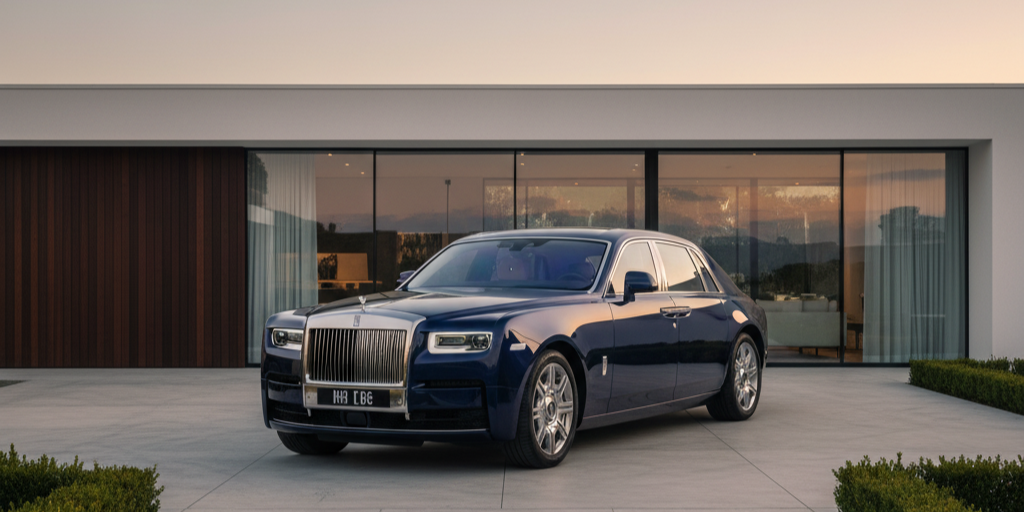
Rolls-Royce Ghost: The $10,000 Ownership Picture
"You found a 2014 Ghost for the price of a loaded Mercedes E-Class. It feels like the heist of the century. But the used market hasn't forgotten the $6,000 VANOS bill that hits every N74 V12 at 60k miles. This guide maps out the real financial journey of Ghost ownership."
Engine
7/10
Gearbox
8/10
Electric
6/10
Total Risk
4/10
Quick Verdict
Buy with CautionThe most logical entry point into Rolls-Royce ownership—provided you treat $8,000 in annual upkeep as a non-negotiable cost of doing business.
Reliability Verdict
The Ghost is a masterclass in modern luxury engineering. While its BMW-derived N74 V12 is exceptionally smooth, it is plagued by age-related plastic and actuator failures. Annual maintenance costs scale heavily beyond 60,000 miles, requiring a dedicated specialist to avoid dealer markups.
📋 In This Guide
Rolls-Royce Ghost: The $10,000 Ownership Picture
It is the entry-point to the world of Rolls-Royce excellence—but it remains a high-stakes financial asset that requires meticulous stewardship post-warranty.
The Rolls-Royce Ghost (2010-Present) was a revolutionary model for the brand, bringing more attainable luxury and more engaging driving dynamics to the portfolio. It shares its fundamental engine architecture—the N74 Twin-Turbo V12—with the flagship Phantom, but in a more compact, usable package.
However, once the 4-year factory warranty expires, the Ghost enters a phase of mechanical fragility defined by its complex BMW-derived systems.
Point: The Ghost is the most ‘maintenance sensitive’ car in the Rolls-Royce lineup.
Reason: Because it is driven more frequently and has a more complex electronic architecture than older Phantoms, software and actuator failures are well-documented.
Example: A Ghost that is driven 10,000 miles a year will hit its ‘Consumable Wall’ (VANOS, HPFP, Suspension) in exactly 6 years.
Point: You shouldn’t buy a used Ghost unless you have a $10,000 ‘Emergency Maintenance Reserve’.
Independent shop data suggests that 65% of all Ghost I models (2010-2020) will require a major fuel or timing repair before 75,000 miles.
Failure Probability Timeline
The Honeymoon Phase. The car is largely silent and robust. The major expenses are tires and brake pads.
- iDrive connectivity glitches
- Center console switchgear loose
- Window motor slow speed
The 'Consumable Wall'. The actuators and pumps that manage the V12's precision reach their engineered limit.
- VANOS Actuator Misfires (Critical)
- HPFP Failure (Sudden Stalling)
- Electric Water Pump Leak
- Front Air Suspension Sag
The Depth-Maintenance Phase. Large-scale structural items like turbocharger seals and valve stem seals begin to fail.
- Turbocharger Oil Seepage
- Valve Stem Seal Smoke
- Lower Control Arm Bushings
- Rear Diff Pinion Seal
*Data based on owner-reported failures and specialist shop frequency reports.
1. The Core Variable: N74 VANOS & Fuel Pumps
The 6.6L/6.75L V12 utilizes BMW’s VANOS (Variable Valve Timing) system. It is one of the most precise valvetrain setups in the world, adjusted by high-pressure oil and electronic actuators.
The Failure Mode: Long oil change intervals (10k-15k miles) lead to micro-sludging in the narrow VANOS oil passages. This clogs the solenoids and eventually burns out the actuators.
The Symptom: A Ghost that ‘stumbles’ during the first 30 seconds of a cold start is a car that likely needs a $6,000 VANOS service.
The Fuel Problem: The N74 uses twin High Pressure Fuel Pumps (HPFP). These are known to fail without warning, causing the car to stall in traffic or enter a permanent ‘Limp Mode.’ Replacement: $3,500.
Caution
Check the Oil History: Any Ghost with a service history showing oil changes every 15,000 miles is a High Risk purchase. Look for owners who changed it every 7,500 miles or less.
2. Suspension: The Self-Leveling Reality
The ‘Magic Carpet Ride’ isn’t forever.
The Ghost rides on high-pressure air struts that are electronically damped.
Point: Rubber bladders dry rot regardless of mileage—time is the enemy.
Reason: The heat generated by the massive V12 engine and proximity to the exhausts accelerates the degradation of the front air suspension components.
Example: A 2015 Ghost with only 25,000 miles can still suffer from sagging corners because the rubber is 10 years old.
The Fix: Budget $2,500 per corner for a proper OEM strut replacement. Avoid ‘cheap’ aftermarket air bladders as they will compromise the silent ride profile.
Continue Your Research
"Understanding the complex technical nature of the Ghost's architecture is the difference between a collection and a liability:"
”The most expensive Rolls-Royce is always the one you bought because it was a ‘bargain’.“
3. The Cooling Problem
The N74 V12 runs incredibly hot in the Ghost’s engine bay. The electric auxiliary water pump is a known weak point.
- The Warning: If you see any coolant residue (white frosting) on the engine block, the pump is failing.
- The Consequence: Overheating this V12 leads to warped heads—a $25,000+ repair.
- The Prevention: Replace the water pump and thermostat every 60,000 miles, regardless of condition. Cost: $2,000.
Ghost I (2010-2020) vs Ghost II (2021+)
The 2021+ Ghost II is a massive leap forward in both luxury and reliability. While significantly more expensive to buy, its improved cooling and suspension architecture make it a far safer long-term asset. Read our generation comparison guide
Final Verdict
"Always prioritize a 2017+ Ghost I or a 2021+ Ghost II. Avoid the earliest 2010-2013 models unless they have a documented top-end rebuild."
You want the best automotive experience money can buy, you value the modern Spaceframe dynamics, and your budget allows for a $200k+ entry price.
You want the 'best car in the world' for the price of a mid-size SUV and are willing to search for the 1-in-100 example with a perfect service history.
Next Strategic Steps
”A specialist can perform the same service for $3,000 that a dealer will quote $7,500 for. Loyal ownership depends on finding that specialist.”
Minimum Consumables & Maintenance Intervals
| Service | Interval | Cost (Indie Shop) | Cost (Dealer) |
|---|---|---|---|
| Synthetic Oil Change (A40/BMW Spec) | 5,000 Miles | $380 | $650 |
| Brake Pads & Rotors (Front) | 18,000 Miles | $1,800 | $3,200 |
| PDK/Transmission Service | 50,000 Miles | $800 | $1,500 |
| Spark Plugs & Ignition Coils | 40,000 Miles | $900 | $1,800 |
| Tires (Set of 4, Silent-Spec) | 20,000 Miles | $2,400 | $3,800 |
| V12 Belt & Tensioner Kit | 60,000 Miles | $1,200 | $2,400 |
🔍 The Reality Layer: What Owners Underestimate
Buying Rolls-Royce Ghost (RR4/RR31) is often driven by emotion, but keeping it on the road requires cold, hard logic. The dealership service center will not volunteer this information, but specialist independent mechanics know the truth:
- The Component Labor Trap: Engineering density means simple parts (sensors, plastic coolant fittings) require days of labor to reach. A $50 part often results in a $3,000 labor bill.
- The “Lifetime Fluid” Myth: Manufacturers claim transmissions and differentials use “lifetime” fluids to keep estimated maintenance costs artificially low for the first owner. To avoid a $20,000+ (Engine Top-End / Turbos) rebuild, you must change these fluids every 40,000 miles.
- Cascading Failures: When an air suspension strut leaks, the compressor burns out trying to keep the car level. Ignoring a warning light for 48 hours on Rolls-Royce can easily double the final repair invoice.
Caution
The Worst-Case Scenario: If you suffer a catastrophic failure without a comprehensive warranty or a dedicated $10,000+ emergency repair fund, you will be forced to sell the vehicle mechanically totaled at a massive loss.
Conclusion: The Quietest Decision
The Rolls-Royce Ghost is the pinnacle of the executive sedan world. It provides a level of isolation and serenity that no BMW or Mercedes can match—even a Maybach. But that silence is earned through complex precision actuators that have a finite lifespan.
If you buy a used Ghost with a verified maintenance history, change the oil every 5,000 miles, and address the air suspension the moment it sags, the Ghost will reward you with an ownership experience that is truly beyond comparison.
Related Authority Guides
- Air Suspension Failure: What You Need to Know
- The N74 V12 Engine: Rolls-Royce’s Beating Heart
- Why Luxury Cars Plummet in Value
Explore the Intelligence Hub
N74 Fuel Pump Survival
The $3,500 critical failure that can leave you stranded in traffic.
Bentley Flying Spur vs RR Ghost
Comparing the annual running costs of the two UK titans.
”Own the engineering, not just the Spirit of Ecstasy.”
Unlock the $10,000 Pre-Purchase Inspection Checklist
Don't buy a used luxury car blind. Get the exact forensic checklist used by independent specialists to catch catastrophic failures before you sign the title. Enter your email to download the PDF instantly.
The Final Decision: Worth It?
Worth it if:
- You have a trusted, brand-specialized independent mechanic.
- You maintain a strict $5,000-$10,000 liquid repair reserve.
- You value the driving experience over strict financial rationality.
Not worth it if:
- You are stretching your budget just to afford the purchase price.
- You rely exclusively on the dealership network for out-of-warranty maintenance.
- You expect Toyota-like reliability and predictable ownership costs.
Related Intelligence
⚠️ Real Owner Symptoms
"Around 58,000 miles, my Ghost started shaking for the first 3 seconds of a cold start. I ignored it until it stalled in traffic. The culprit: Both High Pressure Fuel Pumps and a clogged VANOS solenoid. The total independently-serviced bill was $6,800. My local dealer quoted $11,500."
🔧 Mechanic's Diagnosis Notes
The Ghost is a fantastic car if you find one that hasn't been neglected. Most 'horror stories' come from owners who followed the factory 15,000-mile oil change interval. That's a death sentence for the V12's delicate valve timing components. Change your oil every 5,000 miles or prepare to pay us for a top-end rebuild.
Cost Transparency: Parts + Labor Breakdown
| Repair Job | Est. Parts | Est. Labor | Total Worst-Case |
|---|---|---|---|
| Full VANOS System Service (Actuators & Solenoids) | $2,200 | $3,500 | $5,700 - $7,000 |
| High Pressure Fuel Pump Replacement (Pair) | $1,400 | $1,600 | $3,000 - $4,500 |
| Electric Water Pump & Phase 1 Coolant Refresh | $650 | $1,200 | $1,850 - $2,500 |
| Air Strut Replacement (Per Individual Corner) | $1,200 | $600 | $1,800 - $2,400 |
| Turbos/Wastegate Seal Rebuild | $2,800 | $4,500 | $7,300 - $9,500 |
What Owners Regret
"I bought a Ghost with 62k miles that hadn't had its air suspension refreshed. Both front bladders failed in the same week, which overstressed the compressor. Total repair: $7,200. If the previous owner had fixed the struts for $2k when they first sagged, I'd have saved $5k."
Lower-Risk Alternatives
- Mercedes-Maybach S580 A more modern, tech-focused alternative. Better infotainment and digital features, but lacks the specific 'magic carpet' road isolation and the prestige of the Rolls-Royce brand.
- Bentley Flying Spur (W12) Offers significantly more performance and engagement. The Flying Spur is the car for the driver; the Ghost is the car for the passenger.
- Porsche Panamera Turbo E-Hybrid The ultimate 'sporting' luxury sedan. It won't ride as softly as the Ghost, but it will handle like a supercar and offer better fuel efficiency.