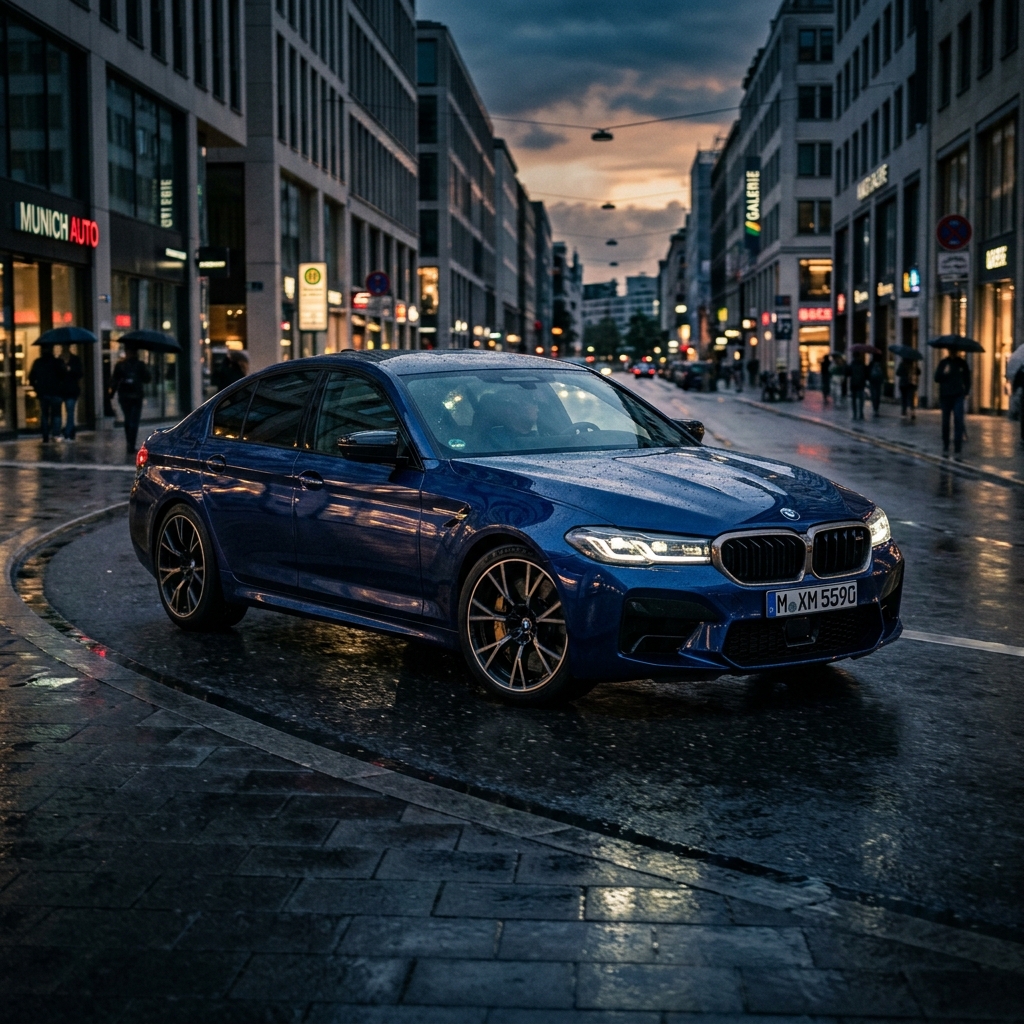
BMW M5 F90 (S63TU4): Engine Issues & Prevention Guide
"The F90 M5's S63TU4 engine is the most refined version of BMW's twin-turbo V8. The coolant expansion tank design flaw is its one major weakness. Here's how to prevent it."
Engine
7/10
Gearbox
7/10
Electric
6/10
Total Risk
4/10
Quick Verdict
Buy with CautionExpect significant running costs. Manageable if preventative maintenance is done.
Reliability Verdict
The F90 M5 (S63TU4) is the most reliable M5 in a generation. BMW fixed the S63TU's rod bearing vulnerability with revised clearances and a quasi-dry-sump oiling system. The main documented risk is the LPFP recall - ich BMW must complete for free. Expansion tank and coil packs are the typical wear items. Stock, well-maintained F90s have shown strong durability approaching 100k miles.
Executive Intelligence Summary
BMW M5 F90 reliability guide. S63TU4 LPFP recall, coolant expansion tank, and owner reports from 2018-2023 models. Year-by-year analysis and ownership costs.
In This Guide
BMW M5 F90 Reliability: Is the S63TU4 Finally Fixed?
The BMW M5 F90 (2018 - 23) is the most technologically advanced M car ever built. All-wheel drive. 600 horsepower. Rear-drive mode. A dual-clutch transmission and the revised S63TU4 engine.
It is also, critically, the most reliable M5 since the E39.
The F10 M5 era (S63TU) scarred the M community with BMW M5 Reliability & Real Costs anxiety and injector failures. Has BMW fixed it?
Yes - stly. Here is the complete analysis.
1. What Changed on the S63TU4 (vs S63TU)
BMW did not simply bolt bigger turbos onto the old S63TU. The TU4 is a substantial revision:
- Revised BMW M5 Reliability & Real Costs: Wider clearances, improved metallurgy. The catastrophic clearance-related failure mode of the S63TU is dramatically less likely.
- Solenoid Injectors: The piezo injectors (the “Index 11 washout” risk) are gone. Solenoid units are used instead, with a much lower failure rate.
- Quasi-Dry-Sump Oiling: The F90 M5 uses a reservoir-assisted oil system similar to race cars. Under high G-loads or track use, oil starvation at the crank is prevented.
- Better Intercooling: Revised intercooler routing improves charge air cooling, reducing heat-related stress.
The result: Bimmerpost’s F90 reliability thread - one of the largest in BMW forums - ows multiple owners with 2018 - 21 M5s and zero major engine failures.
2. The LPFP Recall: The F90’s One Big Weakness
The Low-Pressure Fuel Pump (LPFP) is the known Achilles heel of the F90 M5 and G-generation BMWs.
The Problem
The LPFP impeller (plastic) can crack under thermal stress or fuel quality variation. When it does:
- The engine may stall at speed.
- Hard starts or no-starts occur.
- Fuel pressure drops below threshold and the engine goes into limp mode.
BMW’s Response
BMW issued a safety recall (23V-625 in the US) covering multiple models including the F90 M5. The pump must be replaced at no cost to the owner.
Action Required
- Check your VIN at NHTSA.gov for open recalls.
- If the recall is open, schedule immediately - is is a safety issue.
- If you are buying a used F90 M5, verify the recall is closed/complete in the service history.
3. Coolant Expansion Tank
The expansion tank on the S63TU4 is plastic and susceptible to cracking, particularly around the cap seat and the lower seam.
- Symptom: Low coolant warning, visible coolant residue (white powder) around the cap.
- Risk: If not addressed, the car will slowly lose coolant. An empty system causes catastrophic overheating.
- Fix: Replace tank. $200 - 00 part + $200 labor. Do not ignore this.
4. Year-by-Year Reliability (2018 - 23)
| Year | Engine | Known Issues | Reliability |
|---|---|---|---|
| 2018 | S63TU4 | LPFP (Recall), early software calibration issues | Good |
| 2019 | S63TU4 | LPFP (Recall), minor iDrive bugs | Good |
| 2020 | S63TU4 | LPFP (Some), Competition Pack power delivery | Very Good |
| 2021 | S63TU4 | LPFP (Later batch), coolant tank | Very Good |
| 2022 | S63TU4 | Minimal reports; latest calibration | Excellent |
| 2023 | S63TU4 | Too new for long-term data | Excellent (projected) |
5. Maintenance & Running Costs
| Service | Interval | Cost (Dealer) | Cost (Indie) |
|---|---|---|---|
| Oil Change (5W-40) | 5,000 miles | $400 | $200 |
| Spark Plugs | 20,000 miles | $800 | $600 |
| Brake Service (Front) | 20,000 - ,000 miles | $2,500 | $1,500 |
| Transmission Fluid | 30,000 miles | $900 | $600 |
| Annual Total | - $3,500 - ,000 | $2,000 - ,500 |
6. Buying Guide
- Best Year to Buy: 2020 - 22. LPFP recall mostly complete, software mature.
- CPO vs Used: CPO F90s give BMW warranty coverage. Given potential for cooling/fuel system issues, the CPO premium is worth it.
- Mileage Sweet Spot: 20,000 - ,000 miles. Still under or near BMW’s Limited Warranty threshold for used vehicles.
- Avoid: Heavily tuned examples with upgraded turbos or high-boost maps. These cars stress the bottom end beyond the TU4’s improvements.
Related Resources
- BMW S63 Engine Reliability: Complete Guide
- BMW M8 F92 Ownership Cost
- BMW M5 vs Audi RS7 Reliability & Real Costs
Executive Buying Advice
Verify the LPFP recall has been completed at a BMW dealer. Check the coolant expansion tank for hairline cracks (white residue around the cap). Avoid heavily tuned examples - the S63TU4 handles more power than the TU, but high-boost tunes still stress the bottom end.