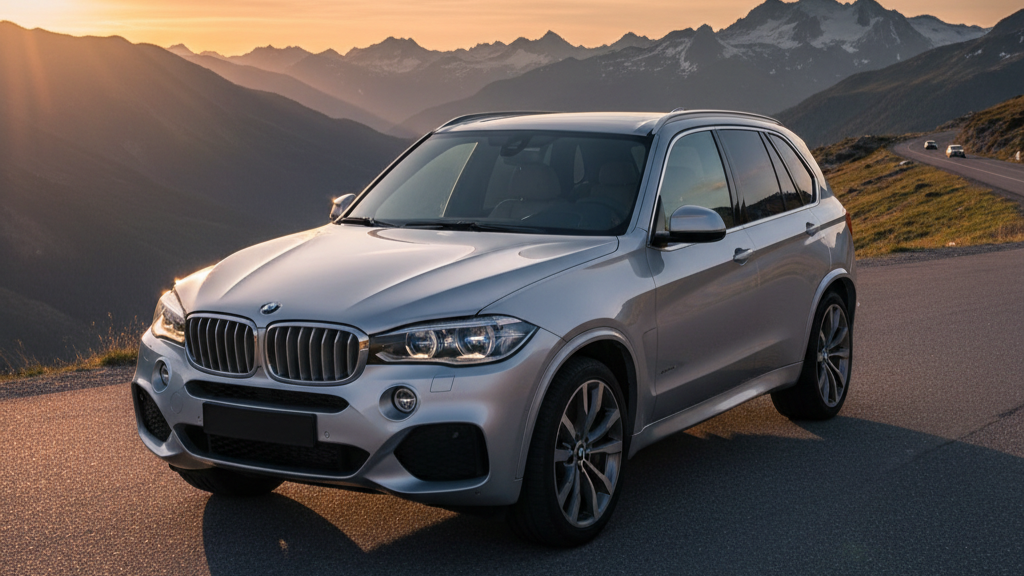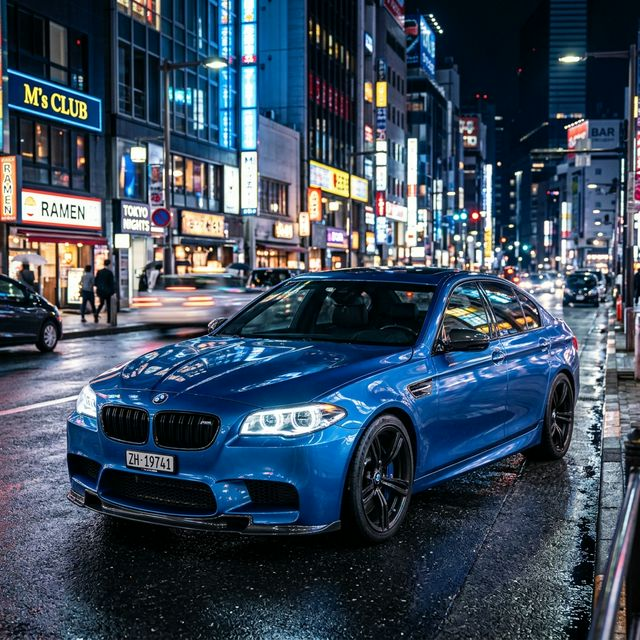
BMW M5 F10 Reliability: The Rewarding, Expensive Risk
"You see them listed for $30,000 — the same price as a new Honda Civic. 560 horsepower, twin-turbo V8, and the presence of a German diplomat. But behind the 'M' badge lies a mechanical reality that breaks wallets: the Rod Bearing lottery. This guide is your insurance policy."
Engine
5/10
Gearbox
6/10
Electric
6/10
Total Risk
8/10
Quick Verdict
Buy with CautionA high-stakes masterpiece. Proactive owners get a supercar-slaying sedan; reactive owners get a financial disaster.
Reliability Verdict
The F10 M5 is a performance bargain with a catastrophic 'binary' risk profile. The S63 engine is solid in its core but suffers from three cascading flaws: leaking injectors dilute the oil, which accelerates rod bearing wear, leading to a $25,000 engine failure. Most documented failures occur between 70k and 100k miles.
Overview
Is the BMW M5 F10 reliable? Technical guide to S63 rod bearing failure, 'Hot-V' turbo coolant leaks, leaking injectors, and why 'Dealer Maintained' is a dangerous term for this 560hp beast.
In This Guide
BMW M5 F10 Reliability: The Magnificent, Expensive Risk
560 Horsepower. Two Turbos. Eight Rod Bearings. One High-Stakes Decision.
The BMW M5 F10 (2012-2016) is currently in its ‘dangerous’ phase. It has depreciated to the point where it is accessible to almost anyone with a decent salary, but its maintenance costs remain anchored to its $110,000 original MSRP. Known for its explosive mid-range torque and surprisingly agile chassis, it is the last rear-wheel-drive M5.
Point: The F10 M5 is a masterpiece of engineering with two fatal, proactive requirements: Rod Bearings and Injectors.
Reason: The S63 twin-turbo V8 produces immense heat in the ‘V’ of the engine, cooking plastic components. Simultaneously, the fuel injectors are prone to leaking, which dilutes the engine oil with gasoline - tripping the lubrication from the rod bearings and leading to catastrophic engine seizure.
Example: A 2013 M5 with 75,000 miles on original bearings is a statistical outlier. Most specialist shops report visible wear on bearings by 60,000 miles, regardless of how ‘gently’ the car was driven.
Point: Ownership is a choice between a $4,000 insurance policy (bearings) or a $25,000 gamble (new engine).
Owner data reveals that M5s following the factory 15,000-mile oil interval are 4x more likely to suffer bearing failure than those on a 5,000-mile schedule.
Failure Probability Timeline
The Golden Era. Most F10 M5s feel bulletproof during this window. Early LCI (2014) update resolved initial DCT software glitches.
- Drivetrain malfunction (Software)
- Battery discharge (iDrive drain)
- Door handle sensor failure
The Critical Interval. This is where the M5 decides if it's going to stay a car or become a parts donor. Bearings and lines are the priority.
- Rod Bearing Spun
- Turbo Coolant Line leak
- Leaking Fuel Injector
- EDC Shock weeping
The High-Mileage Reality. If the engine survived the bearing window, the focus shifts to the chassis, transmission clutches, and cooling system.
- DCT Clutch slip
- Oil pump chain wear
- Differential bushing tear
- Turbocharger bearing play
*Data based on owner-reported failures and specialist shop frequency reports.
1. the Redline Lottery: S63 Rod Bearings
The S63B44T0 engine uses bearings with extremely tight clearances. When you add high oil temperatures (common in twin-turbo V8s) and the potential for fuel dilution from leaky injectors, the oil film breaks down.
The Danger Zone: Unlike the older V10 (S85), which would scream its failure, the S63 often fails silently. You might hear a slight ‘tick’ at 3,000 RPM, or you might simply get a ‘Low Oil Pressure’ light five seconds before the engine locks up.
The Solution: Proactive replacement with upgraded bearings (ACL or BE Bearings). This is carried out by dropping the subframe and oil pan. It is an 18-hour job, but it resets the engine’s lifespan. Cost: $3,800.
Caution
Warning for Tuned Cars: If you are buying an M5 with a ‘Stage 2’ tune or bigger turbos, the stress on the rod bearings is increased by ~40%. On a tuned car, the bearings move from a ‘recommended’ service to a ‘mandatory day-one’ service.
2. The ‘Hot-V’ Heat Soak: Turbo Lines
BMW’s decision to put turbos in the middle of the engine block comes with a thermal price.
Because the turbochargers sit in the valley of the engine, the plastic and rubber lines surrounding them are subjected to ‘kiln-like’ temperatures.
Point: By 60,000 miles, the turbo coolant and oil lines become as brittle as glass.
Reason: Constant heat cycling cooks the rubber. Eventually, the lines crack, leaking coolant or oil directly onto the hot turbo housings.
Example: If you smell burning oil through your AC vents after a spirited drive, your turbo oil lines are likely weeping. If ignored, the leaking coolant can cause the intercooler pumps to fail, leading to massive power loss (limp mode).
The Fix: Replacement with updated heat-shielded lines. Cost: $1,800.
Continue Your Research
"If you're serious about an F10 M5, these technical deep-dives are your best preparation:"
”The F10 M5 is a supercar in a business suit. It requires a supercar’s maintenance budget to maintain its dignity.”
3. The 4,300lb Challenge: EDC & Chassis
The M5 is a heavy car. It uses Electronic Damper Control (EDC) to hide its weight, but the physical laws of physics eventually win.
The Failure Points:
- EDC Shocks: These are magnetorheological dampers. They are prone to leaking internally and externally. A bouncy ride or a ‘clunk’ over speed bumps usually means a $1,200 shock is dead.
- Thrust Arm Bushings: The front suspension takes massive stress under braking. If the steering wheel shakes at 50-70mph, your bushings are ‘shot’. Upgrading to polyurethane bushings is a permanent fix.
- Differential Bushing: The massive torque of the V8 eventually rips the rear differential bushing. This manifests as a ‘thud’ during hard 1-2 shifts.
Financial Reality: Refreshing the suspension and bushings on a 70,000-mile M5 will cost approximately $4,000, but it will return the car to its factory ‘sharpness’.
4. The M-DCT Dual-Clutch Transmission
BMW’s ‘Lifetime’ fluid lie.
The M-DCT is a fantastic transmission, but BMW claimed the fluid was ‘lifetime’. Enthusiast data shows that the fluid degrades and the internal filters clog by 50,000 miles.
Symptoms of Neglect:
- Harsh engagement when cold.
- Hesitation during downshifts.
- Oil seepage from the plastic transmission pan (which warps over time).
Expert Recommended Maintenance: Change the fluid and filters every 40,000 miles. This prevents the mechatronic unit from failing, which is a $6,000 repair.
F10 M5 vs E63 AMG (W212)
The AMG is objectively the 'safer' buy for reliability, but the M5's Dual-Clutch gearbox and pure RWD chassis offer a connection the Mercedes lacks. Read the full M5 vs E63 comparison
Final Verdict
"Only buy an F10 M5 if you have a minimum $10,000 liquid fund for immediate maintenance and the inevitable 'M-tax' repairs."
You want the revised engine software, better interior tech, and the peace of mind that early production 'bugs' were ironed out by the factory.
You are looking for the absolute lowest entry price and plan to build a 'monster' project car where the original components are being replaced anyway.
Next Step: Your Path to Authority
The F10 M5 is a ‘legacy’ asset. It rewards the diligent and punishes the hopeful.
Performance Maintenance Schedule
| Service | Interval | Cost (Spec) | Cost (Dealer) |
|---|---|---|---|
| High-Performance Oil (5W-40) | 5,000 Miles | $220 | $400 |
| Spark Plugs (S63 Heat Range) | 20,000 Miles | $450 | $850 |
| M-DCT Transmission Service | 40,000 Miles | $950 | $1,800 |
| Fuel Injectors (Index 12) | 70,000 Miles | $2,800 | $4,500 |
| Rod Bearing Prophylaxis | 70,000 Miles | $3,800 | $6,500 |
| Brake Rotors & Pads | 30,000 Miles | $2,200 | $4,000 |
Is the F10 M5 reliable? No. Is it worth it? If you have the budget to address its flaws, it is one of the most capable and rewarding four-door cars ever made.
Conclusion: The Final Rear-Drive Legend
The BMW M5 F10 occupies a unique spot in history. It brims with character, offers a manual transmission option (in the US), and delivers a level of RWD drama that the newer AWD M5s have filtered out. However, it is not a car for the faint of heart or the light of wallet. Ownership is a partnership — if you provide the preventive care it demands, it will provide some of the fastest miles you’ll ever experience.
If you are looking for a ‘safe’ luxury sedan, buy a Lexus. If you are looking for an M-Division masterpiece and are willing to pay the ‘entry fee’, the F10 M5 is waiting.
Related Authority Guides
- BMW M5 F90 Reliability: Is AWD Safer?
- BMW S63 vs N63: Why the ‘M’ Version is Better
- The Ultimate Guide to Modern V8 Super-Sedans
Explore the Intelligence Hub
M5 vs Audi RS7: The 4.0T Battle
Which German V8 supercar-killer is the smarter used purchase?
Leaking Injectors: The Silent Killer
How to check your fuel injectors before they destroy your rod bearings.
”Excellence is never accidental.”
Unlock the $10,000 Pre-Purchase Inspection Checklist
Before you commit to a used luxury car, use a thorough inspection checklist to catch common failure points. Enter your email to download our pre-purchase inspection guide as a PDF.
The Final Decision: Worth It?
Worth it if:
- You have a trusted, brand-specialized independent mechanic.
- You maintain a strict $5,000-$10,000 liquid repair reserve.
- You value the driving experience over strict financial rationality.
Not worth it if:
- You are stretching your budget just to afford the purchase price.
- You rely exclusively on the dealership network for out-of-warranty maintenance.
- You expect Toyota-like reliability and predictable ownership costs.
Related Intelligence
Real Owner Symptoms
"I was cruising at 70mph when a faint metallic tapping started. I pulled over, but by the time the tow truck arrived, the engine was locked. No warning lights. Just a $22,000 invoice for a new S63. I should have done the bearings at 60k."
Mechanic's Diagnosis Notes
BMW's 10,000-mile oil change intervals are the enemy here. The S63 runs hot, and the injectors tend to leak fuel into the oil. This thins the lubrication, and the tight-clearance rod bearings simply give up. We recommend 5,000-mile oil changes and mandatory bearing replacement by 75,000 miles.
Cost Transparency: Parts + Labor Breakdown
| Repair Job | Est. Parts | Est. Labor | Total Worst-Case |
|---|---|---|---|
| Rod Bearing Replacement (Preventive) | $900 | $2,800 | $3,700 - $4,200 |
| Turbo Coolant & Oil Line Overhaul | $500 | $1,200 | $1,700 - $2,100 |
| Fuel Injector Set (Index 12 Updated) | $1,800 | $900 | $2,700 - $3,300 |
| M-DCT Service (Fluid & Both Filters) | $450 | $600 | $1,050 - $1,350 |
| EDC Shock Replacement (Front Pair) | $1,600 | $600 | $2,200 - $2,600 |
| Thrust Arm Bushings (Poly Upgrade) | $250 | $600 | $850 - $1,150 |
Executive Buying Advice
Never buy an F10 M5 without a documented Rod Bearing service or a $4,000 discount to perform it immediately. Prioritize 2014+ LCI models for the improved NBT infotainment and revised suspension bushings.
What Owners Regret
"I bought a 'dealer-maintained' car thinking it was safe. It wasn't. The dealer followed the 'lifetime' fluid policy for the DCT and the 10k oil intervals. At 82,000 miles, the engine spun a bearing. 'Dealer-maintained' is a myth — you want 'Specialist-maintained'."
Lower-Risk Alternatives
- Mercedes-AMG E63 (W212) The M157 5.5L engine is arguably more reliable in its bottom-end than the S63, though it lacks the F10's dual-clutch transmission engagement.
- Audi RS7 (C7) The 4.0T V8 is a torque monster with fewer catastrophic 'sudden death' failure modes, though it suffers from turbo oil screen issues.
- Lexus GS F The ultimate 'sensible' choice. 5.0L naturally aspirated V8 with bulletproof reliability, though it lacks the raw torque of the BMW.