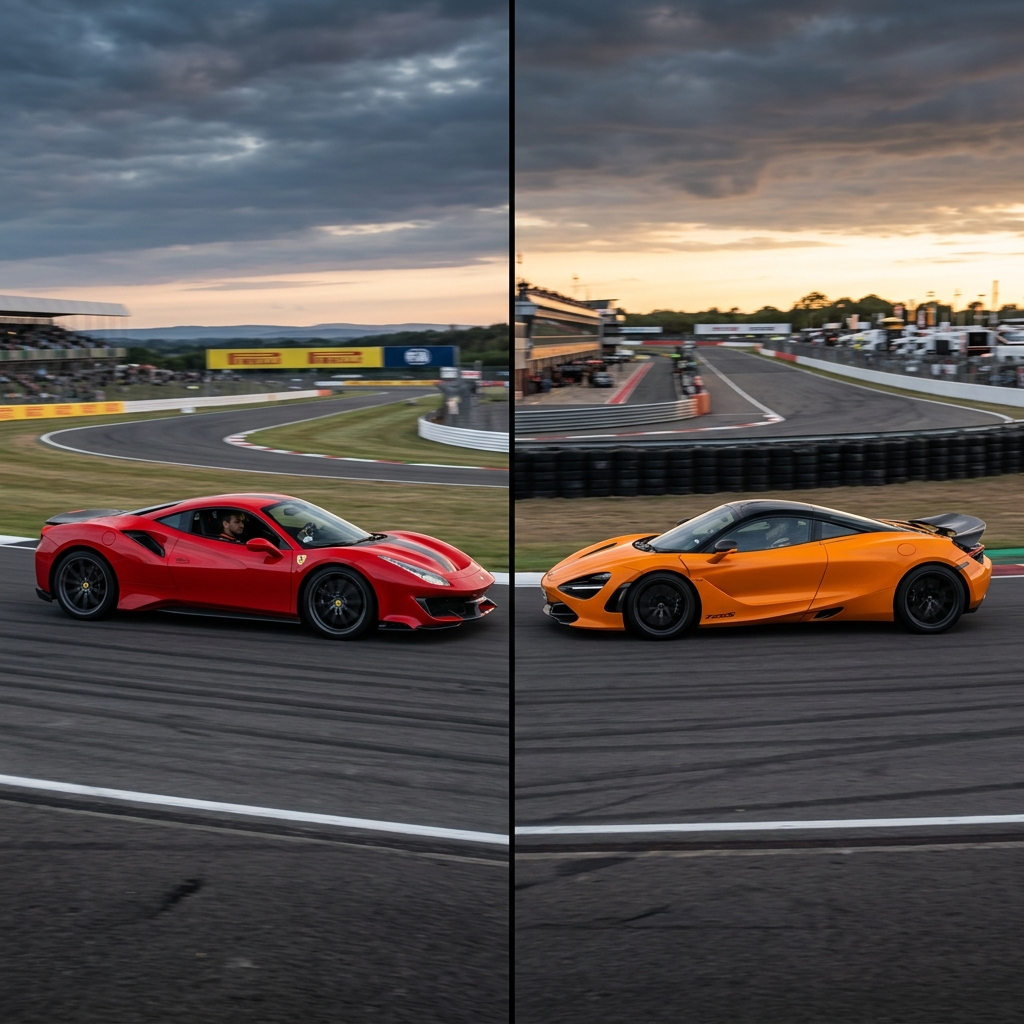
Ferrari 488 vs McLaren 720S: Maintenance & Running Cost Comparison
"Choosing between the Ferrari 488 and the McLaren 720S is a decision that could save - or cost - you thousands. This side-by-side comparison reveals the real reliability winner, with hard data on failure rates and ownership costs."
Engine
3/10
Gearbox
3/10
Electric
2/10
Total Risk
8/10
Quick Verdict
RunExtremely high risk of catastrophic failure. Requires massive emergency budget.
Reliability Verdict
The Ferrari 488 and McLaren 720S represent the pinnacle of turbo V8 performance, but their reliability profiles are polar opposites. The Ferrari is a reliable, 100k-mile machine with cosmetic quirks. The McLaren is faster but plagued by suspension leaks ($6k) and electrical 'limp mode' gremlins.
Executive Intelligence Summary
Supercar ownership costs: Ferrari 488 GTB vs McLaren 720S. Why the Ferrari holds value and the McLaren requires a $6,000/year warranty tax.
In This Guide
We have left the realm of daily drivers. If you are debating between a used Ferrari 488 GTB and a McLaren 720S, you are comparing two of the fastest, most advanced mid-engine supercars ever produced.
Both cars utilize massive Twin-Turbo V8 engines, carbon-ceramic brakes, and dual-clutch transmissions. But the ownership experience between the pride of Maranello and the pride of Woking could not be more different.
Mechanical Reliability: Evolution vs Revolution
Ferrari 488 GTB (The F154 V8)
Ferrari took immense criticism for moving away from naturally aspirated V8s, but the 3.9L Twin-Turbo F154 engine is an absolute masterpiece of reliability.
- The Reality: The 488 simply doesn’t break very often. Ferrari spent decades perfecting this layout. The dual-clutch transmission (which used to be a failure point on the older 458) is solid.
- The Flaws: The exhaust manifolds can occasionally crack (an issue carried over from the 458), and the interior buttons will literally melt and become sticky over time (a $2,000 cosmetic fix).
McLaren 720S (The M840T V8)
The 720S is noticeably faster than the 488 GTB. It utilizes a carbon-fiber tub, making it hyper-light and hyper-stiff. But McLaren is a much younger road-car company than Ferrari, and their cars still feel somewhat like beta-tests.
- The Accumulators: The McLaren uses an incredibly complex cross-linked hydraulic suspension system instead of traditional anti-roll bars. The nitrogen-filled accumulators leak and fail frequently. Your car will ride like a wooden wagon and throw a dash light. Cost: $5,000+.
- Electrical Gremlins: McLarens are infamous for simply deciding not to work. Door latches fail, sensors throw false ‘Limp Mode’ codes, and if the car is not kept on a trickle charger 100% of the time, the lithium-ion battery will die (and replacing the specialized battery costs over $3,000).
The Maintenance and Warranty Game
If you are buying either of these cars in the $200,000 to $250,000 price bracket, you are playing a high-stakes financial game.
- Ferrari’s 7-Year Plan: Every Ferrari 488 came with 7 years of free routine maintenance. If you buy a 2018 model in 2024, you still get one free year. Even after that expires, independent Ferrari specialists are plentiful, and an annual fluid service is around $2,000.
- McLaren’s Mandatory Tax: McLarens require meticulous annual servicing, often costing $3,000+ even when nothing is broken. More importantly, because the cars are so fragile electronically, buying the McLaren Extended Warranty (roughly $4,500 - $6,000 per year) is universally considered mandatory by the owner community.
The Stealth Cost: Depreciation
Ferraris hold their value. Due to strict dealership allocations, brand prestige, and mechanical reliability, the 488 GTB’s depreciation curve is remarkably flat.
McLarens, conversely, depreciate like falling rocks. Because the company continually released new models (765LT, Artura, 750S) and heavily discounted new inventory to hit sales targets, the used market for McLarens is brutal. You can buy a 720S for a massive discount compared to its original MSRP, but be prepared for it to keep dropping in value while you own it.
Conclusion
If your only metric is absolute, terrifying speed and alien technology, the McLaren 720S is unmatched. But from an ownership, reliability, and financial preservation standpoint, the Ferrari 488 GTB is vastly superior.
Never buy a McLaren without an extended warranty.
- Read More: Ferrari Ownership Problems Database
- Read More: Turbo Failure Diagnosis
Keep Reading
- Ferrari 458 Italia vs Porsche 911 Turbo: Drama vs Precision
- Ferrari 458 Italia vs BMW M8: The Icon vs The Beast
- Porsche 911 Turbo vs BMW M5: The Surgeon vs The Sledgehammer
Real Owner Symptoms
"Ferrari owners mostly complain about outdated infotainment systems over time. McLaren owners, however, frequently post about their cars randomly entering 'Limp Mode,' leaking hydraulic fluid on their garage floors, or refusing to start due to battery issues."
Mechanic's Diagnosis Notes
The Ferrari F154 V8 in the 488 is an incredibly stout powerhouse; we rarely see block failures. McLarens, however, spend an immense amount of time in our shop. The Proactive Chassis Control (PCCII) suspension uses hydraulic accumulators that inevitably fail, creating an incredibly harsh ride and a $5,000+ repair bill.
Cost Transparency: Parts + Labor Breakdown
| Repair Job | Est. Parts | Est. Labor | Total Worst-Case |
|---|---|---|---|
| 488: Annual Dealer Service (Post-7 Year) | $800 | $1,400 | $2,200/yr |
| 720S: Accumulator Replacement (Suspension) | $2,500 | $3,000 | $5,500 |
| 720S: Carbon Ceramic Brake Job | $15,000 | $3,000 | $18,000 |
Executive Buying Advice
Buy the Ferrari for real-world reliability and value retention. Never, under any circumstances, own a McLaren 720S without an active exclusionary warranty ($6k/year).
Lower-Risk Alternatives
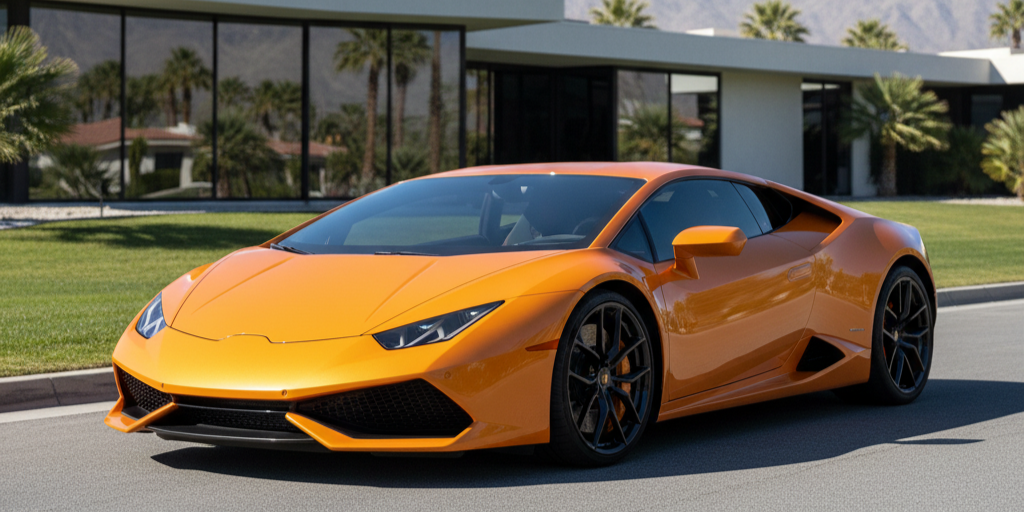
- Lamborghini Huracan EVO The Huracan completely bypasses the twin-turbo reliability issues of both cars by using a reliable, naturally aspirated Audi V10 that is significantly cheaper to maintain.