Carbon Cleaning Cost for Luxury Cars: $600 Walnut Blast vs $6,000 Manifold Replacement
"Your luxury car is losing power and idling rough - and your dealer wants $3,000 to fix it. The real solution costs $600 and takes 3 hours. Here's the complete cost breakdown by brand."
Quick Verdict
BuyRoutine maintenance. Budget $600-$1,200 every 50,000 miles.
Reliability Verdict
Carbon buildup on intake valves is inevitable on all direct-injection luxury engines. A $600-$1,200 walnut blast every 40,000-60,000 miles prevents $3,000-$6,000 manifold or valve replacements.
Overview
Carbon cleaning cost database for BMW, Audi, Porsche, Ferrari, and Mercedes. Walnut blasting vs chemical cleaning vs manifold replacement — real costs and intervals.
In This Guide
Luxury Car Carbon Cleaning Costs: The Complete Decision Guide
Important
Quick Cost Summary:
- Walnut Blasting (Standard): $600 - $1,200 (BMW, Audi, Mercedes)
- Walnut Blasting (Exotic): $1,200 - $2,500 (Porsche, Ferrari, McLaren)
- Chemical Pour-In Products: $30 - $100 (Partially effective at best)
- Intake Manifold Replacement (If ignored): $3,000 - $6,000
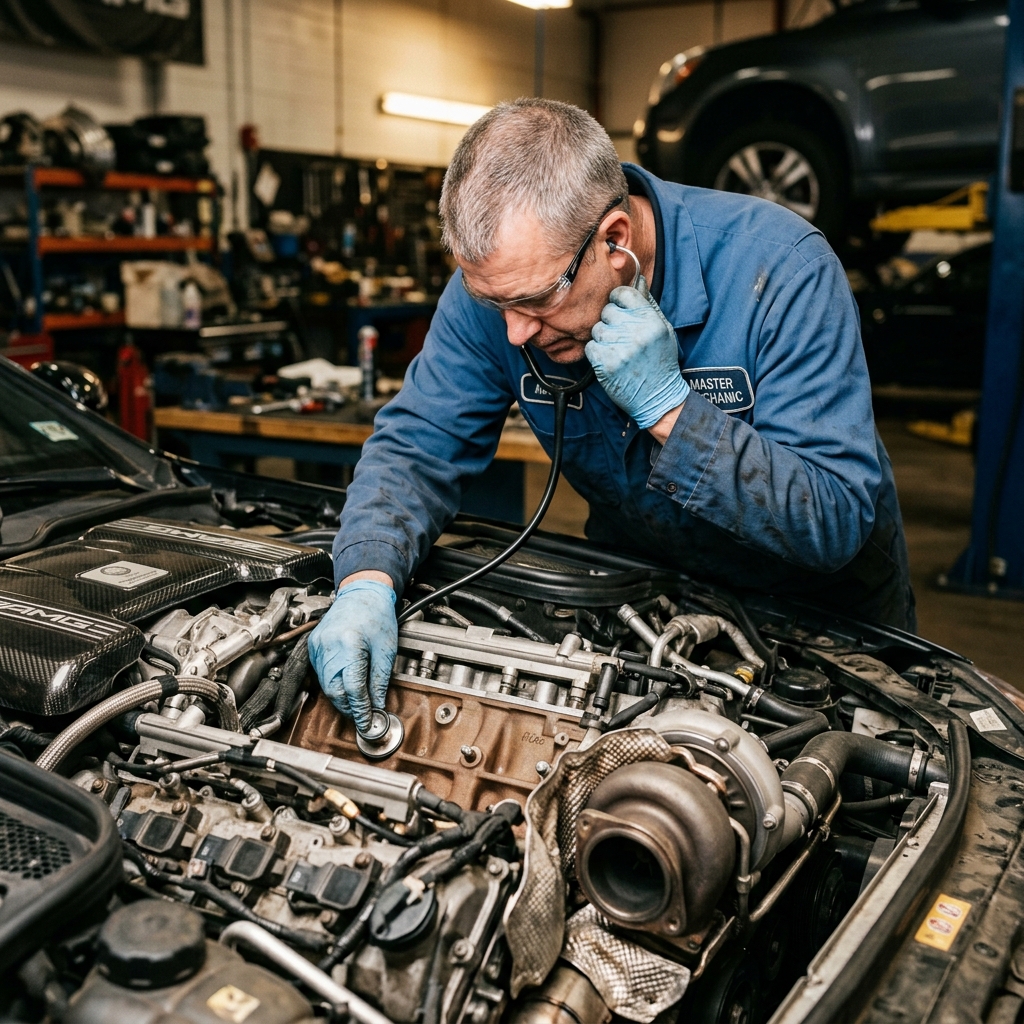
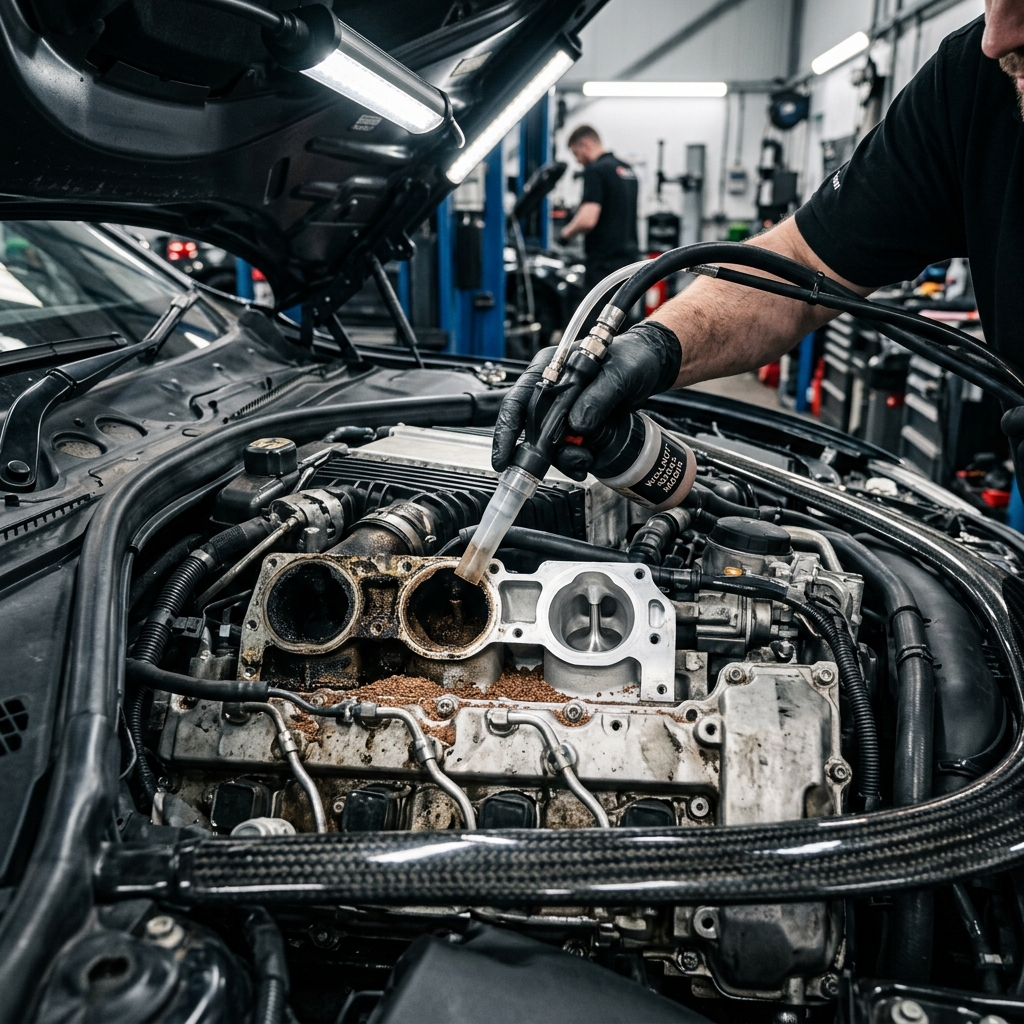
Every direct-injection luxury engine builds carbon deposits on the intake valves. Fuel no longer washes over the valves like it did with port injection, so carbon from crankcase ventilation bakes onto the valve stems in a thick, hardened layer. This is not a defect - it’s physics.
Cost by Brand: What You’ll Actually Pay
| Brand | Procedure | Average Cost | Recommended Interval |
|---|---|---|---|
| BMW (N54, N55, B58, S55) | Walnut Blast | $600 - $1,000 | Every 50,000 miles |
| Audi (EA888, 4.0T) | Walnut Blast | $700 - $1,200 | Every 40,000 miles |
| Mercedes (M274, M278) | Walnut Blast | $800 - $1,200 | Every 50,000 miles |
| Porsche (911, Cayenne Turbo) | Walnut Blast | $1,200 - $2,000 | Every 60,000 miles |
| Ferrari (F136, F154) | Walnut Blast | $1,500 - $2,500 | Every 40,000 miles |
The Solution: Walnut Blasting
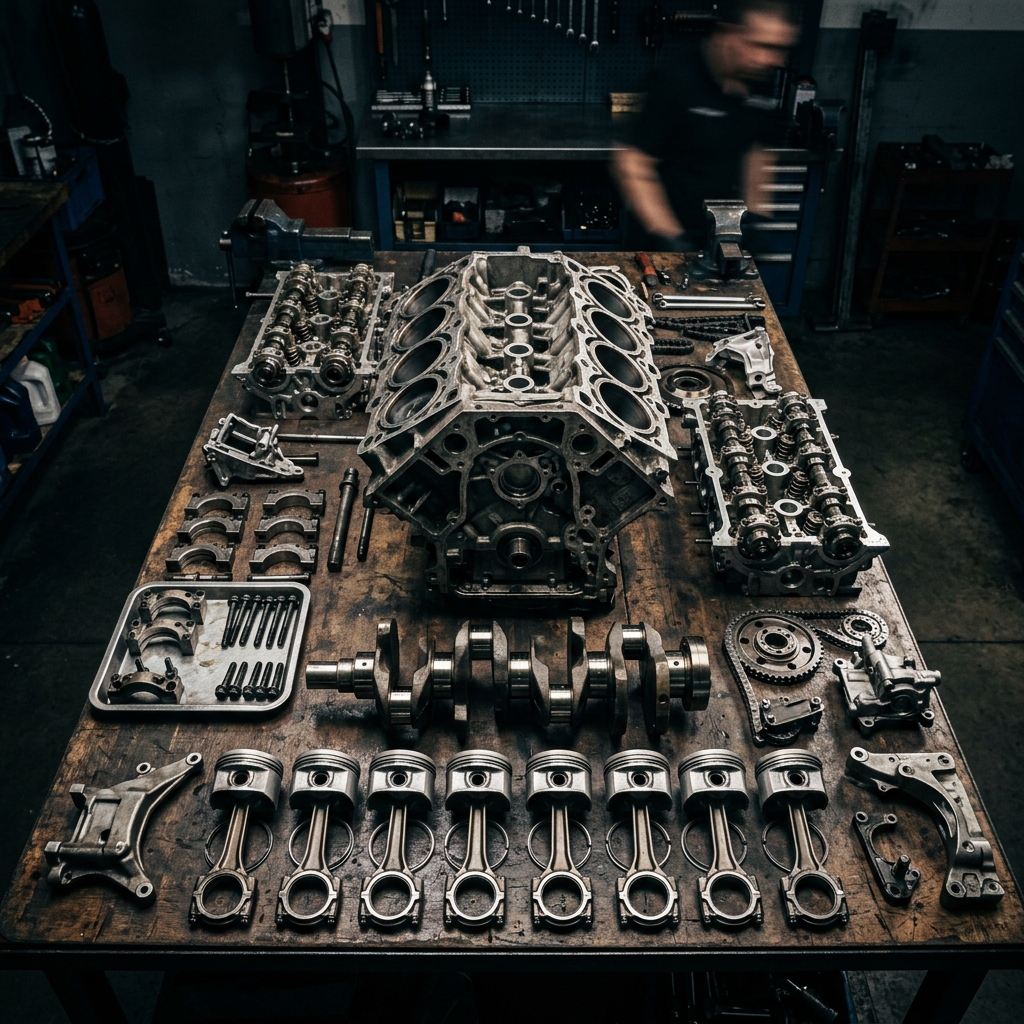
Walnut shell media is blasted at high pressure onto the intake valves while the engine is disassembled at the intake manifold. The shells are soft enough to remove carbon without damaging the valve seat, but hard enough to strip baked-on deposits.
Time: 2-4 hours (BMW/Audi) | 4-8 hours (Porsche/Ferrari)
Chemical pour-in products (like CRC GDI IVD Intake Valve Cleaner) are partially effective for light buildup but entirely ineffective against baked-on direct injection carbon.
The Reality Check
The Reality Check: What Owners Underestimate
The 'Lifetime' Lie
No manufacturer recommends carbon cleaning. They all claim their engines 'don't need it.' Independent shops universally disagree - and the misfires at 80,000 miles prove it.
Exotic Car Labor Multiplier
On a Ferrari 458 or McLaren 720S, the intake manifold is buried. What takes 2 hours on a BMW takes 6+ hours on an exotic - tripling the labor cost.
Diminishing Returns If Ignored
If you wait past 80,000 miles, carbon can become so hardened that walnut blasting alone won't remove it. At that point, the intake valves may need physical removal and hand-cleaning ($2,000+).
Is Carbon Cleaning Worth It?
Is Preventative Carbon Cleaning Worth the Cost?
Worth It If:
- You own any direct-injection luxury car (BMW, Audi, Mercedes, Porsche, Ferrari).
- You plan to keep the car past 50,000 miles.
- You want to maintain full engine power and smooth idle quality.
- $600-$1,200 every 50,000 miles is a manageable budget item for you.
NOT Worth It If:
- You are selling the car before 40,000 miles (carbon hasn't built up enough to matter).
- Your car has dual injection (port + direct) — like the 2020+ BMW B58 or Lexus 2GR. These self-clean.
- You only drive the car 2,000 miles per year (carbon buildup is slow at low mileage).
Dual Injection Systems: The Ultimate Fix
Some manufacturers have solved the carbon problem by adding port injection back alongside direct injection:
- Toyota/Lexus (2GR-FKS): Dual injection since 2015. Virtually zero carbon buildup.
- BMW (B58 Gen2, 2020+): Added port injection. Significant reduction in carbon.
- Porsche (9A2 Evo, 992 GT3): Dual injection. Near-zero carbon.
If you’re buying new, prioritize dual-injection engines. If you’re buying used, budget for walnut blasting.