Most Reliable Luxury Car Engines: The Definitive Rankings
"Good news: the The Most Reliable Luxury Car is one of the more reliable options in its class. But 'reliable' doesn't mean 'maintenance-free.' This guide covers every known weak point and the exact mileage where problems emerge."
Engine
9/10
Gearbox
9/10
Electric
8/10
Total Risk
2/10
Quick Verdict
BuyA highly reliable luxury option. Buy with confidence but verify service history.
Reliability Verdict
Excellent long-term reliability profile with manageable routine maintenance costs. Powertrain is solid, but electronics require periodic updates.
Executive Intelligence Summary
A definitive ranking of the most reliable and bulletproof luxury engines from Porsche, Lexus, BMW, and Mercedes-Benz.
In This Guide
When buying a used luxury car, the difference between a minor service bill and financial ruin comes down to one component: the engine block. While modern luxury vehicles are packed with failing electronics and leaking air suspension, certain engines were over-engineered to the point of being virtually indestructible.
This is the definitive guide to the most reliable luxury car engines ever built - e powertrains that can easily cross 200,000 miles with only basic maintenance.
1. Lexus 1UR-FE 4.6L / 2UR-GSE 5.0L NA V8
Found In: Lexus LS460, GS F, RC F, LC500, IS F
Reliability Score: 98/100
There is no debate in the automotive industry: Toyota/Lexus manufactures the most reliable large-displacement V8 engines on earth. The UR engine family features all-aluminum construction, forged rods, and dual VVT-i. It was engineered originally for the flagship LS sedan to conquer the Mercedes S-Class without the associated repair bills.
- Why it’s Bulletproof: It utilizes port and direct injection (D-4S system), which completely eliminates the carbon buildup issues that plague German direct-injected engines. The timing chain is massively thick and never stretches.
- Known Issues: The “Valley Plate” coolant leak can occur over 100,000 miles, requiring a few hours of labor to reseal. Otherwise, it is a million-mile engine.
2. BMW B58 3.0L Turbo Inline-6
Found In: Toyota Supra, BMW M240i, 340i, X5 40i, 740i
Reliability Score: 92/100
BMW has a long, troubled history with engines (see: S63, S85, N63), but in 2015, they built a masterpiece. The B58 is a “closed-deck” inline-6, meaning the engine block is immensely reinforced around the cylinders. It is so reliable that Toyota famously audited the engine block for three years before agreeing to use it in the MKV Supra.
- Why it’s Bulletproof: An air-to-water intercooler integrated into the intake manifold minimizes turbo lag and heat soak. The forged internals handle 500+ horsepower effortlessly on a stock block.
- Known Issues: The oil filter housing can sometimes crack or degrade over time (a classic BMW plastic issue), and PCV diaphragms can tear at high mileage.
3. Porsche “Mezger” Flat-6 (3.6L / 3.8L NA & Turbo)
Found In: Porsche 996 Turbo/GT2/GT3, 997.1 Turbo/GT2/GT3
Reliability Score: 90/100
Named after legendary engine designer Hans Mezger, this engine block was originally designed for the Porsche 911 GT1 Le Mans race car. Porsche simply detuned it and placed it in their street-legal GT and Turbo cars.
- Why it’s Bulletproof: While standard Carrera 996 and 997.1 models suffered from IMS bearing failures and bore scoring, the Mezger engine has no IMS bearing issue and features genuine dry-sump lubrication and a true split-crankcase design. It was built to run at 8,000 RPM for 24 hours straight.
- Known Issues: Coolant pipes are glued into the housing from the factory and will eventually blow out under pressure. They must be “pinned” or welded - mandatory $3,000 preventative service for all Mezger owners.
4. Mercedes-Benz M113 5.0L / 5.4L NA V8
Found In: Mercedes G500, S500, E55 AMG, SL500 (1998 - 06)
Reliability Score: 94/100
Before the era of complicated BiTurbo hot-V setups, Mercedes built the M113. A naturally aspirated, SOHC, 3-valve-per-cylinder V8. It is widely considered the most reliable V8 Germany has ever produced, often outlasting the electronic modules in the cars that surround it.
- Why it’s Bulletproof: Extreme simplicity. It uses incredibly thick, dual timing chains that never break. It makes low, lazy torque and is entirely unstressed in daily driving.
- Known Issues: Valve cover gasket oil leaks are inevitable but cheap to fix. The harmonic balancer rubber can degrade at high mileage and should be inspected.
5. Porsche 9A1 Flat-6 (3.4L / 3.8L)
Found In: Porsche 997.2 Carrera, 991.1 Carrera, 981 Boxster/Cayman
Reliability Score: 88/100
Introduced in 2009 to replace the fatally flawed M96/M97 architecture, the 9A1 completely eliminated the Intermediate Shaft (IMS) entirely by driving the camshafts directly from the crankshaft.
- Why it’s Bulletproof: It utilizes closed-deck architecture and an integrated dry-sump system with electronic demand oil pumps. It solved bore scoring and IMS issues in one fell swoop.
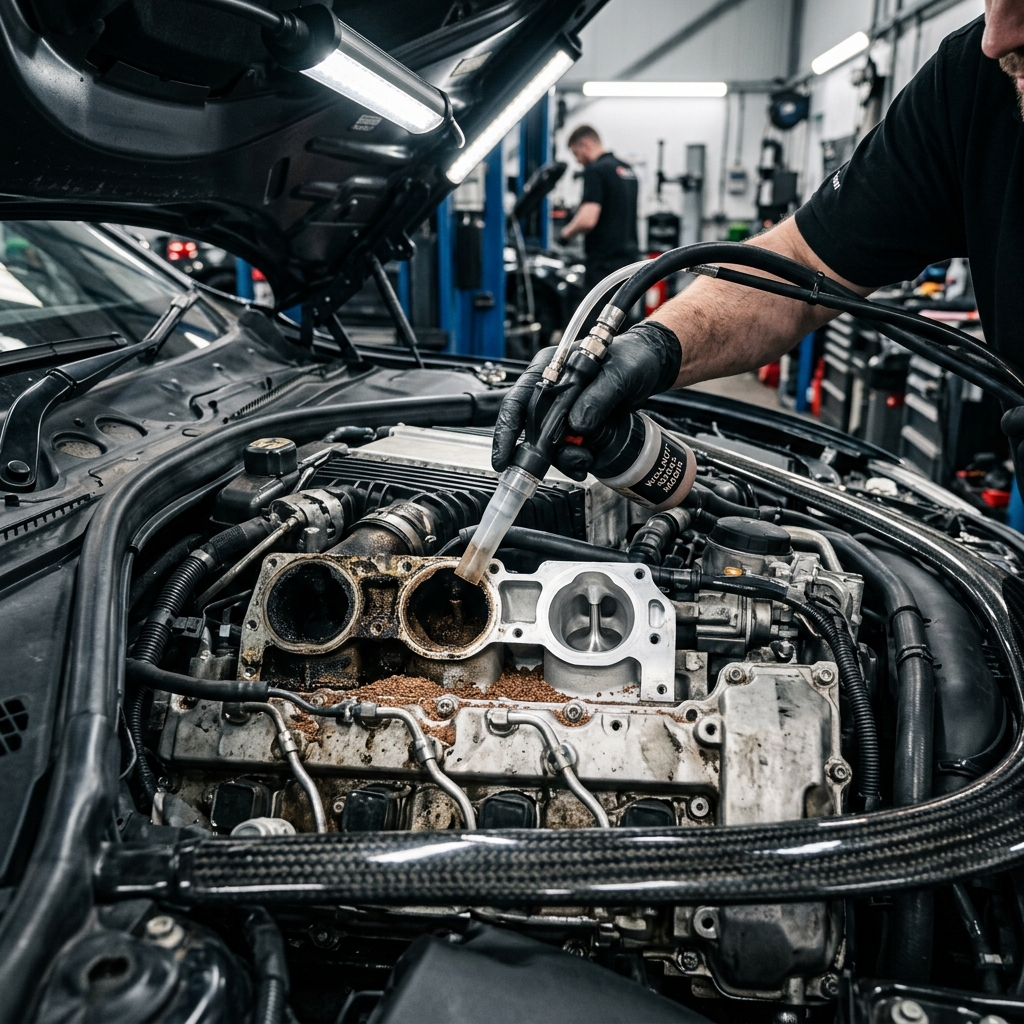
- Known Issues: Like all early direct-injected engines, it requires walnut blasting for carbon buildup around 80,000 miles. High pressure fuel pumps (HPFP) can occasionally fail.
The Common Thread of Reliability
If you analyze this list, the most reliable luxury engines share specific architectural traits:
- Low Thermal Stress: They do not mount turbos inside the engine valley.
- Solid Timing Systems: They use massively thick dual-row chains or gear-driven timing.
- Overbuilt Blocks: Closed-deck aluminum blocks originally engineered for motorsport or flagship applications.
Keep Reading
- Ferrari 458 Italia vs Porsche 911 Turbo: Drama vs Precision
- Ferrari 458 Italia vs BMW M8: The Icon vs The Beast
- Porsche 911 Turbo vs BMW M5: The Surgeon vs The Sledgehammer