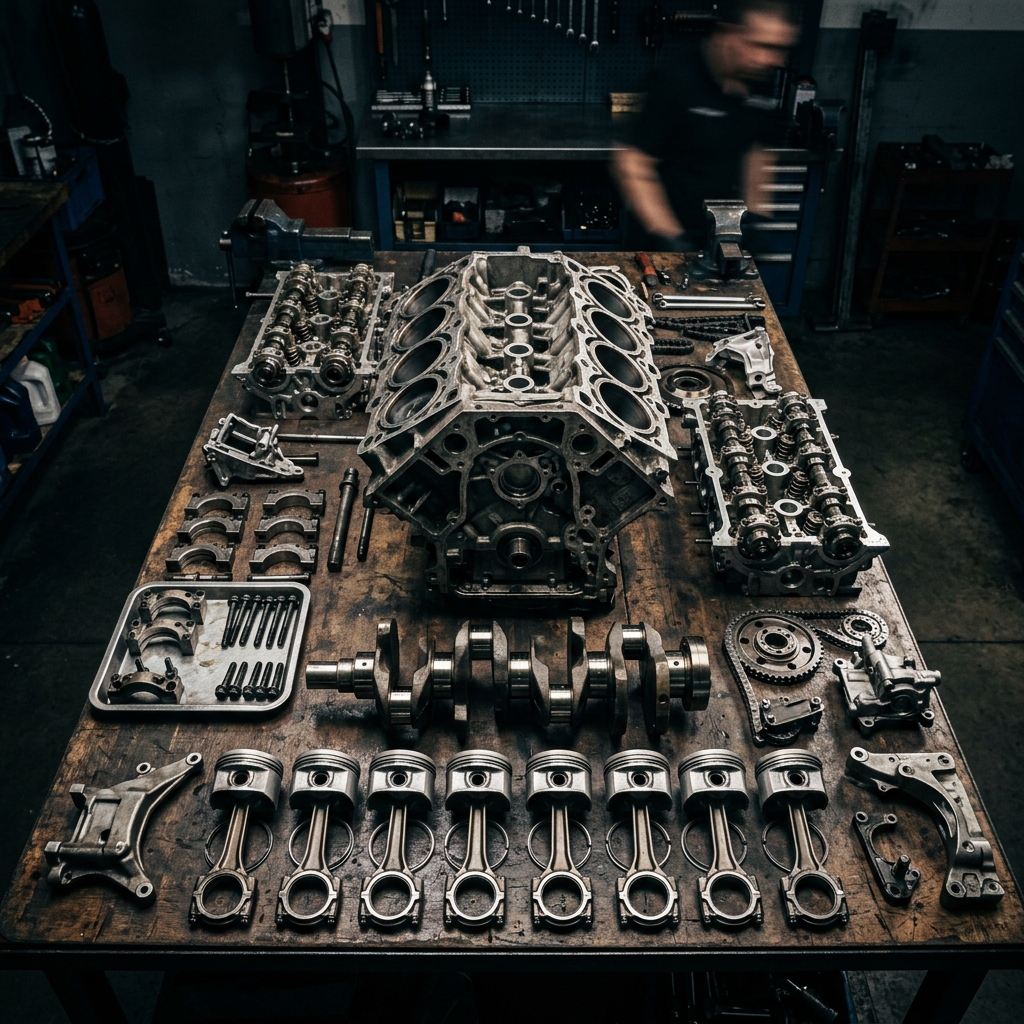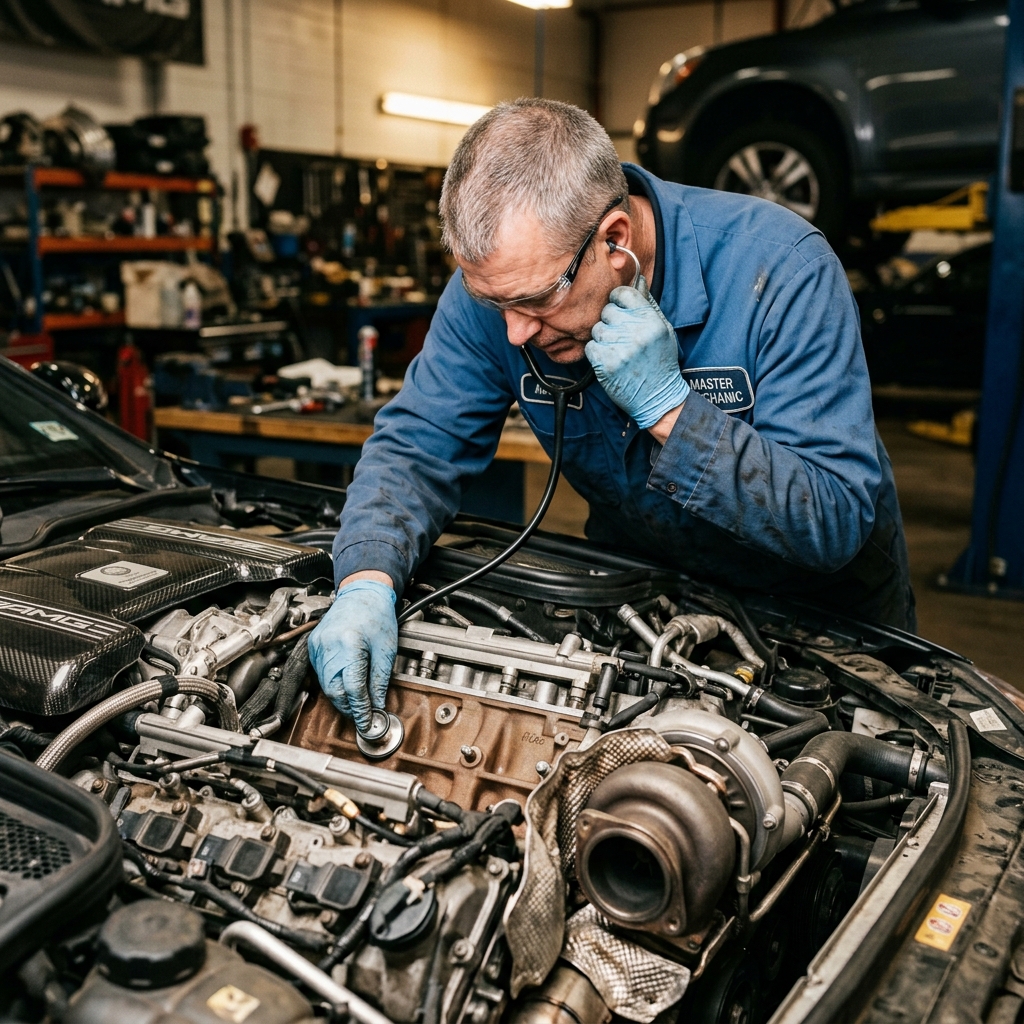
Total Loss: The 5 Most Unreliable Luxury Car Engines in History
"We'll be direct: these 5 engines have documented reliability issues that can result in five-figure repair bills. This guide explains exactly what fails, when it fails, and whether the ownership experience is worth the financial risk."
Engine
1/10
Gearbox
1/10
Electric
1/10
Total Risk
10/10
Quick Verdict
RunExtremely high risk of catastrophic failure. Requires massive emergency budget.
Reliability Verdict
High Ownership Risk: Complex systems and documented failure rates in primary components. Maintain a substantial ($5k+) repair fund.
Executive Intelligence Summary
A data-driven breakdown of luxury car engines with noted reliability challenges and high maintenance requirements.
In This Guide
Certain luxury cars look like bargains on the used market. A $115,000 V10 BMW M5 selling for $18,000. A beautiful $100,000 Range Rover depreciated to $25,000.
These are not always bargains. Ownership costs can be significant, directly tied to the reported failure patterns of the engines beneath their hoods.
This is a technical list of luxury engines with documented high-cost failure profiles - owertrains that require careful inspection and a dedicated maintenance budget.
1. BMW S85 5.0L Naturally Aspirated V10
Found In: E60 M5, E63 M6 (2005-2010)
Catastrophic Event: Rod Bearing Failure, VANOS Pump Shearing
Repair Cost Range: $12,000 - $25,000
BMW built an F1-derived V10 that revved to 8,250 RPM and sounded like a hypercar. However, the factory clearance tolerances on the Rod Bearings were far too tight for the specified 10W-60 oil.
- The Failure: As the engine revs cold, lack of lubrication destroys the bearing shell. The bearing spins, destroying the crankshaft. Concurrently, the high-pressure VANOS (variable valve timing) pump frequently shears its drive gear, sending metal collateral completely through the engine.
- Verdict: It is recommended to verify physical receipt proof that the rod bearings were replaced in the last 40,000 miles before acquisition.
2. Porsche M96 Flat-6 (3.4L / 3.6L)
Found In: Porsche 996 Carrera, 986 Boxster (1998 - 004)
Technical Risk: IMS Bearing Failure, D-Chunking, Bore Scoring
Repair Cost Range: $15,000 - 25,000
The M96 was Porsche’s first water-cooled Flat-6. To achieve specific production goals, Porsche utilized an Intermediate Shaft (IMS) supported by a sealed ball bearing.
- The Failure Pattern: The lubrication inside the IMS bearing can degrade over time. If the bearing fails, it can lead to timing chain issues and internal engine collision. Furthermore, the early 3.4L block can suffer from “D-Chunking” where a segment of the cylinder wall fails.
- Verdict: An engine requiring proactive management. Brand specialists often recommend the LN Engineering ceramic retrofit or Direct Oil Feed solution as a preventative measure.
3. BMW N63 4.4L Twin-Turbo V8 (Early Generations)
Found In: BMW 550i, 750i, X5 50i (2009 - 13)
Catastrophic Event: Valve Stem Seal Failure, Timing Chain Stretch, Injector Flooding
Repair Cost Range: $8,000 - 5,000
BMW’s first attempt at a “Hot-V” layout (mounting two turbos inside the engine valley). The heat generated was astronomical and cooked the engine entirely from the inside out.
- The Failure: The intense heat turns the rubber valve stem seals into brittle plastic. The engine begins consuming a quart of oil every 500 miles, blowing massive clouds of blue smoke at stoplights. The extreme operating temperatures also stretch the timing chains. BMW had to silently issue a “Customer Care Package” to overhaul tens of thousands of these engines.
- Verdict: Pre-2014 BMW 50i models exhibit higher risk profiles. Later “N63TU” variants show improved reliability.
4. Range Rover 5.0L NA & Supercharged V8
Found In: Range Rover L322, L405, Range Rover Sport (2010 - 15)
Catastrophic Event: Timing Chain Tensioner Failure, Cooling Pipe Rupture
Repair Cost Range: $6,000 - 2,000
The 5.0L V8 used in flagship Range Rovers handles extreme weight, but its timing system architecture is fatally flawed on early models.
- The Failure: The timing chain guides were made of aluminum with a steel pin that bored a harsh groove over time. This caused the chain to develop massive slack. The engine develops a loud “slapping” sound on startup. If ignored, the chain jumps time and bends the valves. Simultaneously, the plastic crossover coolant pipes routinely burst, causing instant over-heating.
- Verdict: Avoid 2010-2013 5.0L V8 models entirely. If looking at a 2014+, ensure the timing chain job has already been completed.
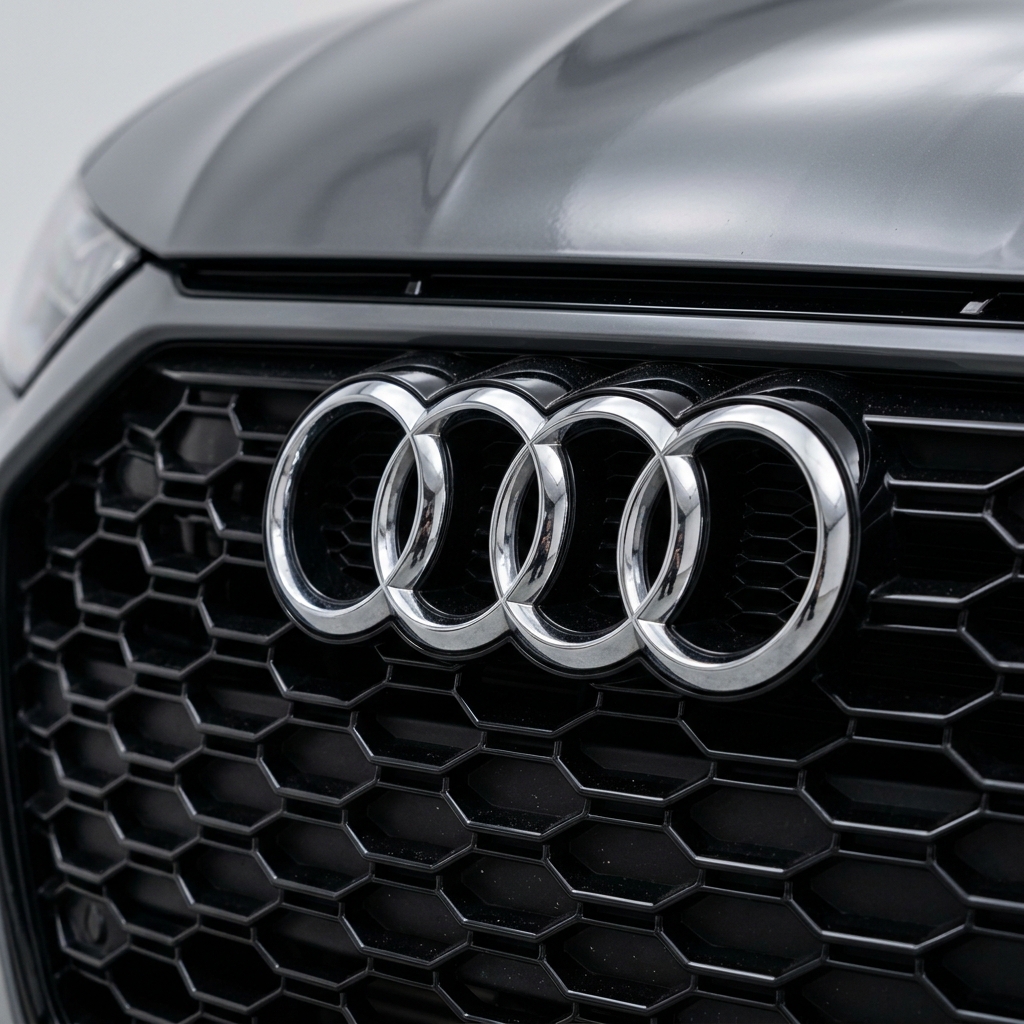
5. Audi / VW 4.2L V8 (BBK / BHF 40-Valve)
Found In: Audi B6/B7 S4, early A6/A8 (2004 - 08)
Catastrophic Event: Timing Chain Guide Destruction
Repair Cost Range: $7,000 - 0,000
Audi designed a brilliant, compact V8 that could fit perfectly into a small S4 sedan. To make it fit, they placed the entire timing chain assembly on the back of the engine, right up against the firewall.
- The Failure: The plastic timing chain guides become brittle due to heat cycling. By 80,000 miles, they crack and shatter. The chain develops terrifying slack and rattles violently on startup.
- The Catch: Because the timing system is on the back of the engine, the entire V8 must be removed from the car simply to replace a $50 piece of plastic. The labor bill frequently exceeds the value of the B6 S4 itself.
- Verdict: The ultimate high-labor-cost trap.
The Golden Rule of Used Luxury Cars
There is nothing more expensive than a cheap German V8. If you cannot afford the car when it is brand new, you cannot afford to replace the engine when it is used.
Always pay for a Pre-Purchase Inspection (PPI), demand oil sample analysis, and read specific engine-code buyer guides before wiring funds.
Keep Reading
- Ferrari 458 vs Porsche 911 Turbo: The $10,000 Gearbox Sensor Showdown
- Ferrari 458 vs BMW M8: Naturally Aspirated V8 vs S63 Tech-Drought
- Porsche 911 vs BMW M5: Reliability of the 9A1 Flat-6 vs S63 V8