Luxury Cars with the Highest Maintenance Costs: Annual Rankings
"Range Rover, BMW 7 Series, and Mercedes S-Class consistently rank as the most expensive luxury cars to maintain. Here's the data, ranked by average annual cost."
Engine
2/10
Gearbox
2/10
Electric
1/10
Total Risk
9/10
Quick Verdict
RunExtremely high risk of catastrophic failure. Requires massive emergency budget.
Reliability Verdict
High Ownership Risk: Complex systems and documented failure rates in primary components. Maintain a substantial ($5k+) repair fund.
Executive Intelligence Summary
A deep dive into the luxury vehicles that carry the highest annual maintenance and repair burdens, featuring McLaren, Rolls-Royce, and AMG cars.
In This Guide
Buying a depreciated luxury car is easy. Keeping it on the road is the true test of wealth. The purchase price of a used supercar or flagship luxury sedan is merely the entry fee to a world of bespoke parts pricing, specialized labor rates, and rigorous service schedules.
This guide highlights the vehicles that carry the most punishing annual running costs in the world. These estimates assume the car is driven 5,000 to 8,000 miles per year and is serviced exclusively post-warranty.
1. McLaren 720S / 765LT (The Supercar Tier)
Average Annual Cost: $8,000 - 5,000+ Hidden Nightmare: Proactive Chassis Control (PCC) Failure
McLaren builds some of the fastest cars on earth, but their maintenance schedule is punishing. They utilize an incredibly complex cross-linked hydraulic suspension system (PCC) that actively manages body roll instead of traditional anti-roll bars.
- The Cost Breakdown: The hydraulic accumulators naturally lose pressure over 3-5 years, causing a stiff, bouncy ride. Replacing them and bleeding the system costs $4,000. Hydraulic strut leaks can push quotes to $12,000. Annual service (oil, filters, inspections) at a McLaren dealer starts at $2,000 even if nothing is broken. Carbon-ceramic brake replacement exceeds $15,000.
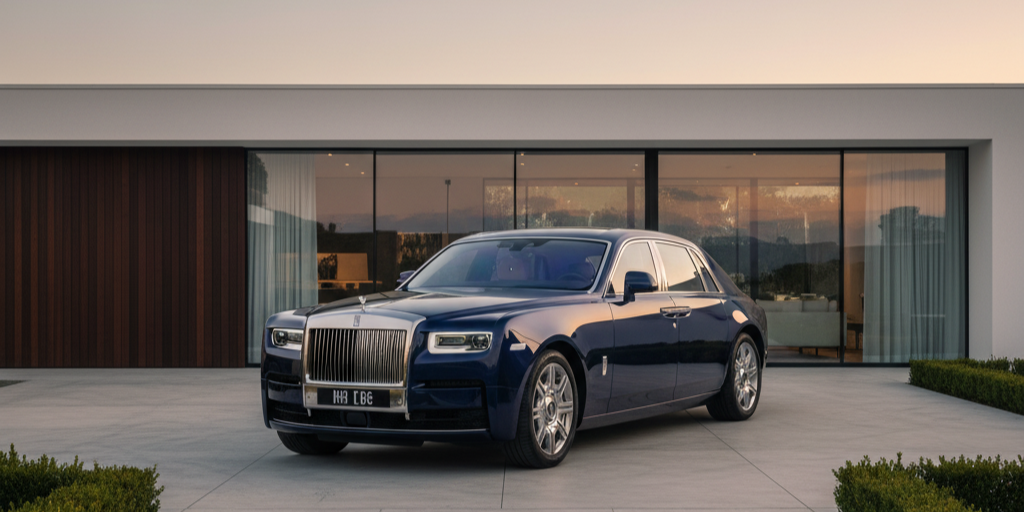
2. Rolls-Royce Ghost / Wraith (The Ultra-Luxury Tier)
Average Annual Cost: $6,000 - 0,000+ Hidden Nightmare: BMW-Derived Engine Complexities masked by bespoke parts.
The Ghost and Wraith are magnificent machines, heavily based on the BMW F01 7-Series architecture and utilizing a 6.6L Twin-Turbo N74 V12. This means you inherit massive V12 thermal loads disguised behind Rolls-Royce pricing.
- The Cost Breakdown: The high-pressure fuel pumps (HPFP) and VANOS solenoids fail just like they do on a BMW 7-Series. However, the exact same part, when placed in a Rolls-Royce box, triples in price. A standard brake job at the dealership costs $4,500. Air suspension strut failures will run $3,000 per corner. To just plug the car into the diagnostic computer at a franchised dealer costs $400.
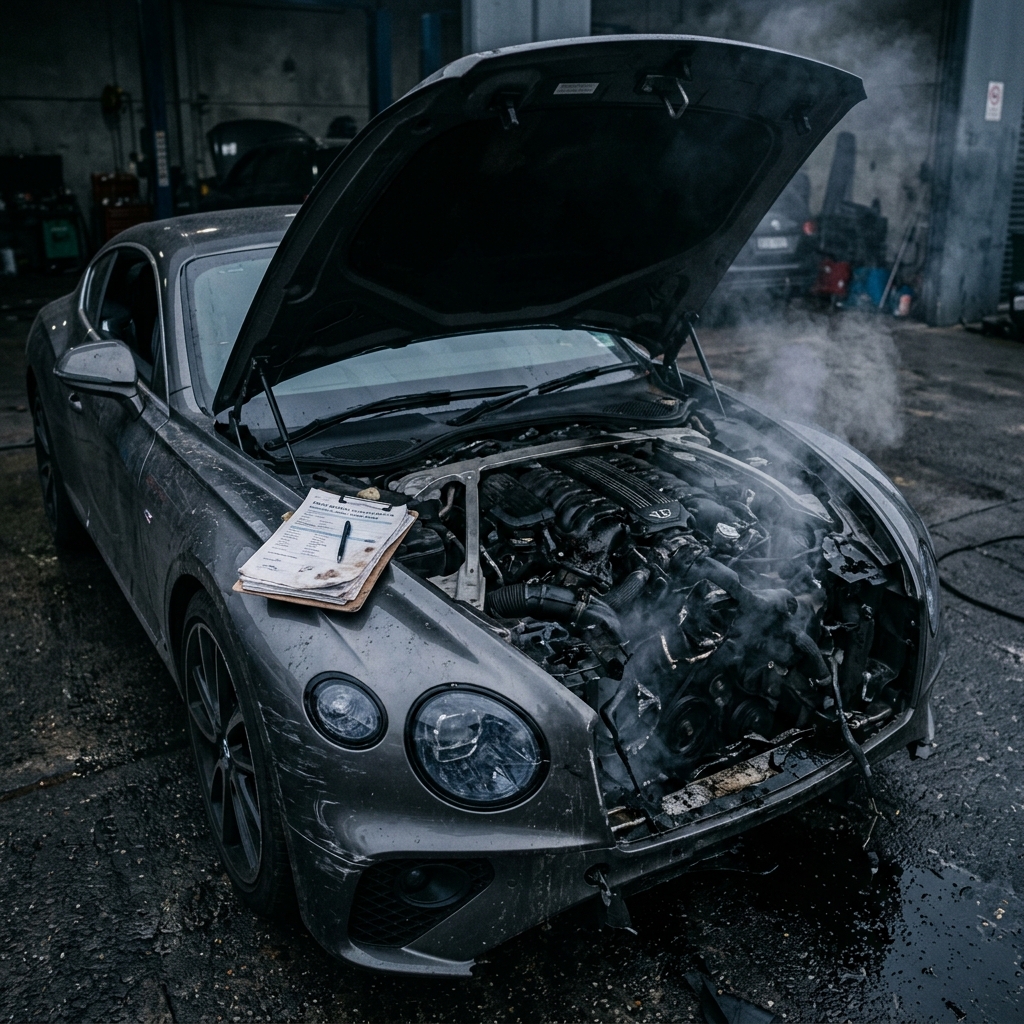
3. Bentley Continental GT W12 (Pre-2018 Generations)
Average Annual Cost: $5,000 - ,000+ Hidden Nightmare: Engine-Out Service Requirements
The W12 engine is an incredibly dense, tightly packaged masterpiece of engineering. That density is its downfall when it comes time for maintenance.
- The Cost Breakdown: Simply accessing oxygen sensors, twin-scroll turbos, or rear timing chain components requires physically removing the 700lb engine and transmission assembly from the car. A $200 vacuum line leak instantly becomes a $4,500 labor bill. High oil consumption is normal, and replacing worn out air-suspension on all four corners will breach $8,000.
4. BMW E60 M5 (The Golden Era Trap)
Average Annual Cost: $4,000 - ,000 Hidden Nightmare: SMG Transmission & S85 V10 Rebuilds
The E60 M5 is legendary for its 5.0L NA V10, but it is unequivocally the most expensive to run 4-door sedan in automotive history.
- The Cost Breakdown: It eats BMW M5 Reliability & Real Costs every 60,000 miles ($3,500 preventative fix). The sequential manual gearbox (SMG III) destroys its hydraulic pump and clutch regularly ($5,000 fix). The idle control actuators and throttle actuators burn out ($2,500 fix). It gets 9 MPG in city driving. If you buy a neglected one for $15,000, you will spend another $15,000 over the first two years just making it reliable.
5. First Generation Porsche Cayenne Turbo / Panamera Turbo
Average Annual Cost: $4,000 - ,000 Hidden Nightmare: Coolant Pipe Explosions & Bore Scoring
Early heavy V8 Porsches are notorious for massive repair bills relative to their rock-bottom used values.
- The Cost Breakdown: The cooling pipes on early Cayenne V8s were made of plastic and routed directly under the intake manifold. They shatter, dumping all coolant onto the starter motor ($3,000 fix). Early Panamera Turbos suffer from PDK transmission sensor failures ($6,000 fix at an Indie, $25,000 at a dealer) and high oil consumption linked to catastrophic bore scoring.
How to Mitigate Extreme Running Costs
If your heart is set on one of the vehicles above, you must adopt a strict financial strategy:
- Never buy the cheapest example on the market. A well-documented, highly maintained $80,000 McLaren 12C is infinitely cheaper to own than a $65,000 McLaren 12C with no records.
- Buy an aftermarket warranty (if they explicitly cover the known issues). Companies like Fidelity offer platinum warranties that will cover an engine replacement, though policies on McLarens and Rolls-Royces often cost $8,000 - $15,000 upfront.
- Find an Independent Specialist immediately. Unless your car is under CPO warranty, you should never step foot in a franchised dealership. Independent specialists who work exclusively on Italian exotics or British ultra-luxury will cut your labor bills by 40%.
Keep Reading
- Ferrari 458 Italia vs Porsche 911 Turbo: Drama vs Precision
- Ferrari 458 Italia vs BMW M8: The Icon vs The Beast
- Porsche 911 Turbo vs BMW M5: The Surgeon vs The Sledgehammer