Ferrari Roma Reliability & Buying Guide: Recalls, Real Costs & What to Check
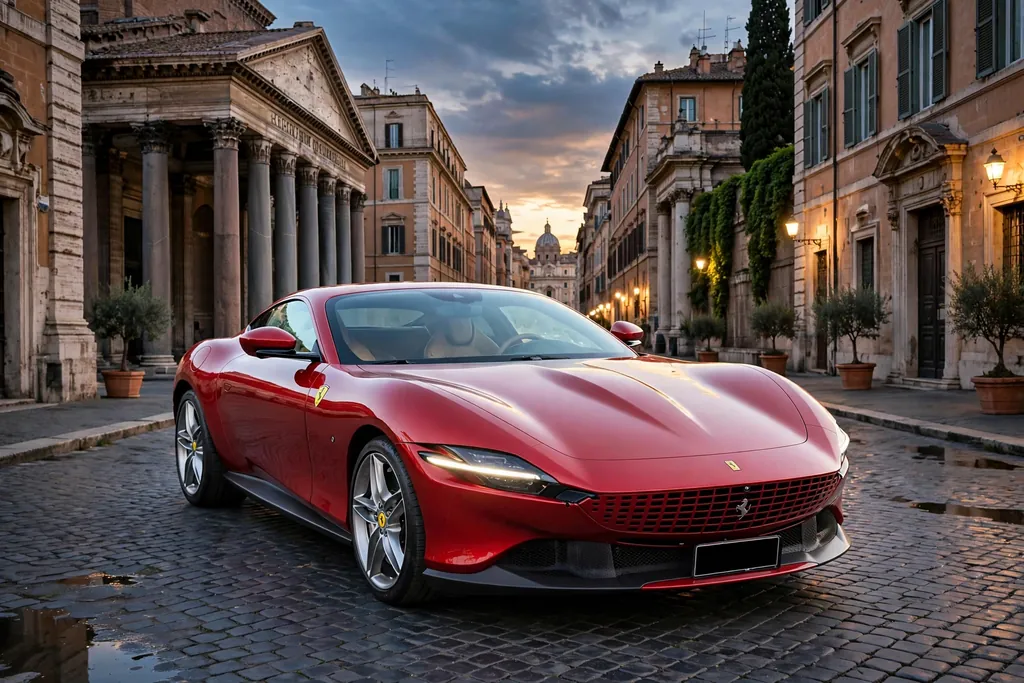
"The Roma is the Ferrari for people who did the spreadsheet — front-engined, discreet, and built around the company's most proven V8. Its ownership economics are genuinely unusual: the factory pays for your scheduled servicing for seven years. The entire buying decision is about how much of that gift is left when you sign."
Engine
7/10
Gearbox
6/10
Electric
6/10
Total Risk
5/10
Quick Verdict
Buy with WarrantyThe rational Ferrari. Buy a car with Genuine Maintenance runway remaining and the brake recall documented, and the Roma is the cheapest-to-run modern Ferrari there is. Buy a 2021 car in 2028 with the program expired and no warranty extension, and you own a Ferrari at full Ferrari prices.
Reliability Verdict
The Roma pairs the most proven powertrain Ferrari makes — the F154 twin-turbo V8, in production across the range since 2013 — with the most buyer-friendly factory support in the supercar class: scheduled maintenance is free for seven years under the Genuine Maintenance program, and it transfers with the car. There is no RepairPal or J.D. Power dependability score for the Roma, so the hard record is the federal one: a single significant campaign, 22V-536, covering the brake fluid reservoir cap on 2021-2022 cars. The Roma's risks are not mechanical fragility. They are a brake recall to verify, and a cost structure that changes completely the day the free maintenance program expires.
Executive Intelligence Summary
Is the Ferrari Roma reliable? Guide to the 22V-536 brake recall, the F154 V8's record, the 7-year free maintenance program, DCT and brake costs, and buying checks.
In This Guide
The Roma is the Ferrari that makes financial sense — up to a date printed in its paperwork. The powertrain is the company’s most proven modern V8, the factory services the car free for seven years, and the federal recall record is a single campaign. Everything about buying one well comes down to verifying that campaign and counting the free years left.
The Roma arrived in 2021 (2020 in Europe) as Ferrari’s front-engined GT coupe, and the coupe has now ended production, replaced by the Amalfi — which makes every Roma a used car and this a buying guide as much as a reliability guide. The Roma Spider continues, on the same mechanical package.
The headline data: There is no RepairPal rating and no J.D. Power dependability score for the Roma — low-volume Ferraris sit outside both datasets, and any precise-looking score quoted elsewhere should be treated accordingly. What exists is harder evidence: the F154 engine family’s record across a decade of Ferraris (covered in our F154 engine reliability guide), a single significant NHTSA campaign, and a factory support structure — seven years of included scheduled maintenance — that no rival matches. The Roma’s reliability question is therefore unusually answerable: the engine is proven, the recall list is one item long, and the costs are a function of the calendar.
Failure Probability Timeline
Full factory support. The 3-year/unlimited-mileage factory warranty (US) and the Genuine Maintenance program both run; scheduled servicing costs the owner nothing.
- Brake Fluid Reservoir Cap Recall (22V-536, 2021-2022 cars)
- Early software and infotainment updates
The maintenance program continues to cover scheduled servicing even after the factory warranty expires. Defect repairs are now the owner's unless a Ferrari Power warranty extension is in place.
- Wear items: tires and brakes (never covered)
- DCT clutch wear (use dependent)
- Out-of-warranty defect repairs
The cliff. Genuine Maintenance expires and scheduled servicing becomes a $2,800-$5,000 annual dealer line item (published estimates). Cars approaching this date trade at a discount that reflects it.
- Full Ferrari service pricing applies
- Carbon-ceramic brake horizon
- Aging cooling and accessory systems
*Data based on owner-reported failures and specialist shop frequency reports.
1. The Brake Recall: 22V-536
Ferrari’s brake fluid reservoir cap recall is the Roma’s only significant federal campaign — and it is a serious one.
The defect (NHTSA 22V-536, Ferrari RC 80): On 2021-2022 Romas — as part of a 23,555-vehicle campaign spanning most of Ferrari’s range — the brake fluid reservoir cap may not vent properly, creating a vacuum inside the reservoir that can cause a brake fluid leak and a partial or total loss of brake function. The campaign is an expansion of the earlier 21V-833, which covered the 458 and 488 generations.
The remedy: Dealers replace the cap and update the software to add a low-brake-fluid warning message, free of charge.
The buying rule: On a 2021 or 2022 car, this is a non-negotiable VIN check — the failure mode is the brake pedal. On 2023+ cars the Roma’s federal record is effectively clean, which is itself a selling point worth paying for.
2. The F154 V8: Ferrari’s Proven Workhorse
The Roma’s 3.9L twin-turbo V8 (611 hp in US specification) belongs to the F154 family that has powered the California T, Portofino, 488, and F8 — the most widely produced and best-documented engine Ferrari has ever made. Its record, detailed in our F154 reliability guide, is one of durability by Ferrari standards: no pattern of internal failures, with the known issues concentrated in ancillaries and in the earlier generations’ recall history (the brake cap campaign above originated with this engine’s stablemates).
Two ownership notes matter more than the engine itself. First, the service interval is annual — 12,500 miles or 12 months, whichever comes first — and continuity of that history is what keeps Ferrari’s own extension programs open to the car. Second, the 8-speed dual-clutch gearbox (shared with the SF90) is robust in normal use, but clutch wear is a function of low-speed maneuvering and launch use, and a dealer clutch replacement is a $5,000-$7,500 event at published estimates. A diagnostic clutch-wear readout belongs in every pre-purchase inspection.
3. The Seven-Year Program: The Roma’s Real Specification
Since 2012, every new Ferrari has included Genuine Maintenance: all factory-scheduled maintenance — parts, labor, lubricants, and consumables within the schedule — free for seven years from first registration, regardless of mileage. The program transfers with the car to subsequent owners. For a used buyer, this is not a footnote; it is the single largest variable in the Roma’s ownership cost:
- A 2023 car bought in 2026 carries roughly four years of free scheduled servicing — worth, at published dealer prices ($2,800-$5,000 per annual service), a five-figure sum.
- A 2021 car reaches the program’s end in 2028. From that date its owner pays full Ferrari service prices, or uses an independent specialist at published estimates of $1,200-$2,500 for the same annual service — with the caveat that leaving the authorized network can close the door on Ferrari’s Power warranty extensions, which require continuous authorized history and an inspection.
The factory warranty itself is 3 years/unlimited miles in the US. Ferrari’s Power warranty programs can extend coverage on inspected cars for a substantial annual premium — worth pricing into any car whose factory warranty has expired, because out-of-warranty Ferrari defect repairs are the one cost in this guide that cannot be bounded by a table.
4. Brakes and Tires: The Costs That Are Never Covered
Neither the maintenance program nor the warranty covers wear — and on the Roma, wear is spelled carbon-ceramic. The standard carbon-ceramic brakes last a very long time in road use, but a full replacement set is a $15,000-$25,000 event at published estimates, and track use shortens rotor life dramatically. Rotor condition is measured, not guessed: a proper inspection weighs the rotors and checks surface condition, and the result should move the price of any high-mileage or track-used car.
Tires are the predictable cost: staggered, Roma-specific fitments, replaced in pairs, on a car with 611 hp driving the rear wheels. Budget for them the way you would on any supercar — annually if you use the performance, and without complaint, because they are the cheapest thing on this page.
5. What It Actually Costs to Run
No fleet dataset exists for the Roma, so every figure below is a published estimate and is labeled as such:
| Job / Cost | Published Figure | Source Type |
|---|---|---|
| Scheduled maintenance, years 0-7 | $0 | Ferrari Genuine Maintenance program |
| Annual service, dealer (after year 7) | $2,800 - $5,000 | Published estimates |
| Annual service, independent specialist | $1,200 - $2,500 | Published estimates |
| DCT clutch replacement (dealer) | $5,000 - $7,500 | Published estimates |
| Carbon-ceramic brake set | $15,000 - $25,000 | Published estimates |
| Recall 22V-536 remedy | Free | NHTSA campaign |
The honest summary: within the program window, a Roma’s scheduled running costs are zero, and its risk costs are defect repairs outside the factory warranty. After the window, it costs what any modern Ferrari costs. The car’s entire used-market pricing logic follows from those two sentences.
6. Best Years to Buy (and Which to Avoid)
Buy: 2023-2025 cars. Outside the 22V-536 population, with the longest Genuine Maintenance runway remaining — a 2025 car’s program runs into the next decade. These are the Romas to pay up for.
Buy with proof: 2021-2022, if the brake recall is documented complete and the remaining maintenance program is priced into the deal. The earlier the first registration, the less program is left — do that arithmetic before comparing sticker prices.
Avoid: Any car with a gap in authorized service history (it can disqualify the car from Ferrari’s own warranty extensions), any car with unmeasured carbon-ceramic rotors and a track history, and any 2021 car priced like a 2023.
For the engine’s full record, see our Ferrari F154 engine reliability guide; for the mid-engined alternative, our Ferrari 488 reliability guide and F8 reliability guide.
7. Frequently Asked Questions (FAQ)
Q: Is the Ferrari Roma reliable? A: By Ferrari standards, it is one of the safest buys in the modern range: the F154 V8 is the company’s most proven engine family, the federal record contains a single significant campaign (22V-536, the brake fluid reservoir cap, on 2021-2022 cars), and scheduled maintenance is free for seven years. There is no RepairPal or J.D. Power score for the Roma — the evidence is the engine record and the recall list, and both are short.
Q: What does a Ferrari Roma cost to maintain? A: Nothing in scheduled maintenance for the first seven years from first registration — Ferrari’s Genuine Maintenance program covers it and transfers with the car. After the program expires, published estimates put a dealer annual service at $2,800-$5,000 and an independent specialist at $1,200-$2,500. Wear items (tires, brakes) are never covered.
Q: What is the Ferrari Roma’s biggest repair risk? A: The carbon-ceramic brakes ($15,000-$25,000 for a full set at published estimates) and the DCT clutch ($5,000-$7,500 at a dealer). Both are inspectable before purchase — rotor measurement and a clutch-wear readout should be in every pre-purchase inspection.
Q: Which Roma years should I avoid? A: None outright — but 2021-2022 cars require proof that recall 22V-536 was completed, and the earliest cars have the least free maintenance remaining. A 2021 car is a good buy at a 2021 price; it is a bad buy at a 2023 price.
Q: Does the 7-year free maintenance transfer to the second owner? A: Yes. Genuine Maintenance is attached to the car, not the first owner, and runs for seven years from first registration regardless of mileage. Verify the first registration date — that date, not the model year, starts the clock.
8. Related Resources
- Ferrari F154 Engine Reliability
- Ferrari 488 Reliability
- Ferrari F8 Reliability
- Ferrari 458 Maintenance Cost
- McLaren GT Reliability
- Aston Martin DBX Reliability & Buying Guide
Real Owner Symptoms
"My 2022 Roma's annual service appeared on the invoice at $0 — line after line of parts and labor, all covered by the maintenance program. The only money I have spent is tires. I know exactly when that changes, because Ferrari tells you the date: seven years from first registration. I will either extend the warranty coverage by then or sell the car to someone who will."
Mechanic's Diagnosis Notes
The F154 is the Ferrari engine we worry about least — it has been in everything from the California T to the F8, and its failure modes are known and rare. What we tell Roma buyers is to spend their inspection money on the boring things: recall completion, brake rotor condition, clutch wear readout from the diagnostic, and the service history's continuity, because a gap in authorized servicing can shut the door on Ferrari's own warranty extension programs.
Cost Transparency: Parts + Labor Breakdown
| Repair Job | Est. Parts | Est. Labor | Total Worst-Case |
|---|---|---|---|
| Annual Scheduled Service (dealer, after program expiry) | Included | Included | $2,800 - $5,000 (published estimates) |
| Annual Scheduled Service (independent specialist) | Included | Included | $1,200 - $2,500 (published estimates) |
| DCT Clutch Replacement (dealer) | Varies | Varies | $5,000 - $7,500 (published estimates) |
| Carbon-Ceramic Brake Set (all four corners) | $12,000 - $20,000 | $3,000 - $5,000 | $15,000 - $25,000 (published estimates) |
Executive Buying Advice
Three dates decide a Roma purchase: the first registration date (the 7-year Genuine Maintenance clock runs from it, and the program transfers to you), the factory warranty status (3 years/unlimited miles in the US, with Ferrari Power extensions available on inspected cars), and the completion record for recall 22V-536 on 2021-2022 cars. A car with three years of free maintenance left is worth a substantial premium over an identical car with none — price the program, not just the car.
What Owners Regret
"I bought a launch-year car because it was the cheapest Roma advertised. What I didn't price was that its free maintenance had less time left than the newer car I passed on, and its factory warranty was already gone. The 'saving' was smaller than one year of dealer servicing."
Lower-Risk Alternatives
- Ferrari Portofino M The Roma's convertible sibling on the same platform and F154 powertrain, under the same recall and the same 7-year maintenance program. Choose on body style; the ownership math is identical.
- McLaren GT The rival GT proposition — lighter and sharper, but with no free maintenance program and a thinner dealer network. See our McLaren GT reliability guide.
- Aston Martin Vantage The character alternative. No seven-year free servicing, and Aston Martin running costs are their own story — see our Vantage review and DBX reliability guide.