Maserati Levante Reliability: Common Problems, Repair Costs & Best Years to Buy
"The Levante was the SUV that was supposed to make Maserati mainstream, and used prices now assume it failed. That discount is the opportunity and the warning in the same number: the engines in this car are genuinely good, the parts ecosystem around them is genuinely thin, and the distance between a cheap Levante and an expensive one is a single morning's stance check."
Engine
7/10
Gearbox
8/10
Electric
5/10
Total Risk
5/10
Quick Verdict
Buy with CautionA Levante is a Ghibli decision made taller: the engines are the strongest part of the car, the air suspension and electrics are the budget, and the thin data is the caveat. A 2019-or-later car with the early campaigns closed and a suspension that sits level in the morning is a defensible purchase. A first-year car with open recalls and a sagging corner is the stereotype, self-inflicted.
Reliability Verdict
The Levante is the Ghibli's running gear in an SUV body, and its record reads the same way: a fundamentally decent Ferrari-built powertrain (the 3.0L F160 V6 shared with the Ghibli, the 3.8L F154 V8 in GTS and Trofeo form) and a ZF 8-speed, wrapped in an electrical and chassis ecosystem that generates the bills. There is no RepairPal rating for Maserati — volumes are too low — and CarEdge projects $11,657 of maintenance over ten years with a 26.57% probability of a major repair, respectable figures for the class that flatter the car's later years less than its early ones. The documented weak point is the standard air suspension: European specialist data prices struts at €800-€1,500 each and a dealer compressor-plus-struts event at €3,000-€5,000. NHTSA holds just 28 complaints for the Levante — the lowest-volume file in this guide series — of which electrical faults are 46%, and eight recall campaigns, all with free remedies.
Executive Intelligence Summary
Is the Maserati Levante reliable? Guide to air suspension costs, all 8 NHTSA recalls, CarEdge maintenance projections, F160/F154 engine data and real ownership costs.
In This Guide
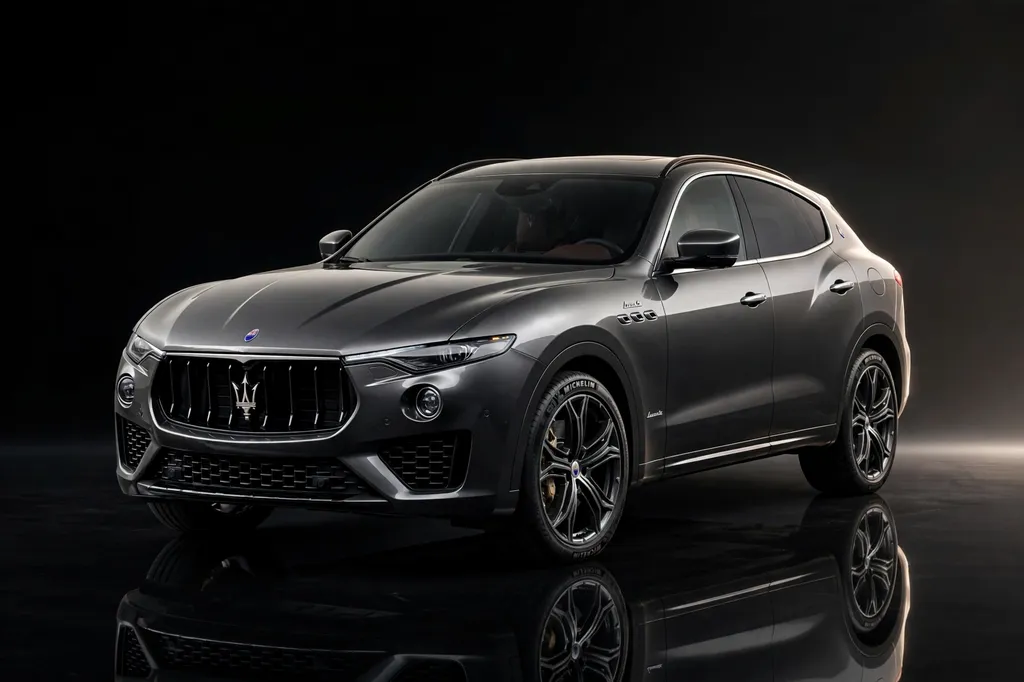
The Levante (2017-2024) was Maserati’s first SUV and its best-selling car — the Ghibli’s platform, engines, and gearbox raised on standard air suspension and aimed at the Cayenne. It never matched the Porsche’s sales, and used prices now reflect that. This guide covers what the record actually shows: the air suspension that dominates the repair file, the eight NHTSA campaigns, the strongest engines Maserati had, and the thinnest dataset in the class.
The range is simple to read. The Levante and Levante S use the 3.0L twin-turbo F160 V6 (345 hp and 424 hp) shared with the Ghibli; the GTS and Trofeo use the 3.8L twin-turbo F154 V8 (550 hp and 580 hp) built in Maranello; a 3.0L diesel served markets outside the US. All use the ZF 8-speed automatic and all-wheel drive, and all sit on air suspension with Maserati’s Skyhook damping as standard. Production ran from 2016 (2017 model year in the US) to 2024, when the smaller Grecale took over the volume role. Factory warranty was 4 years / 50,000 miles.
The headline data: RepairPal publishes no rating for Maserati — the brand’s volumes are too low for its methodology — so the Levante has no score of the kind our Ghibli guide also had to work around. The best structured projection is CarEdge’s: $11,657 of maintenance over ten years and a 26.57% probability of a major repair — mid-pack numbers for a luxury SUV. NHTSA’s file is the smallest in this series: 28 complaints in total, 13 of them electrical (46%), and eight recall campaigns, every one with a free remedy. The car’s documented mechanical weak point, from European specialist data, is the air suspension.
Failure Probability Timeline
The warranty and recall phase. Early cars accumulated campaigns (software, seat wiring, subframe welds on 2018, camera software on late cars) — all free, all verifiable by VIN. The F160 V6 on its 12,500-mile service schedule is a known quantity.
- Recall Campaigns (8 total)
- Electrical & Sensor Faults
- Inner Tire Wear (factory alignment)
The air suspension phase. Compressors tire, struts begin to leak, and the car starts sitting unevenly overnight. This is the Levante's defining ownership cost and the core of the pre-purchase inspection.
- Air Suspension Struts
- Air Suspension Compressor
- Level Sensors & Modules
The specialist phase. The powertrain continues on schedule-based care; the bills come from the chassis electronics ecosystem and accumulated deferred items. Cars with full specialist history age gracefully; cars without it stack faults.
- Suspension Overhaul
- Electrical Fault Accumulation
- ZF 8-Speed Service
*Data based on owner-reported failures and specialist shop frequency reports.
1. The Levante’s Position: Good Engines, Thin Evidence
The Levante inverts the usual exotic-car risk profile. The engines are the most proven components in the car: the F160 V6 is the Ghibli’s unit with a decade of service history (see our Ghibli reliability guide for its full record), the F154 V8 is Ferrari-built, and the ZF 8-speed is the industry’s default answer. The catastrophic-failure story that hangs over the Escalade’s L87 or the early Cayenne’s V8 simply does not exist here.
What generates the Levante’s bills is the layer around the powertrain: standard-fit air suspension on a heavy car, an electrical architecture that accounts for nearly half of all NHTSA complaints, and a parts and labour ecosystem priced like a low-volume Italian brand — because it is one. CarEdge’s $11,657 ten-year projection is an average that conceals the shape of the spending: modest scheduled costs, punctuated by suspension and electrical events. Buy the car for its engines; budget for its chassis.
2. Air Suspension: The Known Weakness
Air suspension is standard on every Levante, and European specialist data identifies it as the car’s principal wear system. The published figures: air struts at €800-€1,500 each, a compressor at roughly €500 for an aftermarket unit (original equipment costs more), and a dealer bill of €3,000-€5,000 when a tired compressor and leaking struts are addressed together — the common pattern, because a compressor that has spent a year compensating for a leaking strut is a compressor at the end of its life.
The diagnosis is free and takes one night: a healthy Levante sits level in the morning; a car with a leaking corner announces it in its stance, and a compressor that runs long and often at start-up is telling you it has been compensating. Our air suspension failure guide covers the full symptom set. A second chassis note from the same specialist data: the factory alignment is aggressive enough to wear inner tire shoulders within 10,000-15,000 km — check the inner edges of all four tires on any used car, and treat a recent alignment receipt as a positive document.
3. The Recall File: Eight Campaigns
The Levante’s complete NHTSA campaign list is short enough to print in full — and short enough that there is no excuse for a used car to carry any of them open:
- 25V-098 (2025): rearview camera image may fail to display (radio software), 2021-2024.
- 21V-872 (2021): fuel line sensor housing can crack and leak fuel, 2021-2022 — the same campaign as the Ghibli’s.
- 21V-703 (2021): automatic locking seat-belt retractors may deactivate early, 2021.
- 19V-521 (2019): LED adaptive headlights adjustable beyond the legal limit, 2019.
- 18V-347 (2018): incomplete front subframe welds can allow the lower control arm to move, 2018 — the most serious campaign on the list.
- 17V-161 (2017): engine software can shift the transmission into neutral at low speed, 2017.
- 17V-046 (2017): power seat wiring harness can short, 2017 — shared with the Ghibli.
- 16V-839 (2016): rearview camera image freezes in low temperatures, 2017.
All remedies are free at franchised dealers. Two campaigns deserve emphasis: the subframe welds (18V-347) are structural, and the fuel line sensor housing (21V-872) is a fuel-leak campaign on the newest cars in the range. A ten-minute VIN check at nhtsa.gov/recalls closes the whole file.
4. Engines: F160 V6 and F154 V8
The F160 3.0L V6 (345 hp in the Levante, 424 hp in the Levante S) is the volume engine and the known quantity: Ferrari-built, chain-driven, and shared with the Ghibli and Quattroporte, with a manufacturer service schedule of 12,500 miles or 12 months. Its documented behaviours are the platform’s — it rewards the schedule and punishes neglect — and our Ghibli problems guide covers the shared fault list in detail.
The F154 3.8L V8 (550 hp GTS, 580 hp Trofeo) is the enthusiast’s Levante and, perversely, a rational one: a Maranello-built engine with the strongest specification in the range, in the cars that were most expensive new and most carefully kept. The later GT and Modena trims (2022 onward) continued with the V6 in 350 hp and 430 hp forms as the range wound down toward the 2024 finale.
Neither engine carries a pattern-failure record in the Levante’s small complaint file — 28 complaints in total across nine model years is, for this class, close to silence.
5. What It Actually Costs to Run
| Job / Cost | Published Figure | Source Type |
|---|---|---|
| 10-year maintenance projection | $11,657 (26.57% major-repair probability) | CarEdge |
| Air suspension strut (each) | €800 - €1,500 | European specialist data |
| Compressor + struts (dealer) | €3,000 - €5,000 | European specialist data |
| Electrical sensor replacement | €200 - €500 per sensor | European specialist data |
| Recall remedies (8 campaigns) | Free | NHTSA campaigns |
Budget $2,500-$4,500 a year for an out-of-warranty Levante — scheduled services on the 12,500-mile interval at Maserati parts prices, a tire budget that respects the alignment’s appetite, and a reserve for the air suspension event that the morning stance test will eventually predict. That is more than a Cayenne of the same age and less than the exotic the badge suggests; the Levante’s costs are those of a low-volume luxury SUV, and they arrive through the chassis and electrics rather than the engine room.
6. Best Years to Buy
Buy: 2019-2024. The later cars sit outside the first-year campaign cluster (software, seat wiring, camera) and, in 2022-onward GT/Modena form, are simply the youngest Levantes there are. The 2021-2022 cars need 21V-872 verified; it is a ten-minute check with a free remedy.
Buy: the V8 cars (GTS / Trofeo, 2019-2024) if the budget reaches — the F154 is the range’s best engine in its best-kept cars, and the Trofeo is the last V8 SUV Maserati will build this way.
Buy with documents: 2017-2018. The cheapest Levantes, and the ones carrying the subframe (18V-347, 2018) and software (17V-161, 2017) campaigns. With the file closed and a level stance, they are the discount the market intends them to be.
Avoid: any car that sits unevenly in the morning at its asking price, and any car whose seller describes eight free recalls as a reason not to have done them.
Set against the class: the Porsche Cayenne (9Y0) is the evidence-rich driver’s choice, the Aston Martin DBX is the newer exotic, and the Levante is the character pick with the thinnest file — priced, correctly, as exactly that.
7. Frequently Asked Questions (FAQ)
Q: Is the Maserati Levante reliable? A: There is no RepairPal rating for Maserati, so the honest evidence is: CarEdge projects $11,657 of maintenance over ten years with a 26.57% chance of a major repair; NHTSA holds only 28 complaints (46% electrical) and eight recall campaigns, all with free remedies. The engines — the Ghibli’s F160 V6 and the Ferrari-built F154 V8 — are the strong part of the car. The air suspension and electrics are where the money goes.
Q: What is the Levante’s biggest problem? A: The standard air suspension. European specialist data prices struts at €800-€1,500 each and a dealer compressor-plus-struts event at €3,000-€5,000. The overnight stance test — a level car in the morning — is the single most useful check on a used Levante.
Q: How much does it cost to maintain a Levante per year? A: Budget $2,500-$4,500 a year out of warranty. CarEdge’s ten-year projection averages to roughly $1,166 a year, but real spending is lumpier: scheduled services at Maserati prices, tires (the factory alignment wears inner shoulders within 10,000-15,000 km), and periodic suspension and electrical work.
Q: Which Levante years should I avoid? A: None outright — but 2017-2018 cars carry the early campaign cluster (transmission software 17V-161, seat wiring 17V-046, subframe welds 18V-347) and should only be bought with the recall file verified closed by VIN. All remedies are free, so an open campaign is a diligence signal, not a cost.
Q: Is the Levante or the Ghibli the safer Maserati buy? A: They are the same bet in different bodies — same F160 powertrain, same thin dataset, same dealer network. The Levante adds air suspension as a standard-fit cost; the Ghibli is cheaper to buy. Our Ghibli reliability guide covers the shared engine record in full.
8. Related Resources
- Maserati Ghibli Reliability
- Maserati Ghibli Problems Guide
- Porsche Cayenne (9Y0) Reliability
- Aston Martin DBX Reliability
- Air Suspension Failure: Symptoms, Causes & Costs
Real Owner Symptoms
"My 2019 Levante S started sitting low on the left front after weekends. The compressor was running longer every morning, which I now know was the symptom, not the cure. A strut and the compressor together were a €3,800 conversation at the dealer. My specialist sourced the same parts for noticeably less — which is the other thing I learned: on this car, who you know is a line item."
Mechanic's Diagnosis Notes
Mechanically, think Ghibli with more weight on everything. The F160 V6 is a known quantity — service it on the 12,500-mile schedule and it behaves. What fills my diary with Levantes is air suspension and electricity: tired compressors cooked by leaking struts, level sensors, random module complaints. Check the stance, scan the whole car, and look at the inner edges of the front tires — the factory alignment eats them, and a fresh-looking set of tires on a used Levante is a receipt someone is proud of.
Cost Transparency: Parts + Labor Breakdown
| Repair Job | Est. Parts | Est. Labor | Total Worst-Case |
|---|---|---|---|
| Air Suspension Strut (each) | Varies | Varies | €800 - €1,500 (European published pricing) |
| Air Suspension Compressor + Struts (dealer) | Varies | Varies | €3,000 - €5,000 (European published pricing) |
| Electrical Sensor Replacement | Varies | Varies | €200 - €500 per sensor (European published pricing) |
| Recall Remedies (8 campaigns) | Covered | Covered | Free (NHTSA Recall) |
Executive Buying Advice
Do the morning test before anything else: photograph the car after it has sat overnight and check it sits level — the air suspension is the Levante's known weakness and its most expensive wear system. Then verify the campaign file by VIN (eight campaigns; the subframe-weld recall 18V-347 on 2018 cars and the fuel-line recall 21V-872 on 2021-2022 cars matter most), and budget a tire set early: the factory alignment wears inner shoulders within 10,000-15,000 km.
What Owners Regret
"I bought a 2017 because it was the cheapest Levante in the country and 'the recalls were just software.' One of them was. One was the transmission shifting itself into neutral, and one was the rear camera freezing solid every cold morning. All free to fix — and all mine to schedule, one dealer visit at a time, because I didn't spend ten minutes with the VIN before I spent the money."
Lower-Risk Alternatives
- Porsche Cayenne (9Y0) The driver's SUV with a real dataset behind it — see our Cayenne 9Y0 reliability guide. Less theatre, more evidence, stronger resale.
- Aston Martin DBX The other exotic V8 SUV: a longer recall file but a Mercedes-sourced powertrain — see our DBX reliability guide. A younger, more expensive proposition.
- Maserati Ghibli The same F160 powertrain and the same caveats in a sedan at lower prices — see our Ghibli reliability guide. Buy it if you don't need the height or the space.