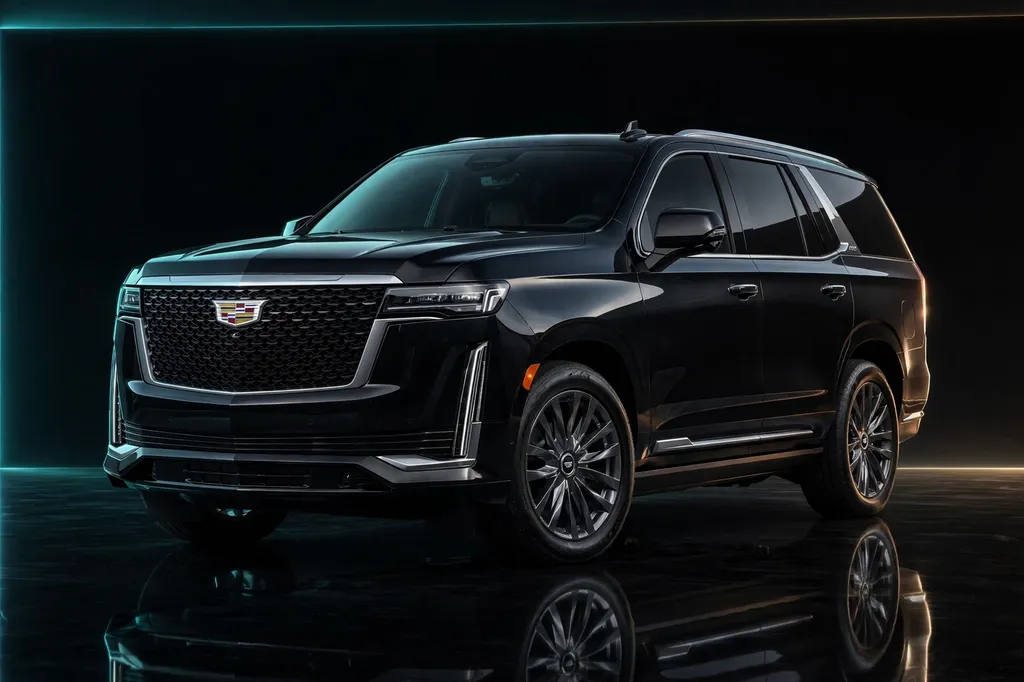
Cadillac Escalade Reliability: Common Problems, Repair Costs & Best Years to Buy
"The Escalade is the one luxury SUV your neighbor's mechanic can fix — and for most of its life that has made it the safe choice in this class. The L87 recall changed the calculation for exactly four model years. The good news is that the risk is written down in a federal document with your VIN on it. The bad news is only for the people who don't read it."
Engine
5/10
Gearbox
6/10
Electric
6/10
Total Risk
8/10
Quick Verdict
Buy with CautionTwo different vehicles share this badge. A K2XX car (2015-2020) with the lifter question answered, or a T1XX car built outside the March 2021 - May 2024 engine window, is a defensible luxury purchase with truck-grade parts availability. A 2021-2024 car inside the recall window is a purchase that starts — and possibly ends — with the recall paperwork.
Reliability Verdict
The Escalade is a truck wearing a tuxedo, and its reliability record splits cleanly in two. The underlying platform — body-on-frame, pushrod V8 architecture refined over decades, a huge dealer and independent network — is fundamentally durable, and RepairPal's dataset rates the Escalade 2.5 out of 5.0 with a $1,007 average annual repair cost, actually cheaper than the $1,127 luxury fullsize SUV average. Against that sits the defining event of the current generation: recall 25V-274, covering 597,571 GM vehicles including 79,673 Escalades and 46,267 Escalade ESVs, for L87 6.2L V8 engines whose crankshafts and connecting rods can fail outright — followed by a federal engineering analysis into engines that failed after the recall remedy. Add the older AFM/DFM lifter failure pattern ($3,000-$7,000) and Magnetic Ride shocks at $800-$1,800 a corner, and the Escalade's risk is concentrated, knowable, and largely checkable by build date and VIN.
Executive Intelligence Summary
Is the Cadillac Escalade reliable? Guide to the L87 engine recall (25V-274), AFM lifter failure, Magnetic Ride costs, RepairPal data and real maintenance costs.
In This Guide
The Escalade has spent two decades as the default answer to “big American luxury SUV” — and for most of that time its truck underpinnings made it the low-anxiety choice in a class full of European complexity. Then GM recalled nearly 600,000 of its 6.2-litre V8s for crankshafts that can end the engine without warning. This guide separates the four model years that carry that risk from the rest of the Escalade’s long, mostly ordinary record.
The Escalade’s formula has not changed since 1999: a full-size truck frame, a pushrod V8, and the largest interior in the class. The fourth generation (K2XX, 2015-2020) paired the 6.2L L86 V8 with Magnetic Ride Control as standard. The fifth generation (T1XX, 2021-) moved to independent rear suspension, the 6.2L L87 V8 with Dynamic Fuel Management, a 10-speed automatic across the range, an available 3.0L Duramax diesel, and — from 2023 — the Escalade-V with a supercharged 682 hp LT4.
The headline data: RepairPal rates the Escalade 2.5 out of 5.0 for reliability, ranking it 6th of 19 luxury fullsize SUVs, with an average annual repair cost of $1,007 — below the $1,127 class average — 0.3 unscheduled repair visits per year, and a 20% probability that a repair is severe. That is the dataset of a fundamentally sound truck. The exception, and it is a large one, is recall 25V-274: GM’s April 2025 recall of 597,571 vehicles for L87 crankshaft and connecting-rod defects, including 79,673 Escalades and 46,267 Escalade ESVs. Section 1 is that story.
Failure Probability Timeline
The warranty phase. Cadillac covers the car for 4 years / 50,000 miles (6 years / 70,000 on the powertrain). On 2021-2024 cars, the recall inspection belongs in this phase — confirm it was done and which remedy the engine received.
- Recall 25V-274 Inspection (2021-2024 L87)
- Infotainment & Trim Faults
- Magnetic Ride Early Leaks (rare)
The decision phase. Magnetic Ride dampers reach the end of their life, and AFM/DFM lifter wear begins to announce itself on 6.2L cars. This is where documented oil-change history starts to matter more than mileage.
- Magnetic Ride Control Shocks
- AFM / DFM Lifter Tick
- Air Ride Compressor (if equipped)
The truck phase. A sorted Escalade settles into ordinary full-size-truck running costs. A neglected one stacks lifter, suspension, and transmission bills — still at GM parts prices, which is the Escalade's permanent advantage.
- Lifter & Camshaft Replacement
- 10-Speed Transmission Wear
- Suspension Overhaul
*Data based on owner-reported failures and specialist shop frequency reports.
1. The L87 Recall: 597,571 Engines and an Open Investigation
In April 2025, GM filed recall 25V-274 with NHTSA covering 597,571 vehicles — 2021-2024 Escalade and Escalade ESV, Tahoe, Suburban, Silverado, Sierra, Yukon and Yukon XL — equipped with the 6.2L L87 V8 built between March 1, 2021 and May 31, 2024. The defect, in GM’s own filing: connecting rods and crankshafts with manufacturing defects — machining sediment left in connecting rods and crankshaft oil galleries, and crankshaft dimensions and surface finish outside specification — that can damage rod bearings and fail the engine outright, with loss of propulsion as the stated safety risk. GM estimated 3% of the recalled population carries the defect, and its filing counted 28,102 reports of engine failure between April 2021 and February 2025, roughly half of them in motion.
The remedy is an inspection, not an automatic engine. Dealers scan for diagnostic trouble code P0016 and inspect the engine. Engines that fail receive repair or replacement. Engines that pass are switched to higher-viscosity 0W-40 oil, given a new oil fill cap and filter, and an updated owner’s manual insert — all free of charge.
The story did not end there. NHTSA opened an engineering analysis (EA25007) in October 2025 into failures in engines outside the recall scope, a recall query (RQ26001) in January 2026 into whether the remedy was adequate, and a second engineering analysis (EA26005) in August 2026 after 499 complaints of engine failure in vehicles that had already received the recall repair — 473 after the oil-change remedy, 26 after engine replacement. EA26005 covers 997,743 vehicles across the 2021-2026 model years. Both investigations were open as of November 2026.
The buying rule: on a 2021-2024 car, the VIN check is the purchase. Establish whether the car is in the recall population (build date, not model year, decides), whether the remedy was performed, and which remedy it was. An engine replacement under the recall is the strongest paperwork a used T1XX can carry. A passed inspection is a fact, not a guarantee — price it accordingly.
2. AFM / DFM Lifters: The Other V8 Problem
Separate from the recall — older, slower, and almost as expensive — is the cylinder-deactivation lifter failure that follows GM’s V8s across two Escalade generations. The K2XX’s L86 uses Active Fuel Management; the T1XX’s L87 uses the more aggressive Dynamic Fuel Management. Both deactivate cylinders via special oil-fed lifters, and those lifters are the documented weak point: a collapsed lifter ticks, misfires (codes P0300-P0308), bends pushrods, and can score the camshaft lobe it rides on.
Published warranty-claims data puts the repair at $3,000-$7,000 for lifters and camshaft work, with US dealer quotes reported to $8,700; the typical window is 70,000-130,000 miles, and stretched oil-change intervals are the strongest predictor. Many owners, once inside the engine, fit a delete kit — standard lifters and a non-AFM camshaft — to remove the failure mode permanently, at the cost of the fuel-economy feature.
The buying test: idle, then a steady 1,500 rpm under light load, windows down. A metallic tick that follows engine speed on a 6.2L car is a negotiation worth several thousand dollars — or a reason to choose the diesel.
3. Magnetic Ride and Air Ride: The Suspension Bill
Magnetic Ride Control is standard on the Escalade and is genuinely excellent — right up until the magnetorheological dampers begin to leak, typically between 60,000 and 100,000 miles. Published figures put replacement at $800-$1,800 per corner, and because the dampers age together, owners routinely face several corners in the same year: a four-corner refresh is a $3,200-$7,200 event at published prices. There is no cheap pattern-part culture for these dampers comparable to the truck lines, and a passive conversion changes the character of the car.
T1XX cars optioned with Air Ride add a second system: a compressor (published at $800-$1,500 for the part) and air springs ($400-$800 each for parts) on the same 60,000-100,000-mile horizon as every other air suspension in this guide series. Our air suspension failure guide covers the overnight stance test that prices both systems before you buy.
4. The Rest of the Record
The 10-speed automatic (10L80, standard on T1XX and fitted to late K2XX cars) is a GM/Ford joint design with a generally sound record; the published failure costs — valve body work and rebuilds at $4,000-$7,500 — belong to high-mileage cars and are priced like truck transmissions, not European ones.
The K2XX’s CUE infotainment screen delaminates and goes unresponsive with age — a known, cosmetic-but-maddening fault with dealer replacement reported around $800-$1,200 and aftermarket screen repairs for less. Test every touch input on a 2015-2020 car.
The diesel is the recall escape hatch. The 3.0L Duramax inline-six (LM2, available from 2021) shares nothing with the L87, sits entirely outside 25V-274, and returns highway economy no V8 Escalade can approach. The Escalade-V’s supercharged LT4 is likewise outside the recall — a different engine, built to a different standard, at a very different price.
Factory coverage is 4 years / 50,000 miles basic and 6 years / 70,000 miles powertrain — the powertrain term is why many lifter repairs on younger cars have been warranty events rather than owner events. Check what remains on any car you price.
5. What It Actually Costs to Run
| Job / Cost | Published Figure | Source Type |
|---|---|---|
| Average annual repair cost | $1,007 (class average $1,127) | RepairPal dataset |
| AFM / DFM lifter & camshaft repair | $3,000 - $7,000 | Published warranty-claims data |
| Magnetic Ride shock (per corner) | $800 - $1,800 | Published figures |
| 10-speed transmission rebuild | $4,000 - $7,500 | Published figures |
| Recall 25V-274 remedy | Free | NHTSA campaign |
A realistic out-of-warranty budget is $1,500-$3,000 per year — RepairPal’s $1,007 average is a young-fleet figure, and it does not contain a lifter job or a set of Magnetic Ride dampers, both of which are schedule items on a high-mileage car rather than surprises. Set against the class, the Escalade’s permanent advantage is logistical: every part exists, everywhere, at GM prices, and every independent shop in the country has seen the engine before — the L87 recall window excepted.
6. Best Years to Buy (and Which to Avoid)
Buy: 2015-2020 (K2XX). No L87, no recall of this scale, and the platform’s faults — lifters, Magnetic Ride, CUE screen — are known, priced, and testable in an afternoon. The 2018-2020 cars with the 10-speed are the sweet spot.
Buy with paperwork: 2021-2024 (T1XX), in this order of preference: a car whose engine was replaced under 25V-274; a diesel; a car built outside the March 2021 - May 2024 engine window; and only then a car that passed the inspection remedy, priced for the open federal investigation into post-repair failures.
Buy: 2025-2026, with the caveat that EA26005’s scope includes these years — the investigation is not a recall and there is nothing to schedule, but a buyer should know it exists.
Avoid: any 2021-2024 car whose seller cannot tell you its recall status, and any 6.2L car of any year with an audible lifter tick priced as if it were silent.
For the Escalade’s closest rivals, see our BMW X7 reliability guide and our used Range Rover (L405) buying guide — and for the warranty question on a car with this recall history, our extended warranty guide.
7. Frequently Asked Questions (FAQ)
Q: Is the Cadillac Escalade reliable? A: Mostly, with one large exception. RepairPal rates it 2.5 out of 5.0 with a $1,007 average annual repair cost — cheaper than the $1,127 luxury fullsize SUV average, with only 0.3 unscheduled repair visits a year. The exception is the 2021-2024 L87 V8: recall 25V-274 covers 597,571 GM vehicles for crankshaft and connecting-rod defects that can fail the engine, and a federal investigation into post-repair failures remains open.
Q: What is the Cadillac Escalade’s biggest problem? A: The L87 engine recall on 2021-2024 cars (25V-274: 79,673 Escalades and 46,267 ESVs). Behind it, the AFM/DFM lifter failure shared by both modern generations — $3,000-$7,000 in published claims data, typically between 70,000 and 130,000 miles.
Q: How much does it cost to maintain an Escalade per year? A: RepairPal’s dataset says $1,007 a year on average. A realistic out-of-warranty budget is $1,500-$3,000 a year, because the average does not include the schedule items: Magnetic Ride shocks at $800-$1,800 per corner and the lifter repair if your car draws it.
Q: Which Escalade years should I avoid? A: Treat 2021-2024 as paperwork-first years rather than automatic avoids: a car with a recall-replaced engine is a strong buy, while a car with no recall documentation is not buyable at any discount until its status is established. Engines built from March 2021 through May 2024 define the recall window — build date, not model year.
Q: Is the diesel Escalade a safer buy? A: On the engine question, yes. The 3.0L Duramax (LM2) shares nothing with the L87 and is outside recall 25V-274 entirely. It has its own diesel-specific maintenance discipline, but the catastrophic-failure story of the current Escalade generation does not apply to it.
8. Related Resources
- BMW X7 Reliability
- Mercedes-Benz GLE Reliability
- Used Range Rover (L405) Buying Guide
- Air Suspension Failure: Symptoms, Causes & Costs
- Extended Warranty for Luxury Cars
Real Owner Symptoms
"My 2022 started ticking at 71,000 miles — a light metallic tap that followed engine speed. The dealer found a collapsed lifter and a scored cam lobe. It was repaired under the powertrain warranty, but the truck was gone for five weeks, and I now know more about Dynamic Fuel Management than I ever wanted to."
Mechanic's Diagnosis Notes
On these trucks the questions are always the same three. Has the 6.2 had its lifters — listen at idle, then at 1,500 rpm under load. What did the recall inspection find, and is the paperwork in the glovebox. And are the Magnetic Ride dampers weeping — at this mileage, originals are on borrowed time. Everything else on an Escalade is ordinary truck work at ordinary truck prices, which is more than you can say for most of this class.
Cost Transparency: Parts + Labor Breakdown
| Repair Job | Est. Parts | Est. Labor | Total Worst-Case |
|---|---|---|---|
| AFM / DFM Lifter Replacement (with camshaft) | Varies | Varies | $3,000 - $7,000 (published claims data; dealer quotes reported to $8,700) |
| Magnetic Ride Control Shock (per corner) | Varies | Varies | $800 - $1,800 (published figures) |
| 10-Speed Transmission Rebuild (10L80) | Varies | Varies | $4,000 - $7,500 (published figures) |
| L87 Recall Remedy (25V-274) | Covered | Covered | Free (NHTSA Recall) |
Executive Buying Advice
Start with the build date, not the model year. For any 2021-2024 Escalade, run the VIN at nhtsa.gov/recalls and establish three things: whether the car is inside 25V-274, whether the remedy was performed, and which remedy it received — engine replacement or the inspection-and-oil-change path. Then listen to any 6.2L car, K2XX or T1XX, at idle and under light load for lifter tick, and budget for Magnetic Ride shocks on any car past 60,000 miles. The diesel (LM2) and the Escalade-V's LT4 sit outside the L87 recall entirely.
What Owners Regret
"I bought a 2021 because it was $4,000 cheaper than the 2020 next to it and never asked why. The recall letter arrived a month after I did. The inspection passed and I got the oil change remedy, and now I drive a truck whose engine is the subject of a federal engineering analysis. The 2020 would have been cheaper."
Lower-Risk Alternatives
- BMW X7 The driver's alternative: better road manners, a strong six-cylinder base engine, and its own documented list — see our BMW X7 reliability guide. It lacks the Escalade's space and presence.
- Range Rover (L405) More magic, more risk. The L405's failure stack is longer than the Escalade's — see our L405 reliability guide — but so is the sense of occasion.
- Lexus LX 570 The durability answer in this class: an older-school V8 with no cylinder deactivation failure pattern and no engine recall of this scale. Less technology, far less drama.