Burning Oil Smell from Engine: Diagnosis Guide for Luxury Cars
"That burning oil smell after parking isn't coming from the car next to you. Valve stem seals, turbo oil lines, and valve cover gaskets are the three usual suspects. Here's how to diagnose which."
Engine
5/10
Gearbox
5/10
Electric
4/10
Total Risk
6/10
Quick Verdict
Buy with CautionExpect significant running costs. Manageable if preventative maintenance is done.
Reliability Verdict
A burning oil smell through your climate control vents is almost always caused by an oil leak dripping directly onto a hot exhaust manifold or turbocharger. Left unchecked, this is a severe fire hazard.
Executive Intelligence Summary
Why does your luxury car smell like burning oil? From BMW valve cover gaskets to Porsche RMS failures, diagnose the smell before a catastrophic fire or engin...
In This Guide
A burning oil smell in the cabin of your luxury car is not a minor annoyance - is a clear warning sign of a mechanical leak dripping directly onto a superheated component.
Unlike Japanese or American naturally aspirated V8s, German and Italian luxury cars utilize “Hot-V” turbo setups, massive exhaust manifolds, and extremely high operating temperatures (often 220ツーF+ coolant temps for emissions efficiency). This intense under-hood heat bakes rubber gaskets until they turn brittle as glass.
Where is the Oil Leaking From?
If your car smells like a refinery when you come to a stoplight, the oil is hitting the exhaust system. Here are the three most common culprits in modern luxury vehicles:
1. Valve Cover Gaskets (The Top-End Leak)
This is the most common cause of smoke and smell in BMWs (N63, S63, N55, B58) and Mercedes (M278, M177).
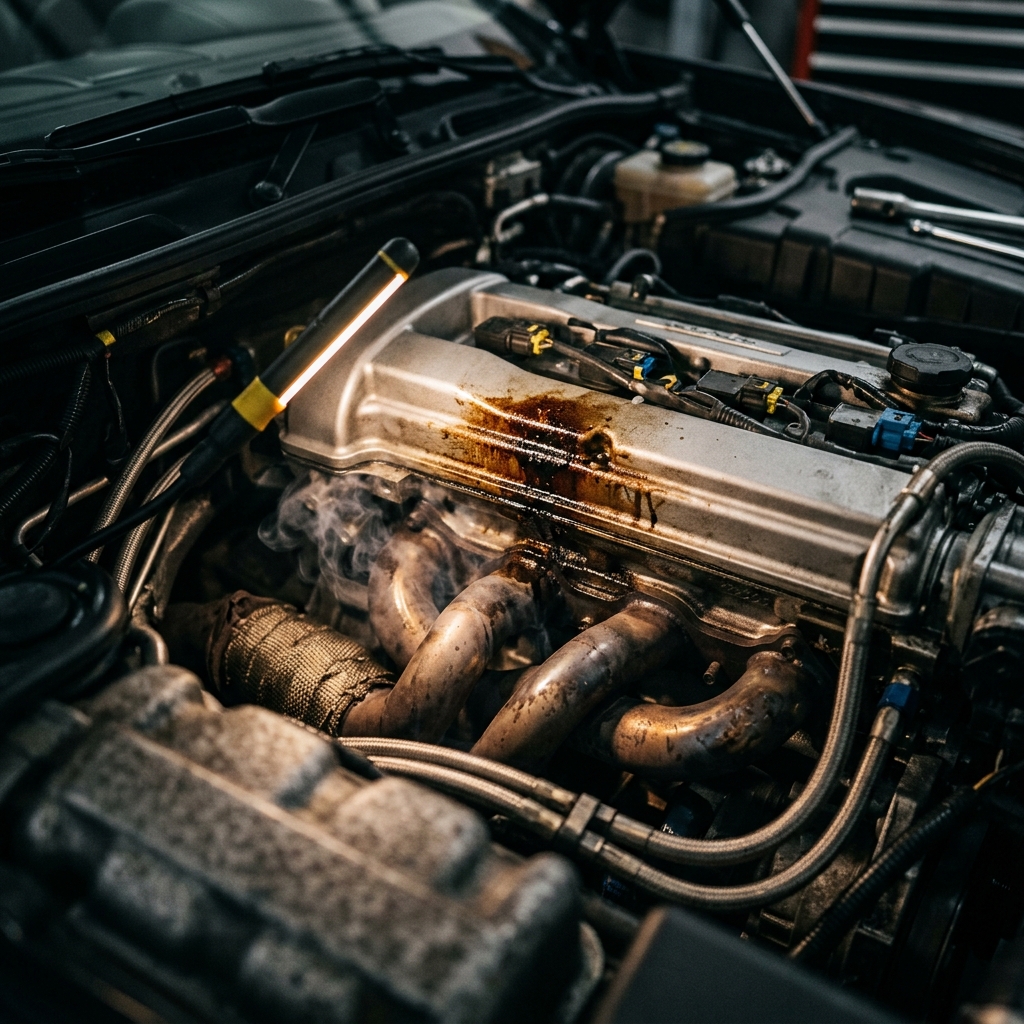
- The Issue: The valve covers sit at the top of the engine, directly above the exhaust manifolds. Once the rubber gasket hardens, oil seeps out from the lower edge. Gravity pulls it down directly onto the red-hot catalytic converters or exhaust headers.
- The Symptom: You will rarely see a puddle on your garage floor because the oil instantly burns off on the exhaust before it hits the ground. But you will smell it through the AC vents.
- Read the Deep-Dive: BMW N63 Reliability - he $10,000 Hot Reliability: Common Problems & Repair Cost Guide ($5,000 - $25,000+)
2. The Rear Main Seal (The Bottom-End Leak)
The RMS is the massive ring seal at the back of the engine block where the crankshaft connects to the transmission flywheel.
- The Issue: When this seal fails, oil pours out of the back of the engine. Some of it gets whipped around by the spinning flywheel or dual-clutch pressure plate, burning up on the transmission housing and exhaust pipes running directly underneath it.
- The Symptom: This will leave a puddle on your driveway. You will smell burnt oil, and if you drive a manual or certain DCTs, your clutch may begin slipping as the friction plates become soaked in engine oil.
- Notorious Offenders: Porsche 996/997 (M96/M97 Engine), and increasingly, the Mercedes M177 Engine due to failed oil separators over-pressuring the crankcase and blowing the seal out.
3. Turbocharger Oil Feed Lines (The Valley Leak)
In “Hot-V” engines like the Audi 4.0T, BMW S63, and Mercedes M177, the turbos sit inside the valley of the V8 block.
- The Issue: The steel braided / rubber oil feed and return lines that supply the turbos are subjected to the highest heat concentrated anywhere in the car. They literally bake.
- The Symptom: The lines crack, leaking oil directly onto the massive turbocharger turbine housings. The smell is incredibly strong, and you will often see white/blue smoke billowing from the top-center of the engine cover immediately after turning the car off.
- Read the Deep-Dive: Turbo Failure Costs
The Hidden Danger: PCV Valve Failure

If multiple seals fail at once on your engine, do not just replace the seals.
A blocked PCV (Positive Crankcase Ventilation) valve or Air-Oil Separator (AOS) is often the root cause. When the PCV fails, the immense pressure generated inside the engine block has nowhere to go. It searches for the weakest point of exit - ually blowing out the Rear Main Seal, front crank seal, or valve cover gaskets.
If your mechanic replaces the Rear Main Seal without fixing a broken PCV valve, the brand-new $3,000 seal will blow out again within 1,000 miles. ALWAYS test crankcase vacuum pressure when diagnosing a sudden, massive oil leak.
Real Owner Symptoms
"Owners notice a distinct, acrid, burning rubber/oil smell entering the cabin, especially when stopped at a red light after driving hard. Sometimes, faint wisps of white smoke emerge from the hood near the windshield cowls."
Mechanic's Diagnosis Notes
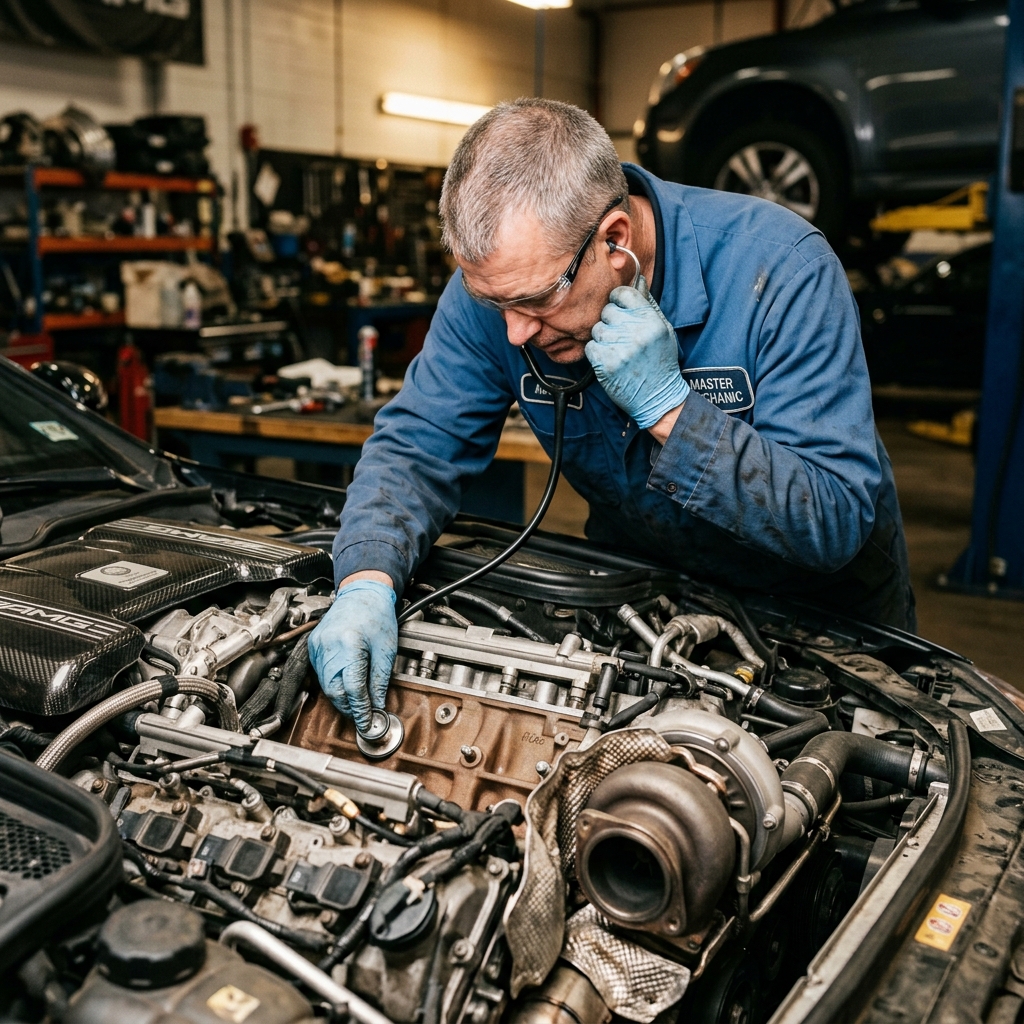
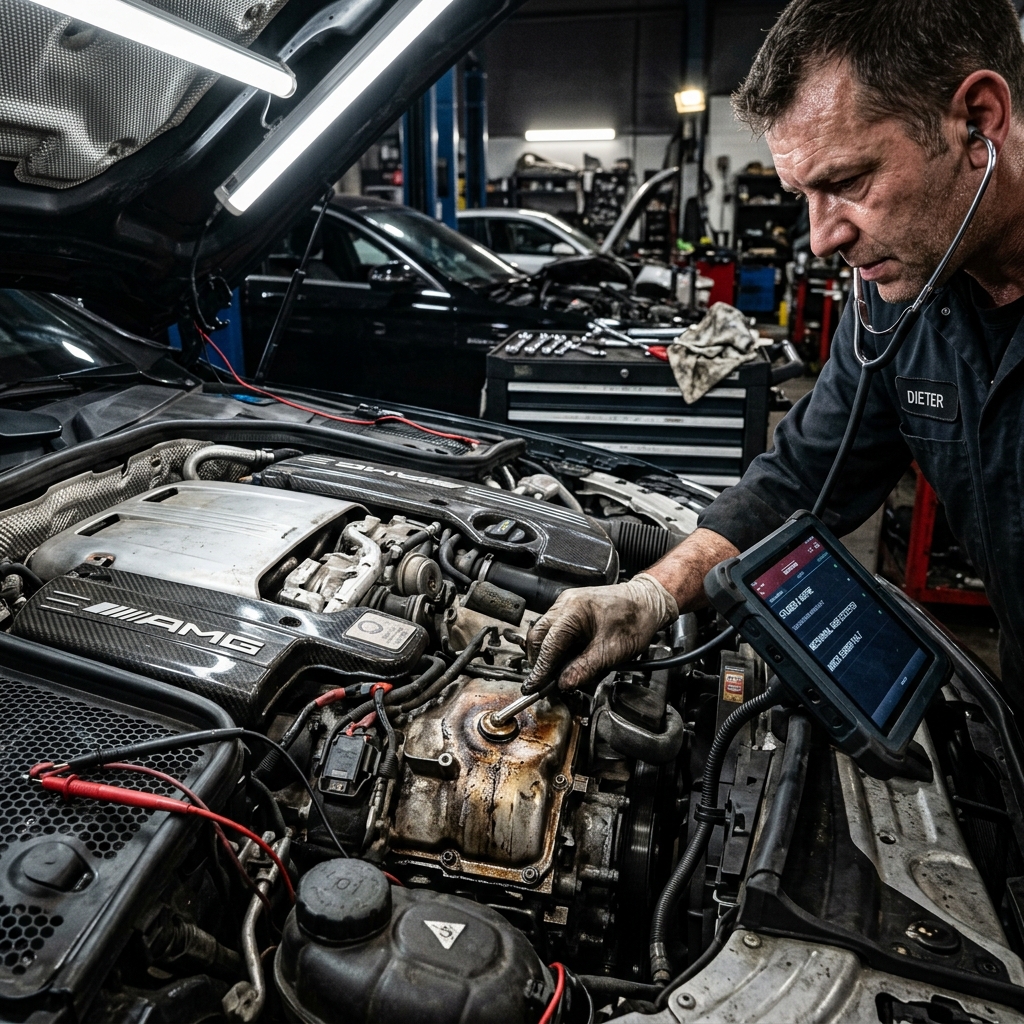
We put the car on a lift, drop the plastic undertrays (which are usually soaked in oil, masking the symptom), and look directly at the exhaust manifolds and the V-valley of the engine. If the exhaust heat shields are wet with oil, it's a valve cover leak. If it's dripping from the bell housing, it's the RMS.
Cost Transparency: Parts + Labor Breakdown
| Repair Job | Est. Parts | Est. Labor | Total Worst-Case |
|---|---|---|---|
| Valve Cover Gaskets (V8/V6) | $200 | $800 - $1,500 | $1,000 - $1,700 |
| Turbo Oil Feed Lines (Hot-V Engine) | $400 | $2,000+ | $2,400+ |
| Rear Main Seal (Engine-Out or Trans-Out) | $100 | $3,500+ | $3,600+ |
Lower-Risk Alternatives
- Lexus LC500 (2UR-GSE) Toyota/Lexus rubber compounds and naturally aspirated design result in virtually zero major top-end oil leaks until well over 150,000 miles.