Turbo Whistle Sound: What It Means & When to Worry
"A turbo whistle on boost is normal. A turbo whistle at idle, combined with oil smoke, is not. Here's how to tell the difference between healthy turbo sounds and imminent failure."
Engine
5/10
Gearbox
5/10
Electric
4/10
Total Risk
6/10
Quick Verdict
Buy with CautionExpect significant running costs. Manageable if preventative maintenance is done.
Reliability Verdict
High Ownership Risk: Complex systems and documented failure rates in primary components. Maintain a substantial ($5k+) repair fund.
Executive Intelligence Summary
Turbo whistling or whining noise? Learn to distinguish normal turbo spool from failing bearing sounds - th brand-specific causes and repair costs.
In This Guide
A turbocharger operates at up to 150,000 RPM while running at temperatures exceeding 1,000ツーC. Some level of turbo noise is completely normal. However, there is a critical difference between the pleasant whistle of a healthy turbo spooling up and the alarming whine of a failing turbo bearing.
Learn to tell the difference before your next $8,000 repair.
Normal Turbo Sounds vs. Warning Signs
| Sound | Normal or Warning? | Description |
|---|---|---|
| Woosh/Whoosh on boost | Normal | Compressed air moving through the intercooler pipes |
| Subtle high-pitch spool | Normal | Compressor wheel spinning at high RPM |
| Slight flutter on lift-off (open intake) | Normal | Compressor surge from aftermarket intake - rmless |
| Constant high-pitch whine at idle | 笞EEWarning | Turbo bearing wear from oil starvation |
| Grinding or gravelly noise under boost | 閥 Danger | Compressor wheel contacting housing |
| Siren-like wail that gets louder with RPM | 閥 Danger | Catastrophic bearing failure imminent |
| Hissing or whistling from hose | 泯 Minor | Boost pipe or intercooler hose crack - x now |
Diagnosing the Specific Turbo Noise
The Hissing Noise
Likely Cause: A cracked boost pipe, loose intercooler hose clamp, or split charge pipe. This is the best-case scenario for a turbo-related noise.
- Test: With the engine running, spray soapy water around all boost/intake pipes. Bubbles indicate an air leak.
- Cost: $200 - 00 (hose repair or replacement).
The Constant High-Pitch Whine
Likely Cause: Turbo bearing wear from oil starvation or oil sludge contamination.
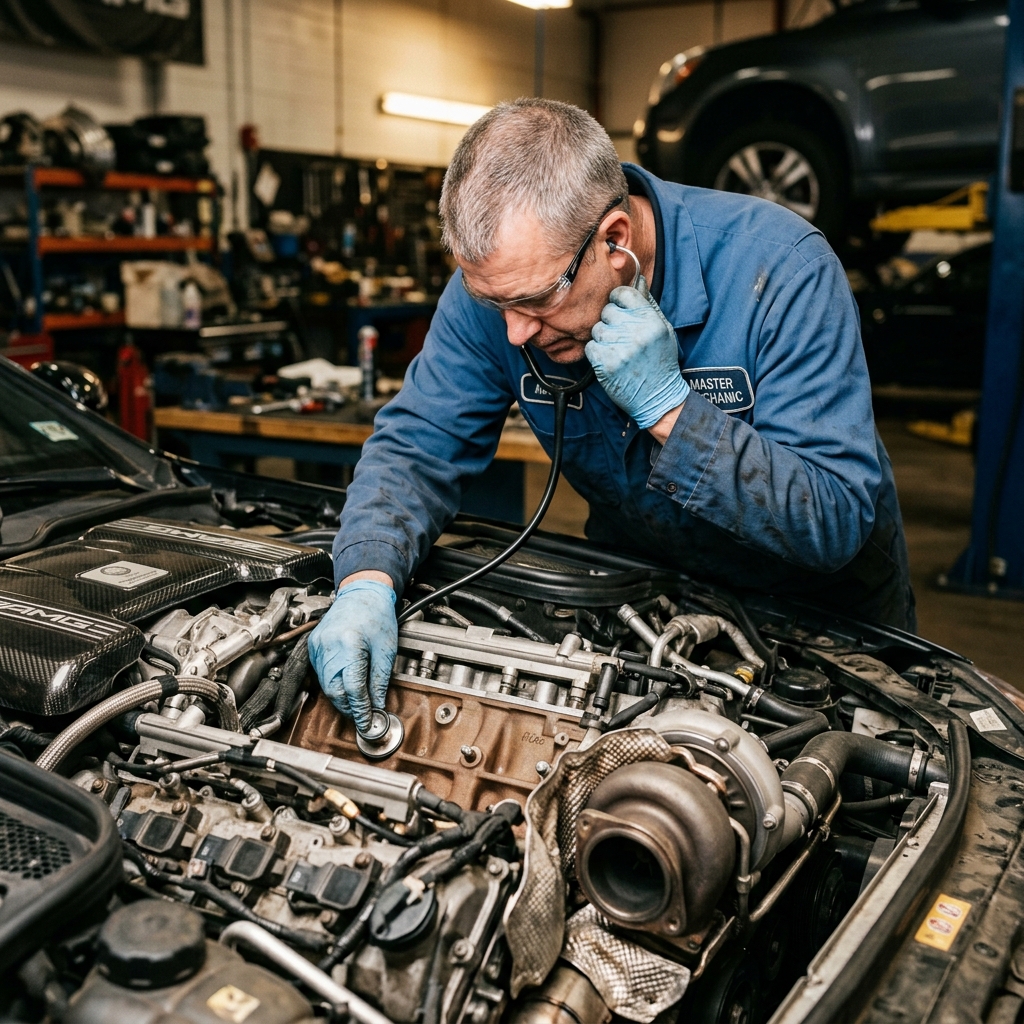
- Test: With the engine off (and cool), grab the turbo compressor wheel and attempt to wiggle it side-to-side. Any lateral play (not rotational spin) indicates bearing wear.
- Cost: $4,000 - ,000 per turbo (pair replacement recommended on twin-turbo engines).
The Grinding Noise Under Boost
Likely Cause: The compressor or turbine wheel has contacted its housing - kely due to a foreign object ingestion or extreme bearing collapse.
- This is an emergency. A wheel contact event typically destroys the turbo within minutes and sends aluminium fragments downstream into the intercooler or engine.
- Cost: $6,000 - 2,000 for replacement. Plus potential intake system cleaning and engine inspection.
Brand-Specific Turbo Warning Signs
BMW N63 / S63
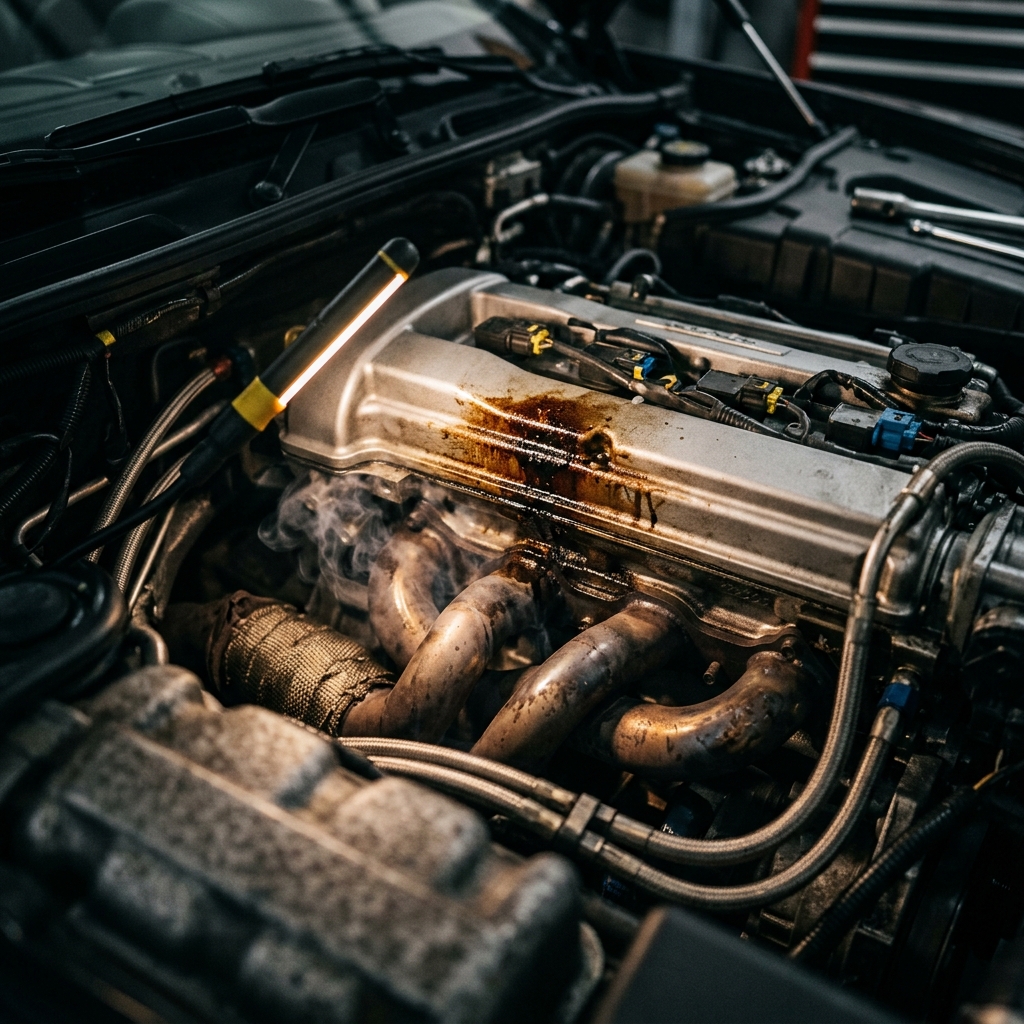
- A turbo whistle that only occurs after a hot restart (not at cold start) is a classic sign of heat soak coking the bearing journals. The oil in the bearings has been cooked solid.
- Action: Investigate immediately. The N63’s hot-V layout accelerates this.
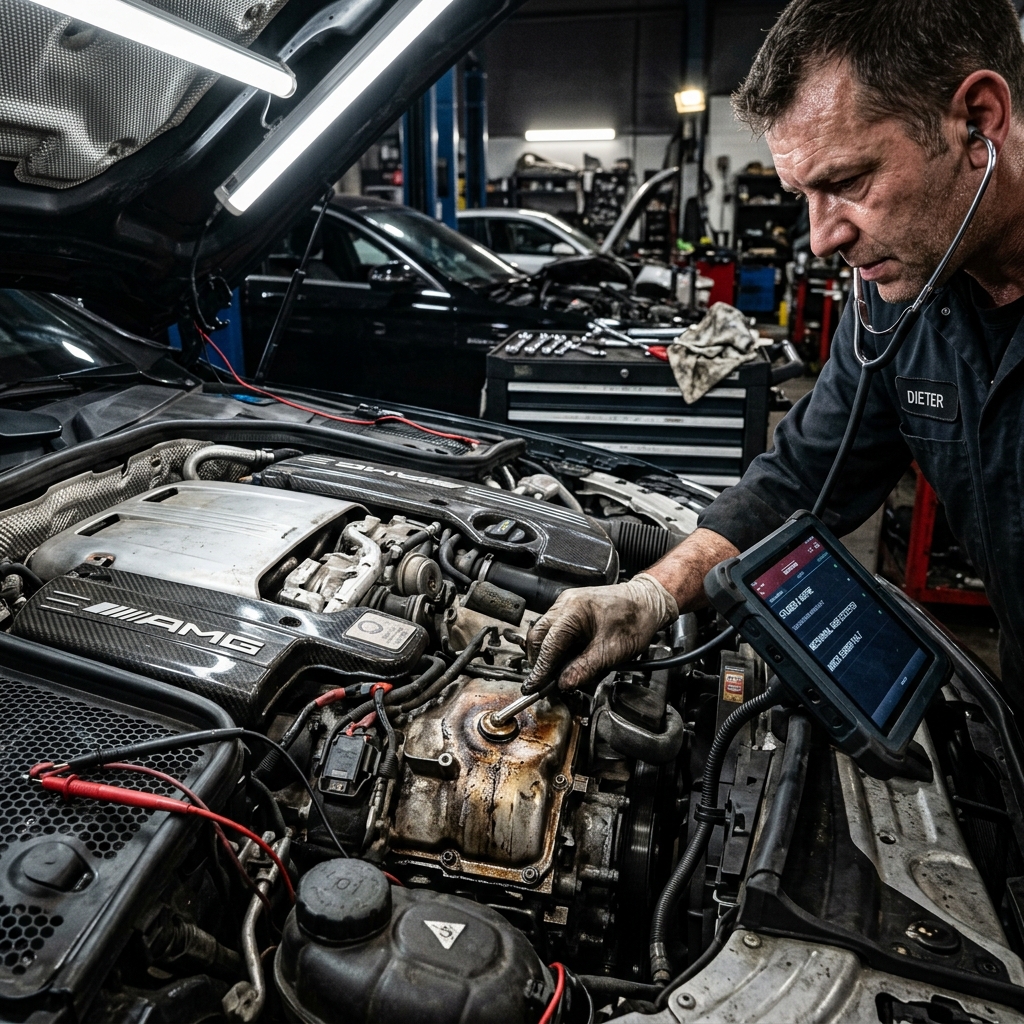
Mercedes AMG M177 (C63, E63)
- A whistle or chirp specifically during the transition from idle to light throttle is often the intake inlet hose cracking where it meets the turbo inlet. An inexpensive fix ($400 - 00) if caught early.
Audi 4.0T (RS7, RS6)
- Turbo noise that is accompanied by white or blue smoke on boost suggests oil is burning inside the turbo. The turbo bearings are failing and oil is being ingested through the compressor seal.
- Action: Stop driving. Request an oil analysis.
Range Rover AJ133 (Supercharged, not Turbo)
- A supercharger whine or “siren” noise on the AJ133 is often the supercharger snout seal. While this is not technically a turbo, the noise profile is similar and signals a $1,200 - ,200 repair.
The “30 Second Rule” for Turbo Care
The single most damaging thing you can do to a turbo is turn off a hot engine immediately after hard driving. The turbo bearings need oil to cool.
- Always idle for 2 - minutes after highway or performance driving before shutting the engine off.
- This allows oil circulation to cool the turbos from 900ツーC+ down to a safe temperature before oil flow stops.
Related Research
- Turbo Failure Database
- Engine Knocking Noise Reliability & Real Costs
- BMW N63 Reliability - he $10,000 Hot Reliability: Common Problems & Repair Cost Guide ($5,000 - $25,000+)