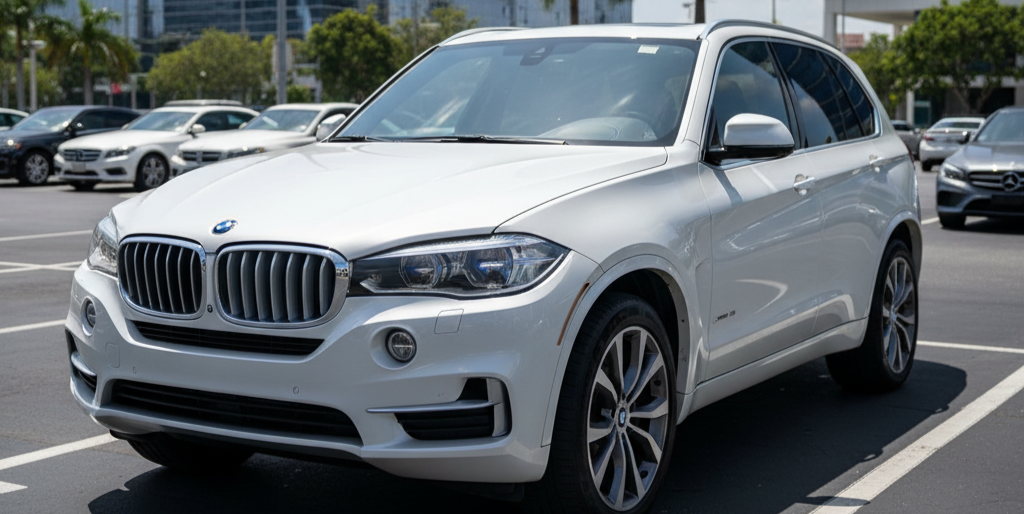
BMW M5 F10 Turbo Problems: Hot-V Oil Lea: Worth It? Real Maintenance Costs
Engine
6/10
Gearbox
6/10
Electric
5/10
Total Risk
5/10
Direct Answer
Expect significant running costs. Manageable if preventative maintenance is done.
Verdict
Buy with Caution
Risk Level
Medium
Annual Cost
$3,000 - $5,000
Worst-Case
$10,000+
Reliability Verdict
Intermediate risk profile. Balanced ownership experience with some known failure points in cooling and high-pressure fuel systems.
📋 In This Guide
The Hot-V Turbo Problem: BMW’s $7,000 Packaging Mistake
The BMW M5 F10 S63 engine uses a hot-V turbo configuration where both turbochargers sit inside the V of the engine.
This creates two major problems:
- Turbo oil line leaks from extreme heat (60,000+ miles)
- Expensive repairs due to difficult access
The Hot-V Design Explained
What is Hot-V?
Traditional Layout: Turbos mounted on exhaust manifolds (outside engine)
Hot-V Layout: Turbos mounted between cylinder banks (inside V)
Why BMW Used It
Benefits:
- Shorter exhaust runners (faster spool)
- Better throttle response
- More compact packaging
Drawbacks:
- Extreme heat trapped in V-area
- Oil line stress from heat cycles
- Difficult access for repairs (engine top must be removed)
Problem 1: Turbo Oil Line Leaks (60,000+ Miles)
The Failure Pattern
Mileage: 60,000+ miles (commonly reported)
Cause: Heat stress causes oil line deterioration
Symptoms
- Oil smell from engine bay (hot oil on exhaust)
- Visible oil in V-area (top of engine)
- Oil drips on undertray
- Smoke from engine bay (oil burning on hot components)
The Cost Reality
| Component | Independent | Dealer |
|---|---|---|
| Turbo oil lines (both turbos) | $800-$1,500 | $1,500-$2,500 |
Why it’s expensive:
- Engine top removal required (intake manifold, covers)
- Labor-intensive access (10-15 hours)
- Often combined with other work (valve cover gaskets, spark plugs)
Owner Sentiment
“Owners frequently complain that the hot-V packaging makes turbo and oil-line work very expensive and labor-intensive. Repeated oil smells and leaks in the V erode confidence in long-term reliability.”
—BMW Tuning S63 problems guide
Problem 2: Turbocharger Bearing/Seal Failures (80,000-100,000+ Miles)
The Failure Pattern
Mileage: 80,000-100,000+ miles (stock cars)
Earlier on: Tuned/track cars (60,000+ miles)
Symptoms
- Blue/grey smoke from exhaust (oil burning)
- Increased oil consumption (1 quart per 1,000 miles)
- Whining noise from engine bay (turbo bearing wear)
- Reduced boost (loss of power)
- Oil in charge pipes (turbo seal failure)
The Cost Reality
| Component | Independent | Dealer |
|---|---|---|
| Single turbocharger replacement | $2,000-$3,500 | $3,500-$6,000 |
| Both turbochargers | $3,500-$7,000+ | $7,000-$12,000+ |
What’s Included:
- Turbocharger(s)
- Oil lines
- Gaskets and seals
- Coolant lines
- Labor (engine top removal)
Owner Sentiment
“Some describe feeling ‘trapped’ between living with leaks and facing four-figure bills to strip the top of the engine. Turbo replacements at higher mileage or on tuned cars generate frustration about ‘BMW tax’ on parts and labor.”
—YouTube owner reports
Mileage-Based Failure Timeline
60,000-70,000 Miles
- Turbo oil line leaks begin
- Oil smell from engine bay
- Visible oil in V-area
70,000-80,000 Miles
- Oil line leaks worsen
- Multiple leak sources
- Often combined with valve cover leaks
80,000-100,000 Miles
- Turbo bearing wear begins
- Blue smoke (intermittent)
- Increased oil consumption
100,000+ Miles
- Full turbo failures (stock cars)
- Significant smoke
- Loss of power
- Replacement required
Repair Strategy: Preventive vs Reactive
Preventive Approach (Recommended)
At 60,000-70,000 Miles:
- Inspect turbo oil lines
- Replace if any seepage visible
- Cost: $1,000-$1,500
At 80,000-90,000 Miles:
- Inspect turbochargers for play/noise
- Monitor oil consumption
- Budget: $3,500-$7,000 for eventual replacement
Reactive Approach (Risky)
Wait until leaks are severe:
- Risk oil fire (oil on hot exhaust)
- Risk turbo seal failure (oil in intake → hydrolock)
- Deferred maintenance often costs 2-3x more
The “While You’re In There” Problem
Why Repairs Are Expensive
When removing engine top for turbo work, shops recommend:
- Valve cover gaskets ($800-$1,500)
- Spark plugs ($200-$400)
- Ignition coils ($400-$800)
- VANOS solenoids ($400-$900)
Total “while you’re in there” cost: $2,000-$4,000+
Owner Sentiment
“Expect some hot-V oil leak around 60k+; budget for turbo work if you plan to own into six-figure mileage.”
—Owner rule of thumb
Should You Repair or Sell?
笨Repair If:
- Car has low mileage (under 80,000 miles)
- You plan to keep it long-term (100k+ miles)
- You have a trusted independent specialist
- Repair cost is under $5,000 (oil lines only)
笶Sell If:
- Both turbos need replacement ($7,000+)
- Car has high mileage (over 100,000 miles)
- Repair cost exceeds 30% of car’s value
- You cannot afford additional failures
Buying Strategy: Turbo Inspection
If Buying an F10 M5
Ask These Questions:
- Any oil leaks from turbo area?
- Blue smoke on startup or acceleration?
- Oil consumption rate?
- Service history for turbo work?
Negotiate Based on Turbo Condition:
| Scenario | Price Adjustment |
|---|---|
| Turbos recently replaced | +$3,000-$5,000 premium |
| No leaks, low mileage (under 60k) | Neutral |
| Oil leaks present | -$1,500-$3,000 |
| Smoke/high oil consumption | -$5,000-$8,000 |
Related Guides
Understand the full reliability picture: