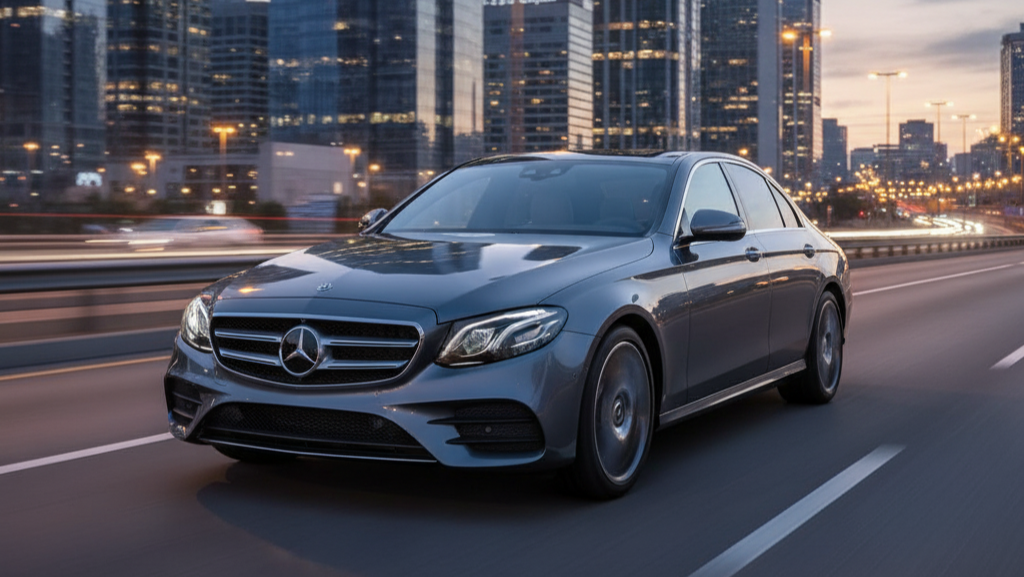
Mercedes-AMG GT Reliability: M178 in a Pure Sports Car
Engine
7/10
Gearbox
7/10
Electric
6/10
Total Risk
4/10
Direct Answer
Expect significant running costs. Manageable if preventative maintenance is done.
Verdict
Buy with Caution
Risk Level
Medium
Annual Cost
$3,000 - $5,000
Worst-Case
$10,000+
Reliability Verdict
The AMG GT (M178) benefits from a dry-sump oiling system compared to the M177 in road cars, giving it better oil management under sustained high-G track use. The oil separator risk is structurally similar. The biggest cost differentiator vs C63/E63 is the optional Carbon Ceramic Brake system —hich can cost $10,000—18,000 to replace.
📋 In This Guide
Mercedes-AMG GT Reliability: The M178 Sports Car Experience
The Mercedes-AMG GT is a different kind of AMG. While C63 and E63 are performance derivatives of production chassis, the AMG GT (R190) was designed from a clean sheet as a sports car.
It uses the M178 —he dry-sump, track-focused sibling of the M177. Same 4.0L twin-turbo V8, but with genuine motorsport oiling that makes it more suitable for sustained track use.
1. AMG GT Variants: Which One to Buy?
| Variant | Output | Key Diff |
|---|---|---|
| GT | 469 hp | Manual gearbox option, base car |
| GT S | 522 hp | More aggressive tune, standard DCT |
| GT C | 549 hp | Rear-wheel steering, wider body |
| GT R | 577 hp | Full aero, adaptive suspension |
| GT Black Series | 730 hp | Motorsport-derived, most extreme |
Higher variants have better suspension and brakes but also higher parts costs. The GT Black Series is in a separate class and not recommended for regular street use as a daily driver.
2. The M178 Advantage: Dry-Sump Oiling
The key mechanical advantage of the AMG GT over M177-powered sedans:
- Dry-sump oiling: A separate oil reservoir and scavenge pump prevents oil starvation under sustained high lateral G-forces (cornering, track use).
- Result: Under track conditions where a wet-sump engine would oil-starve in fast corners, the M178 maintains lubrication.
- Reliability impact: Better protection at the limits. But the oil separator risk is still present.
3. Carbon Ceramic Brakes: The Hidden Ownership Cost
The GT S and above commonly come with optional carbon ceramic brakes (CCB):
- Front rotor size: 390mm (standard) / 420mm (GT R/Black)
- Rotor lifespan: Highly variable —treet-only use can last 50,000—0,000 miles. Track use: 10,000—0,000 miles.
- Wear indicator: Rough finger-touch texture across rotor surface = replacement needed.
- Cost: $10,000—18,000 for a full four-corner replacement set (AMG parts pricing).
Caution
Always check CCB rotor texture before purchase. A set needing replacement is a $10,000+ bill that should be factored into the purchase price.
4. DCT vs Manual Transmission
The base AMG GT offered a 7-speed manual (rare) or Speedshift DCT. The DCT is the dominant choice on used market cars.
- DCT fluid: Change every 30,000 miles (AMG “lifetime” claim is false under performance use).
- Track use: The DCT runs hot on track. Fluid degradation is rapid when track driving without cooling periods.
- Clutch pack: $5,000—8,000 if worn from track abuse.
5. Buying Advice by Variant
- GT / GT S: Best entry-level. Most supply, best parts availability.
- GT C: Best balance of performance and practicality.
- GT R: Genuine sports car but heavy track history —nspect carefully.
- GT Black Series: Collector / track car. Not a daily driver.
Universal rule: Ask for track history. A GT R with heavy Nürburgring use is a very different ownership proposition than a GT S with 90% highway miles.
Related Resources
Executive Buying Advice
Check CCB rotor surfaces immediately —ough texture means replacement is imminent. Verify oil separator service history on any car over 55k miles. Track history dramatically increases risk on this car —sk explicitly.