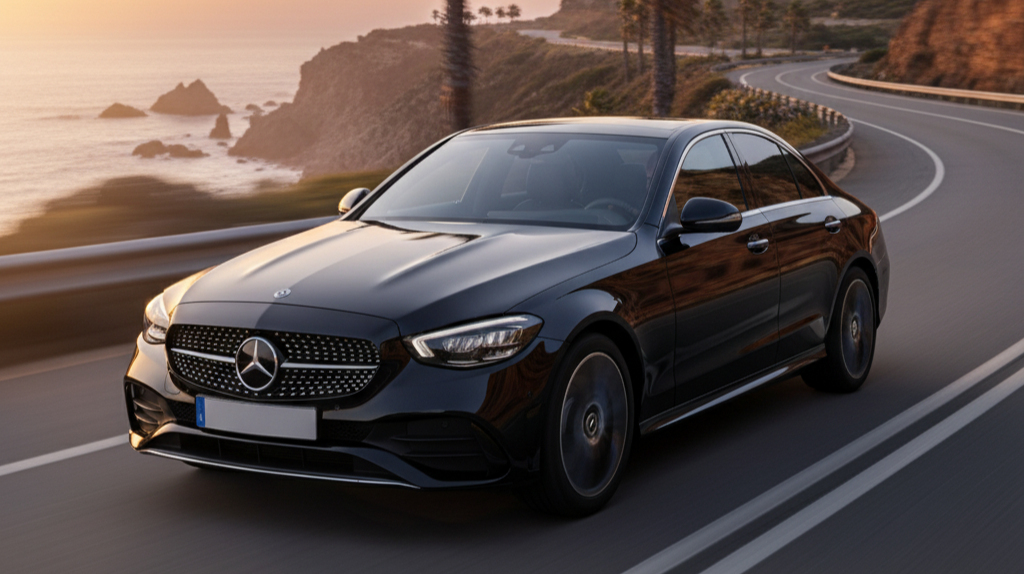
Mercedes-AMG M177 Reliability — The $10,000 Oil Separator Disaster
Engine
7/10
Gearbox
7/10
Electric
6/10
Total Risk
4/10
Direct Answer
Expect significant running costs. Manageable if preventative maintenance is done.
Verdict
Buy with Caution
Risk Level
Medium
Annual Cost
$3,000 - $5,000
Worst-Case
$10,000+
Reliability Verdict
The M177 is mechanically robust, but the crankcase ventilation / oil separator system is a documented high-cost failure item. When it fails at 60,000 miles, it often requires an engine-out service ($10,000) to address a cascade of oil seal leaks.
📋 In This Guide
Mercedes-AMG M177 Reliability: The $10,000 Oil Separator Disaster
Important
Featured Intelligence: Is the Mercedes-AMG M177 Reliable? Mechanically, the M177 is superior to its BMW rivals, but it has a specific “engine-out” failure mode. The oil separator ($10,000 repair) fails around 60k-80k miles, driving pressure into every gasket and causing catastrophic oil leaks. Otherwise, the bottom end and turbochargers are remarkably durable for a 600hp unit.
The Mercedes-AMG M177 and M178 are twin-turbocharged 4.0-liter V8 engines — arguably the most accomplished performance V8s Mercedes-AMG has ever produced.
The M177 powers the C63, E63, CLS53 AMG, and G63. The M178 is the mid-engine variant found in the AMG GT sports car family. Both share the same fundamental architecture: a 90-degree V8 with “hot-V” turbo placement, dual overhead cams, and AMG’s signature wet-sump dry-sump hybrid oiling.
They make between 469 and 630 horsepower depending on specification, with the AMG GT Black Series reaching 730 hp in motorsport-derived form.
Both are also subject to a very specific, very expensive failure pattern that every prospective owner must understand.
1. Architecture: The AMG Hot-V Advantage (and Its Consequences)
Like BMW’s S63 and Audi’s 4.0T, the M177/M178 uses a hot-V layout — the twin turbos sit in the valley between the cylinder banks, not outside the engine as in traditional twin-turbo configurations.
The advantages:
- Near-zero turbo lag from direct proximity to exhaust ports.
- Compact packaging within the engine bay.
- Even heat distribution across both banks.
The thermal consequences:
- Everything in the valley — seals, hoses, the crankcase ventilation system — bakes continuously.
- Rubber degrades faster than on a conventional layout.
- The crankcase ventilation separator, which manages blow-by gases, is positioned directly in this heat zone.
M177 vs M178: Key Differences
| Specification | M177 | M178 |
|---|---|---|
| Application | C63, E63, G63 | AMG GT, GT R, GT Black |
| Wet-Sump Style | Conventional wet sump | Dry-sump system |
| Power Range | 469— 12 hp | 522— 30 hp |
| Orientation | Longitudinal (front-engine) | Front-mid (longitudinal) |
| Key Advantage of M178 | Dry-sump prevents oil starvation at track G-loads | Better high-RPM lubrication stability |
2. The Oil Separator: The $10,000 Surprise
This is the most important section in this guide. The crankcase ventilation separator (also called the oil separator or catch can valve) is the primary high-cost failure item on the M177.
What It Does
Every internal combustion engine produces “blow-by” gases — combustion gases that leak past the piston rings into the crankcase. The oil separator removes oil aerosol from these gases before returning them to the intake.
On the M177, the separator sits in the hot-V, directly between the two banks of turbos. It is constantly exposed to temperatures that degrade its internal diaphragm over time.
The Failure Mechanism
- The separator diaphragm cracks or stiffens due to thermal cycling.
- Crankcase pressure builds beyond designed limits.
- The excess pressure finds the path of least resistance: every oil seal in the engine.
- The rear main seal begins weeping. Valve cover gaskets blow out. The oil cooler seals fail. The front crank seal weeps.
- The entire engine is now leaking from multiple locations simultaneously.
Why It Becomes a $10,000 Job
The rear main seal — the primary victim — is accessible only by removing the engine from the car. Once the engine is out, an experienced Mercedes-AMG specialist will address:
- Oil separator itself (~$400 part)
- Rear main seal
- Valve cover gaskets
- Oil cooler seals
- Front crank seal
- Engine mounts (while accessible)
- Coolant hoses and pipes adjacent to engine
Total labor + parts: $8,000 - $12,000 (US independent). EU equivalent: €7,000 - €11,000.
Warning
This is a documented failure at 55,000 - 80,000 miles on multiple W205 C63 and W213 E63 examples. It is not a rare edge case. Budget for it before you buy.
Real Owner Case (from ref_info.txt source data)
A 2019 E63 M177 at approximately 55,000 miles required engine-out to address oil separator failure. The job included: engine-out, rear main seal, both valve covers, front crank seal, engine mounts, and coolant line refresh — total cost at an independent shop: $10,400.
3. Valve Cover Leaks & Oil Cooler Seals
These are the secondary oil leak system — cheaper than the separator failure, but an early warning sign that separator pressure is affecting the engine.
Valve Covers ($700— 1,500)
- Mileage: 60,000 - 100,000 miles.
- Symptoms: Burning oil smell, oil residue on top of covers, occasional smoke at idle.
- Fix: Valve cover gasket replacement. Engine does not need to come out. An independent shop can complete both covers in 4 - 6 hours.
Oil Cooler Seals ($300— 700)
- Mileage: 60,000 - 80,000 miles.
- Symptoms: Oil pooling below the cooler, drips on underside, slight power loss if very severe.
- Fix: Cooler seal replacement. Moderate difficulty — requires partial disassembly of ancillaries.
Important
If you see valve cover or cooler seal leaks on a high-mileage M177, treat it as an early warning that the oil separator may be failing. Do not simply replace the surface seals and assume the problem is fixed.
4. Cooling System
The M177’s cooling system mirrors the pattern seen on other modern BMW Group / AMG era engines: plastic components in a high-heat environment with a finite service life.
Electric Water Pump
- Failure mileage: 40,000 - 80,000 miles.
- Symptoms: Low coolant warning, P0128 code (coolant temp below threshold), occasional limp mode.
- Cost: $900 - $1,800 including coolant, thermostat, and related hoses.
- Note: The electric pump is electronically controlled. When it fails, the failure is sudden — no gradual degradation warning. A failed pump left unaddressed = overheating = head gasket risk.
Thermostat
- The thermostat on the M177 is a known early-failure item, particularly in US and European markets where warranty extensions were applied.
- Failure mode: Sticking open -> long warm-up times -> engine runs rich for extended periods -> increased fuel dilution risk.
- Cost: $300 - $700.
Plastic Coolant Pipes
- Multiple plastic pipes and fittings route coolant through the engine valley. By 60,000 - 80,000 miles, these become brittle.
- Preventive strategy: During any major engine service, replace plastic pipes with silicone aftermarket alternatives (~$500 parts).
5. Engine Mounts & Suspension
Hydraulic Engine Mounts ($700— 1,500)
- The M177 uses fluid-filled hydraulic mounts to isolate the torque impulses from a 469 - 512 hp V8.
- These mounts fail at 50,000 - 80,000 miles. Symptoms: vibration at idle, clunk on throttle application, shudder when rocking the car between D and R.
- Worth replacing during any engine-out service.
Front Control Arms
- Lower control arm and eccentric bushing failure is common on W205 and W213 platforms under the weight and torque loads of AMG variants.
- Mileage: 50,000 - 80,000 miles.
- Cost: $600 - $1,800 (parts and labor, both sides).
6. Generation Comparison: M177 vs M178
| Aspect | M177 | M178 |
|---|---|---|
| Oil Separator Risk | Same design — same failure | Same design — same risk |
| Cooling | Wet-sump auxiliary pump | Superior dry-sump oiling |
| High-RPM Reliability | Adequate for road use | Stronger at sustained track RPM |
| Common Applications | C63, E63, G63 | AMG GT family |
| Bottom-End Failure Risk | Low (stock, maintained) | Very Low (dry-sump advantage) |
7. Real Ownership Cost: 5-Year Projection
Scenario: 2018 W205 C63 (M177), 50,000 miles at purchase. Driven to 90,000 miles over 5 years.
| Year | Work | Cost |
|---|---|---|
| Year 1 | Pre-purchase service, fluids, valve cover gaskets | $3,500 |
| Year 2 | Brakes (front + rear), tires, annual service | $4,000 |
| Year 3 | Oil separator service (engine-adjacent, if early signs) | $4,000 |
| Year 4 | Tires, annual service, suspension arms | $3,500 |
| Year 5 | Water pump, cooling refresh | $2,500 |
| Total | $17,500 | |
| Annual Average | $3,500/year |
If the full oil separator engine-out job hits: add $8,000 - $12,000 to the above. Plan for the worst.
8. M177 vs the Competition
vs BMW S63 (M5, X5M)
The S63 has systematic rod bearing failure as its primary risk — requiring proactive replacement ($4,000 - $7,000) to avoid catastrophic failure. The M177’s primary risk (oil separator) is reactive — it needs attention when it shows warning signs. The M177’s bottom end is inherently stronger at stock power. For stress-free ownership: M177 is slightly better.
vs Audi 4.0T (RS6, RS7)
The Audi 4.0T has the turbo oil screen issue and carbon buildup. Both are addressable. The M177 has the separator issue. Both are roughly similar in annual running cost. Advantage: Very close. Audi has slightly better parts availability.
vs Porsche 3.8TT (911 Turbo)
Porsche’s flat-six 3.8TT remains the benchmark. No separator issue. No rod bearing issue. More predictable costs. The AMG M177 is more exciting to drive; the Porsche is more reliable. Winner on reliability: Porsche.
9. Buying Advice
Before purchasing any M177-powered car:
- Check under the engine cover for oil residue on the valley and surrounding the turbos.
- Smell the engine bay at operating temperature — burning oil indicates separator build-up.
- Ask for oil separator / valve cover service documentation.
- On cars over 60,000 miles: negotiate the oil separator anticipated service into the purchase price.
- Diesel or petrol? The M176 (petrol V8 non-AMG) is different — this guide covers M177/M178 AMG units only.
Annual budget (post-warranty): $2,000 - $4,000/year for normal running costs. $8,000 - $12,000 reserve for the oil separator service.
Related Guides
Executive Buying Advice
Check for burning oil smell at operating temp. On cars over 60k miles, verify if the oil separator has been addressed. Budget $3,000/year for general maintenance and a $10k reserve for the separator.